


Issue #44 | August 31, 2026
🥄 FIRST BITE
The appetizer before we dive in
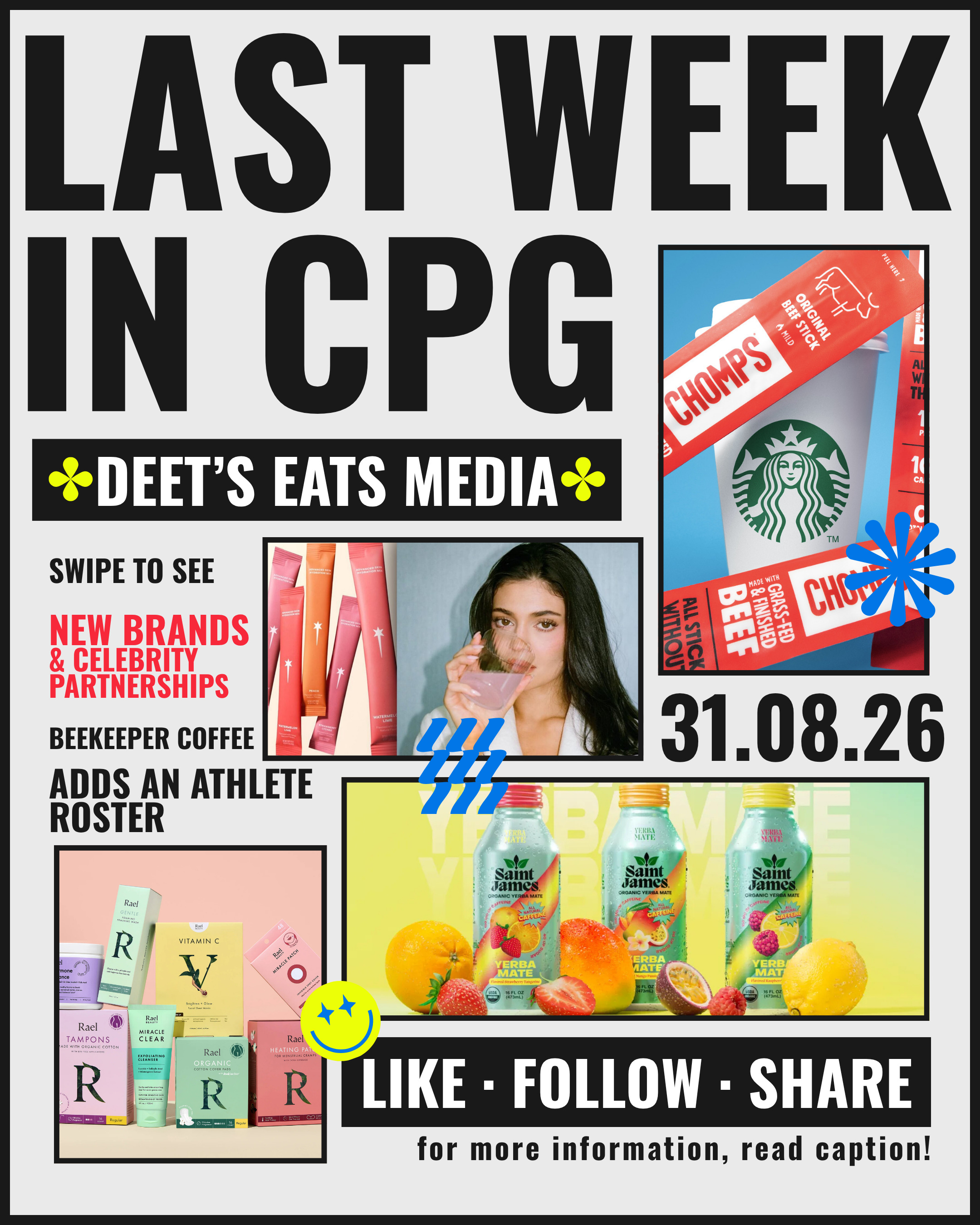
Welcome back. James Watt has made over two billion cans of beer, which, by his own math, means he's caused more hangovers than any other human on the planet.
Last week he launched a hangover drink. He called it karma.
Fool’s Fix is a sparkling electrolyte drink built to be the last thing you drink at night, and it is genuinely the most interesting launch of the week. Not because of the liquid. Because of the cap table. Watt is giving 10% of the entire company to his first 20,000 customers, and he was explicit about why: not influencers, not celebrities, not some famous face in return for an Instagram post.
Now look at what else happened this week. Beekeeper Coffee added Draymond Green, Rich Paul, Anthony Davis, and Jared Goff as investors. Chris Hemsworth invested in Australian whisky producer Archie Rose. Saint James launched Yerba Mate with a national campaign fronted by Victor Cruz, Isabela Rangel Grutman, and Jack Hughes.
Four brands went shopping for famous names in the same seven days that one founder deliberately did the opposite.
Both approaches can work. But one of them is a bet on attention and the other is a bet on ownership, and we are about to find out which one holds up. Let’s dig in.
🍊 THE MAIN COURSE
This week’s biggest CPG moves
James Watt Gives 10% of His New Company to Customers
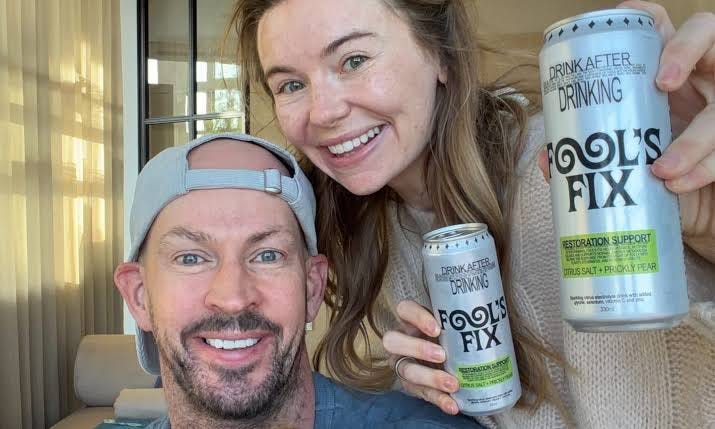
James Watt launched Fool’s Fix on August 24, a sparkling recovery drink positioned as the final drink of the evening. Citrus Salt and Pear, formulated with electrolytes, vitamins, minerals, glycine, and prickly pear across twelve active ingredients. Six 12oz cans run £23, so roughly £3.99 a can. UK first, then Europe, then the U.S. It sits under Second Best, his new beer venture.
It has a money-back guarantee: if you don't feel better the next morning, you get a refund.
And then the actual story. The first 20,000 customers each get 100 Founding Shares, collectively 10% of the business, for free. Former BrewDog Equity Punks who registered for Second Best get a stake automatically without buying anything.
Watt framed it directly. Founders give equity to celebrities, influencers, advisors, and investors. He decided to turn that model on its head and give it to customers instead.
You cannot separate this from what happened to the last group of people who believed him. BrewDog’s Equity for Punks scheme raised money from thousands of amateur investors across multiple rounds through 2021. When Tilray acquired parts of the business for £33 million in March, those shareholders got nothing. Watt stepped down as CEO two years ago, tried to buy the company back this summer, and is now building the next one on a promise not to do that again.
I covered the BrewDog buyback attempt in the P.S. of Issue #40 and said buying back the company you already blew up is a level of self-awareness I have to respect. This is the same instinct pointed at a better target. Whether it works depends entirely on whether 20,000 people believe the guy whose last crowdfunding cohort got wiped out.
The category timing is also sharp. We covered UNDO landing 900 Target stores last week with pre-alcohol gummies. Fool’s Fix is the same occasion from the other end. Hangover support has been a graveyard of one-time purchases for a decade because the product only matters at a moment nobody plans for. Both brands solved that by tying the purchase to the drinking itself rather than the morning after.
TowerBrook Partners With Rael
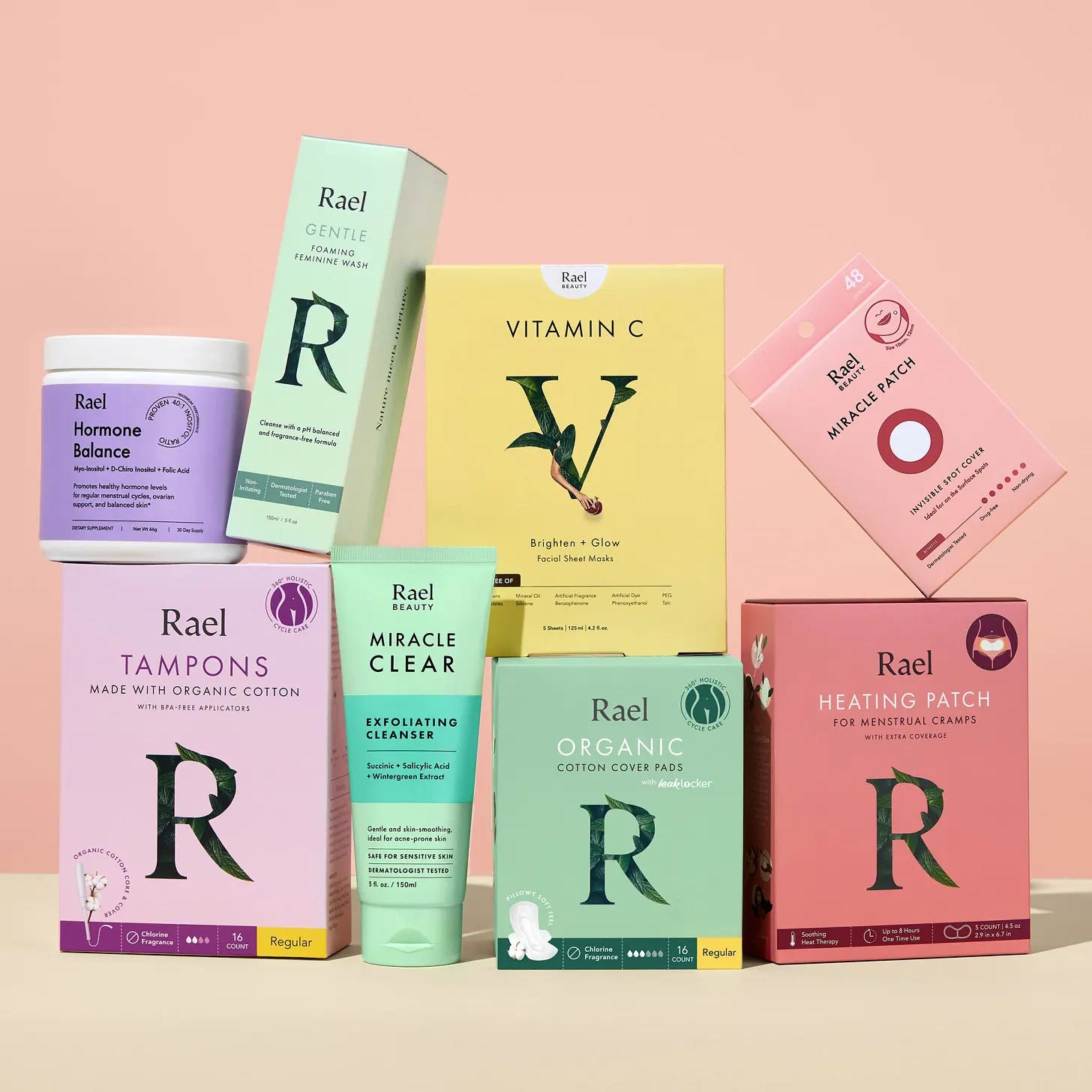
TowerBrook Capital Partners announced a strategic partnership with Rael, the women’s wellness platform founded in 2017 by CEO Yanghee Paik and two other Korean American women. Rael spans period care, skincare, hormonal wellness, and adjacent categories. Existing investors include Colopl Next, Signite Partners, Unilever Ventures, and BAM Ventures.
Women’s health keeps drawing institutional money, and the pattern is consistent: buyers want platforms, not products. Rael is not a period care brand that also sells skincare. It is a customer relationship that spans several categories, which is much harder to build and much more defensible to own.
Put it next to Essity buying Kenvue’s Brazilian feminine care business for $284 million last week, plus its earlier acquisitions of Knix and Modibodi. The category that used to be an afterthought inside diversified conglomerates is now what specialists are deliberately assembling.
KKR Buys Ci FLAVORS From L Catterton
KKR is acquiring Japanese beauty platform Ci FLAVORS from L Catterton and other shareholders. Founded around 2011, Ci FLAVORS owns brands across haircare, skincare, and beauty, including &honey. L Catterton originally invested in 2022.
Four years in and out. That is a fast hold period for a consumer platform, and it says something about how liquid Asian beauty assets have become.
It is also L Catterton’s second notable exit in a month. They sold Thorne to P&G for $3.8 billion three weeks ago after taking it private for $680 million in 2023. Meanwhile, they still own Kodiak, which has doubled since 2021, and they led Smash Foods’ $18 million round in July. That firm is having a year, and watching what they buy next is a reasonable proxy for where consumer capital thinks the puck is going.
The Drinking Occasion Is Being Unbundled
Four launches this week, all circling the same consumer.
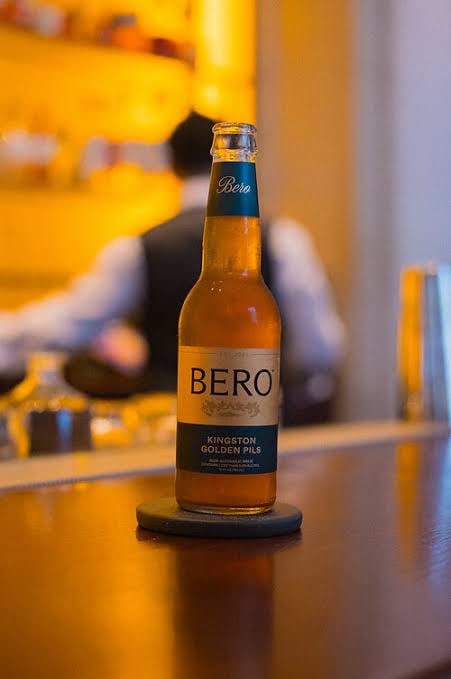
BERO released glass bottles, reportedly the first craft non-alcoholic beer brand in the U.S. to do so. The Kingston Golden Pils bottle is available online and at select bars and restaurants in the U.S. and UK. Herb Light launched as a non-alcoholic, low-dose THC beer from the founders of Quality Meats, a Chicago ad agency: 40 calories, 1mg THC, 1mg CBD, with genuinely fun, nostalgic branding. Teeling Irish Whiskey entered canned cocktails with Phoenix Twist, combining its Small Batch whiskey with ginger, lime, and yuzu. And Willie’s Remedy+ launched Stardust Sleep Gummies at 10mg THC, 25mg CBD, and 10mg CBN.
Add Fool’s Fix for after and UNDO for before, and the occasion that used to be one product is now at least four. Something to drink instead. Something to drink alongside. Something to take first. Something to take after.
We have been tracking this from the deal side all summer. AB InBev’s beer volumes grew 1.1% while non-alcoholic grew 27%. Damm bought into a soda brand. Sazerac spent a reported £500 million on Au Vodka’s RTD business. The brewers understood, before almost anyone else, that growth had migrated out of the liquid and into everything surrounding it.
The BERO detail is the one I would flag for founders. Glass bottles in non-alc are not a formulation decision; they are a status decision. Non-alcoholic beer spent a decade apologizing for itself in cans that looked like a compromise. Putting it in glass and onto a back bar is a bet that customers want to be seen holding it.
💰 THE FUNDING FRENZY
Big checks being written
Beekeeper Coffee Adds an Athlete Roster
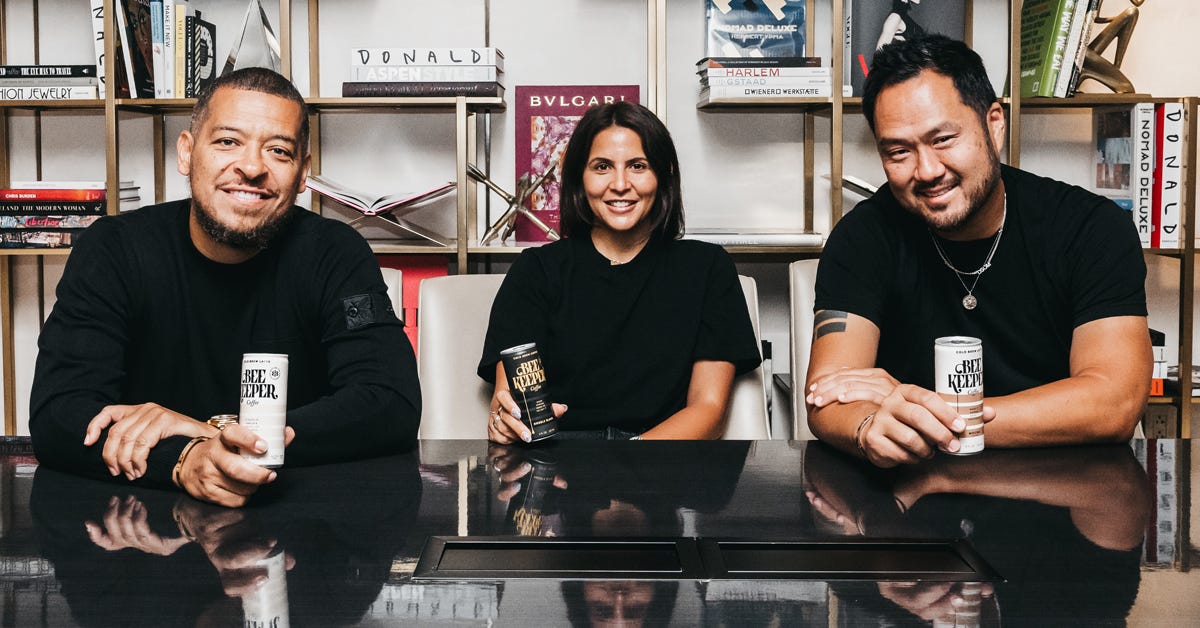
Beekeeper Coffee announced a group of new celebrity and athlete investors including Draymond Green, Rich Paul, Anthony Davis, and Jared Goff. The canned coffee brand recently made its nationwide Target debut, expanding beyond regional grocers like Wegmans and The Fresh Market.
Rich Paul is the interesting name on that list. He is not a celebrity investor in the usual sense; he represents a large share of the NBA, which means the value is less about his audience and more about who he can introduce the brand to. That is a different asset than a posting schedule.
Still, four famous names arriving the same week James Watt built a company specifically to avoid this makes for a useful natural experiment. Beekeeper just got national distribution at Target. The names will drive awareness into those doors. The question, as always, is what month four looks like.
Chris Hemsworth Invests in Archie Rose
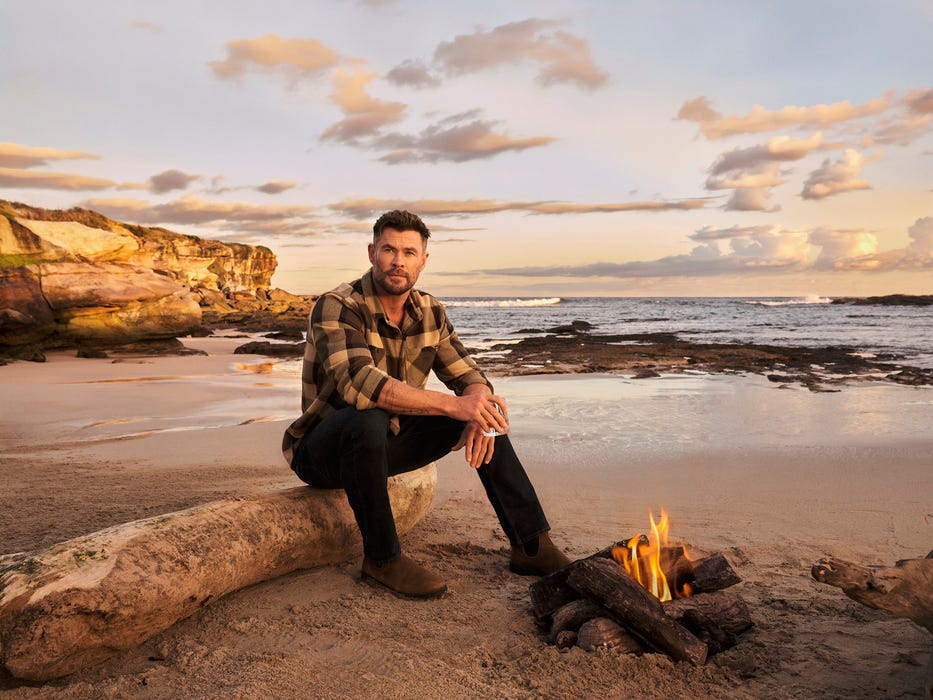
Chris Hemsworth invested in Archie Rose Distilling Co., the Sydney distillery founded in 2014 that is now Australia’s largest whisky producer and its number one independent gin producer. Hemsworth joins ahead of the brand’s U.S. debut later this year.
Celebrity spirits investments have had a rough month in this newsletter. LVMH exited Beyoncé’s whisky. Campari sold Cabo Wabo. But the structure here is closer to the version that works: an established producer with real volume and manufacturing depth adding a name for a specific market entry, rather than a name launching a brand from scratch. Archie Rose does not need Hemsworth to have a business. It needs him to get American attention.
Quick Hits
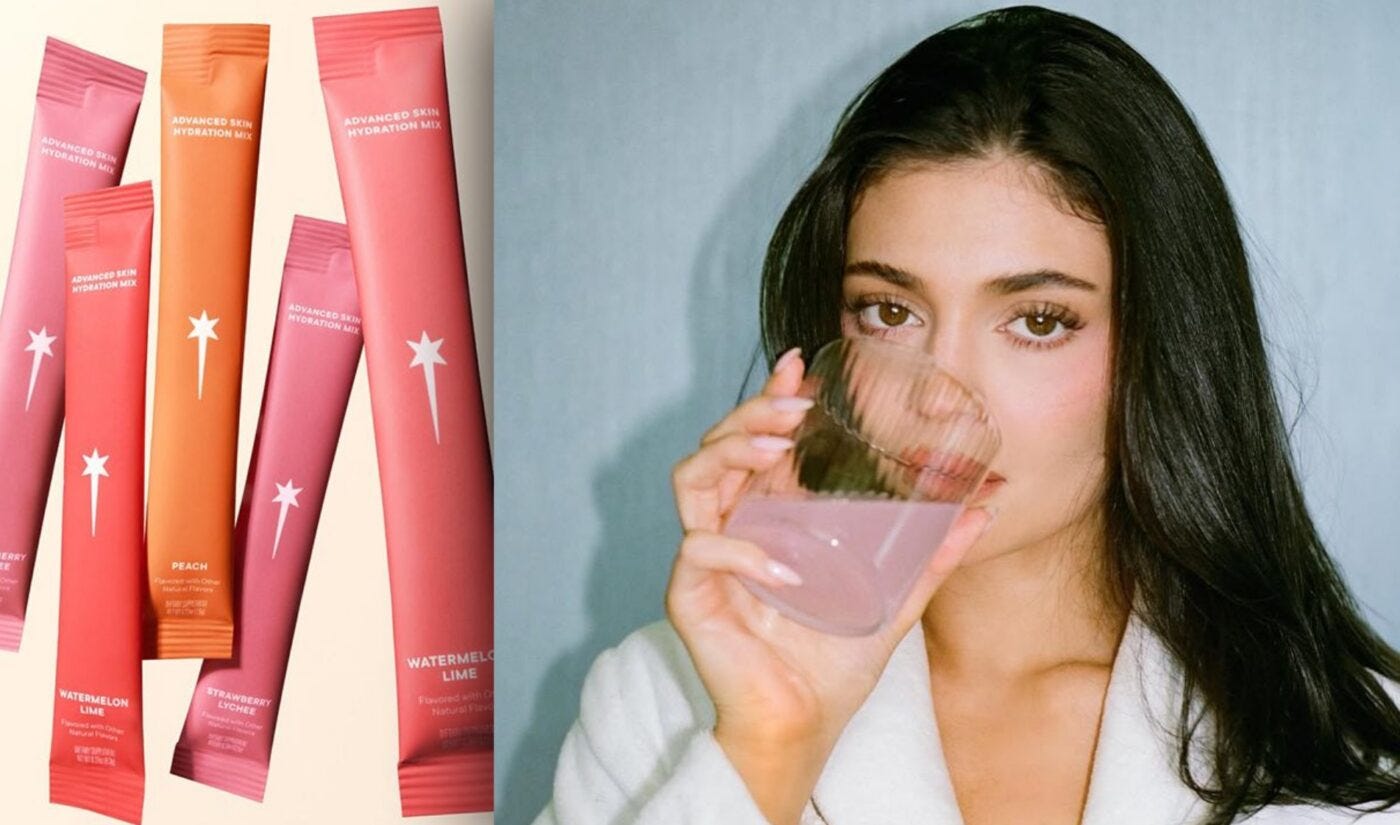
k2o, Kylie Jenner’s beauty-first hydration brand, went live online and in-store at Target nationwide across four varieties of its Advanced Skin Hydration Mix. Launched April 2026, $2 million in sales in five weeks. Jay Hunter, formerly Chief Revenue Officer at MaryRuth’s, took over as CEO earlier this year, which is the detail that matters more than the famous founder.
🆕 PRODUCT LAUNCHES & INNOVATION
This week’s innovation circus
Nancy Twine Is Back
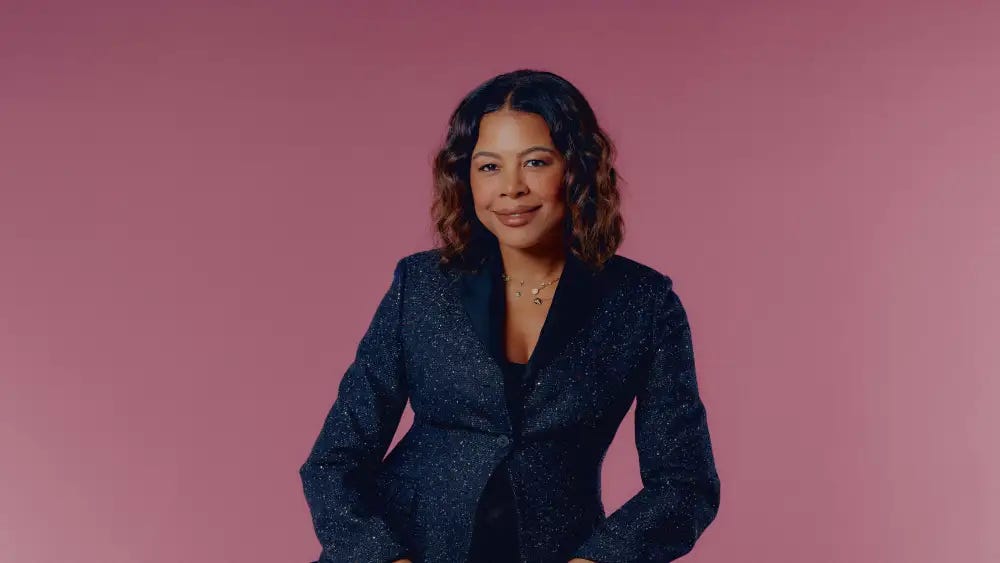
After scaling Briogeo to $100 million in revenue and selling it to Wella Company in 2022, Nancy Twine returns September 1 with a new haircare brand called Soulstice. The tagline is “where science meets soul.”
Second-time founders with a completed exit are the most interesting people in consumer right now, and we keep running into them. The Yasso founders built Snack Buddies and Foundership. The Corkcicle co-founder launched Heist. Now Twine, who did the hard version of this once already and knows exactly which parts of it were luck.
She also has something a first-timer cannot buy: every retail beauty buyer will take the meeting.
Create Puts Both Trends in One Sachet
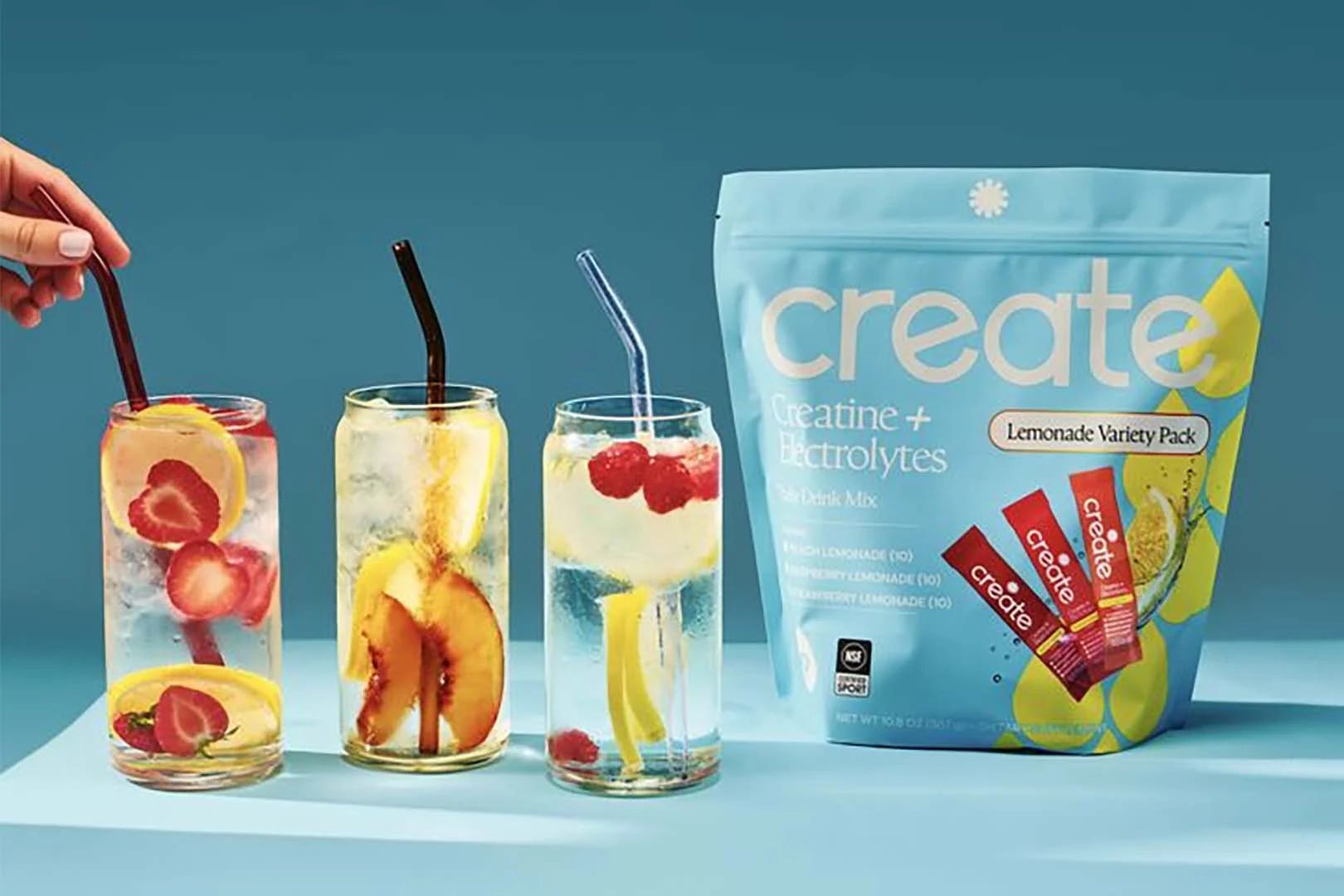
Create expanded its Creatine + Electrolytes line with a Lemonade Collection in Strawberry, Peach, Raspberry, and Classic, plus a variety pack.
I have spent two months in this newsletter arguing that electrolytes are the new protein and creatine is the newest new protein. Create has now put both in a single product. I am declaring the ledger closed on that one.
Saint James Enters Yerba Mate
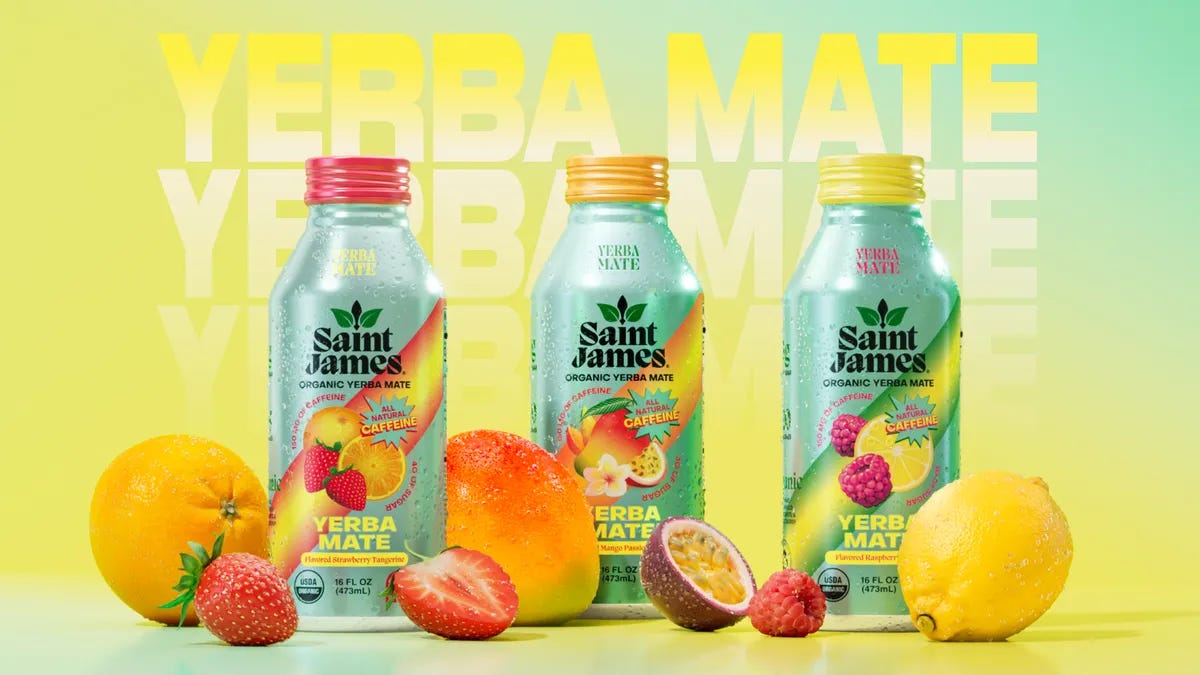
Saint James Iced Tea launched a Yerba Mate line at 150mg natural caffeine, 20 to 25 calories, and 3 to 4g of sugar across Mango Passionfruit, Raspberry Lemon, and Strawberry Tangerine. The national launch campaign features Isabela Rangel Grutman, Victor Cruz, and Jack Hughes. In August, the company reported 164% year-over-year revenue growth, with distribution in more than 25,000 retail doors across the U.S. and Canada.
That growth number is the story, not the campaign. A tea brand growing 164% has earned the right to extend into an adjacent caffeine format, and yerba mate is where the energy category is quietly pooling.
More Launches
TRUBAR extended its kids’ protein bar line with Banana Bread and licensed Minions packaging, launching DTC before Sprouts, Albertsons, and Safeway. That is the second Minions deal we have covered after Grüns, so somebody at Illumination is running a very good licensing desk.
REP, the UK protein brand, added Salted Caramel and Strawberry RTD milkshakes at 20g protein and five to six ingredients per can. Little’s Coffee launched an iced coffee concentrate line in Sweet Cinnamon, Frozen Vanilla, and Creamy Caramel. Hiya launched a Teen Daily Multivitamin gummy for ages 12 to 17 with 15-plus vitamins and minerals including B vitamins, myo-inositol, and K2.
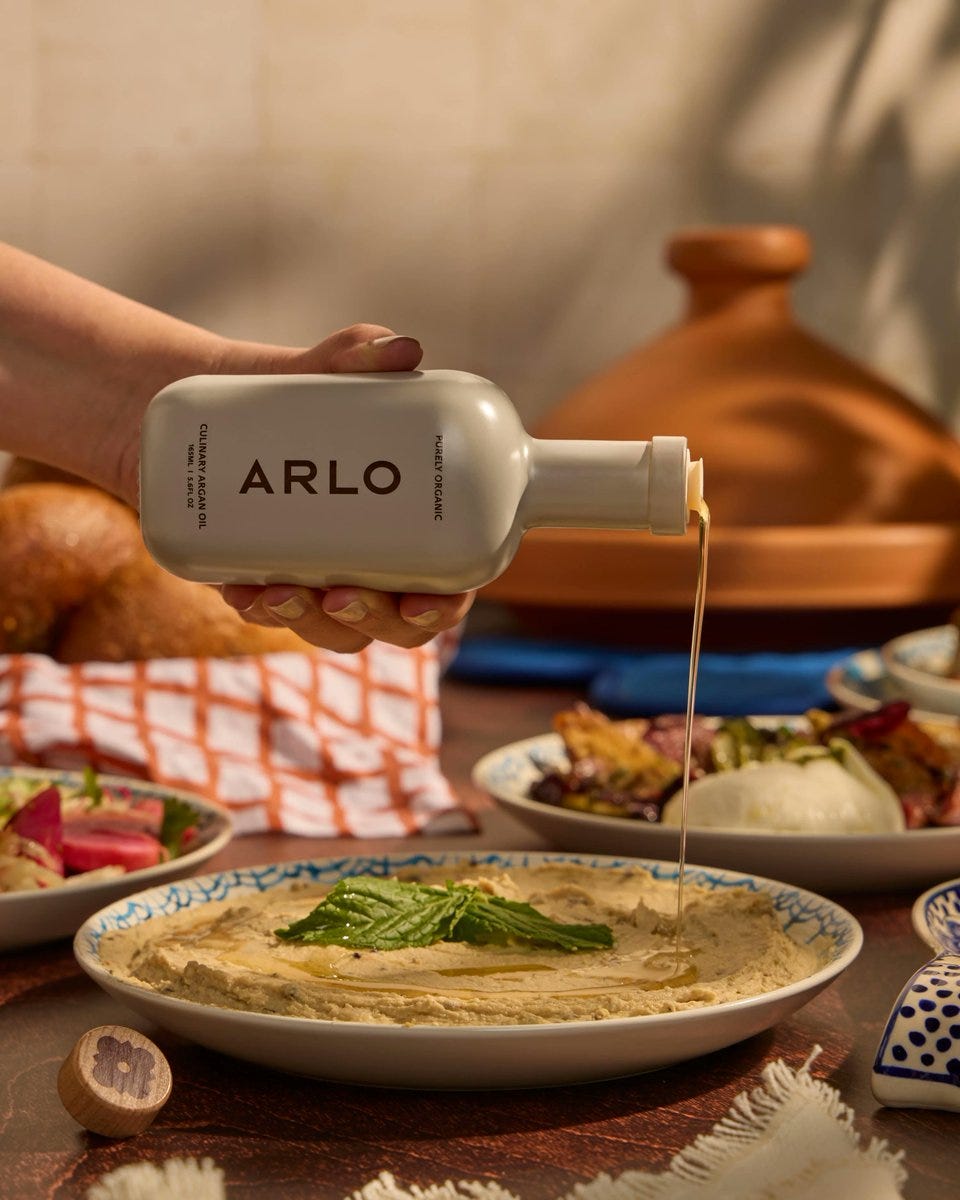
And ARLO launched to bring Moroccan culinary argan oil into the American pantry. Cold-pressed, single-ingredient, USDA Organic, sourced exclusively from women-owned cooperatives in the Souss Valley. Co-founder Amine Maadir said his grandmother called it the elixir of oils, and he couldn't find it anywhere after moving to the U.S. Founder-origin stories are cheap. Ones with a supply chain attached are not.
📊 THE DATA DIGEST
Numbers that matter
Tony’s Chocolonely secured distribution at four of five national Canadian retailers in 18 months and is now a top-10 chocolate bar brand in the country. Combined U.S. and Canada revenue is north of $100 million a year. Eighteen months to top-10 in a category dominated by companies a century older is genuinely fast.
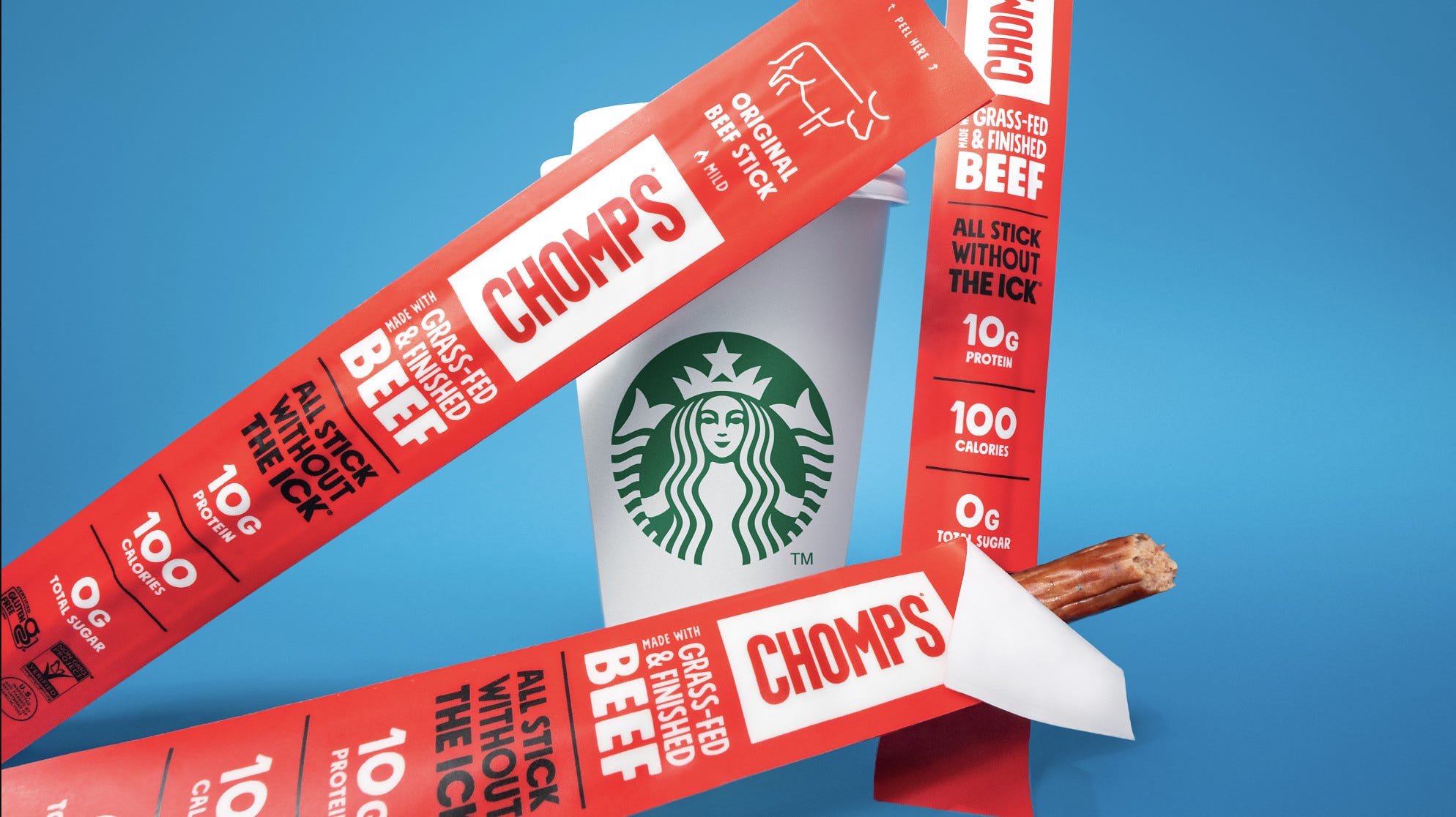
Chomps surpassed 65,000 points of distribution after launching nationwide at Starbucks, adding Costco Canada and Home Depot on top of recent launches at Sam’s Club, BJ’s, 7-Eleven, ExtraMile, and RaceTrac. MULO sales are up 81% over 52 weeks.
The number I would underline: 79% of Chomps buyers are incremental to the meat snack category. They are not taking share from Slim Jim; they are bringing people who never bought meat snacks into the aisle. That is the metric that gets a brand more shelf, because it grows the category for the retailer rather than reshuffling it.
Also worth noting where Chomps went. Starbucks and Home Depot are not snack aisles; they are occasions. Morning coffee and a hardware run. Floura landed at Starbucks nationwide the same week. Starbucks is quietly becoming a serious CPG channel.
Saint James reported 164% year-over-year revenue growth with distribution past 25,000 doors.
🏪 DISTRIBUTION DOMINATION
Everyone’s everywhere
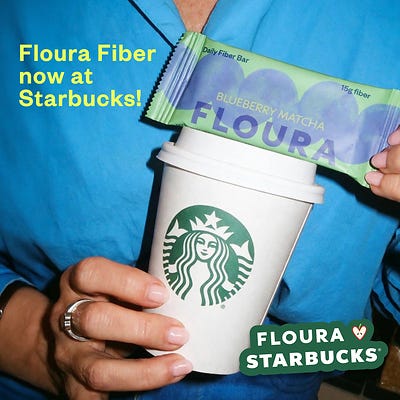
Starbucks: Floura went nationwide with its 15g Blueberry Matcha fiber bar, and Chomps landed nationwide. Sprouts: Drizzy launched online and in-store, roughly a month after relocating from Sydney. 7-Eleven: Protein Candy launched at 500-plus stores in Canada. Kroger: Xochi is now available throughout Texas. Costco: Doughlicious launched at select locations. Target: k2o went nationwide.
Drizzy is the fast one. We covered their U.S. launch plan in Issue #42 when Georgia Park and Jason Spyrides were still relocating with backing from Alexis Ohanian, RiverPark, and Nucleus. Squeeze-bottle peanut butter into Sprouts within weeks of landing is a genuinely quick turnaround.
👋 PEOPLE MOVES
Vacation named Nelson Miranda CEO. The University of Florida alum spent two decades at P&G before becoming CEO of DeMert Brands in 2020, the company behind Not Your Mother’s, which Henkel acquired earlier this year. A sunscreen brand built on nostalgia and design, bringing in a P&G operator with a completed exit, is the same move OLIPOP and Everyday Dose made this month.
Levain Bakery named Lorna Sommerville and Taya Stenson Co-CEOs. Sommerville comes from Coca-Cola, Mammoth Brands, and Function of Beauty. Stenson spent more than a decade at Starbucks. Packaged goods experience plus QSR experience is a deliberate pairing for a bakery deciding whether its future is stores, shelf, or both.
Nancy Twine returns with Soulstice, three years after the Wella exit.
🔥 THE HOT TAKE
My unfiltered opinion on this week’s madness
Everybody gives equity to famous people. This week one founder gave it to customers instead, and I cannot stop thinking about it.
James Watt is giving 10% of Fool’s Fix to his first 20,000 buyers. His words: founders give equity to celebrities, influencers, advisors, and investors, so he decided to turn that model on its head. Same week, Beekeeper Coffee added four athlete investors, Chris Hemsworth backed Archie Rose, and Saint James put three famous faces in a national campaign.
Here is the thing. The celebrity playbook is not stupid. It works often enough that a rational operator keeps running it. Beekeeper just got Target nationwide, and Draymond Green plus Rich Paul will absolutely drive awareness into those doors. Archie Rose is a real distillery using Hemsworth for a specific market entry, not to invent a business.
But we have spent a month watching what happens when the famous name is the whole thesis. Alex Cooper’s Unwell had one of the biggest podcast audiences and shut down the beverage line in under two years. LVMH quietly offloaded Beyoncé’s whisky. Campari sold Sammy Hagar’s tequila. The ones that worked had something else underneath. IM8 is up 359% because Danny Yeung and Prenetics built an operating company first. k2o has a former MaryRuth’s CRO running it. Alix Earle used Cymbiotika for years before she took equity.
So the honest version is that celebrity is a cost-of-first-impression lever. It is efficient. It is also rented, repriced constantly, and it does nothing for the second purchase.
What Watt is testing is whether ownership does something different. If 20,000 people own a piece of Fool’s Fix, they are not an audience; they are a distribution channel with skin in the game. They tell friends because they benefit, not because they were paid to post. In theory, that compounds where a campaign decays.
In practice, I have real questions. Twenty thousand shareholders is an administrative burden most consumer companies would never take on voluntarily. The shares are almost certainly illiquid for years. And the people being asked to trust this are, in many cases, the exact people whose BrewDog Equity Punk stakes went to zero when Tilray bought the pieces for £33 million. Watt is asking a burned cohort to believe him a second time, which is either the boldest part of the plan or the part that sinks it.
I do not know which. That is what makes it worth watching.
But the underlying question applies to every brand reading this, and it has nothing to do with whether you can afford an athlete. It is this: when you hand out equity, are you buying attention or are you buying advocacy? Attention is cheaper, faster, and shows up in launch metrics. Advocacy is slower and shows up in reorders, which is the number that actually decides whether you are still here in three years.
Most brands buy attention and hope it turns into advocacy on its own. It usually does not.
Build accordingly.
🎙️ COMING TUESDAY
Unpackaged Goods Episode
James Watt giving 10% of his new company to customers and why the Equity Punk history makes it complicated. TowerBrook backing Rael and the institutionalization of women’s health. KKR buying Ci FLAVORS out of L Catterton four years in. The drinking occasion splitting into four products. And Chomps hitting 65,000 doors with 79% incremental buyers.
🥫 ONE MORE THING...
Before you close this tab
ARLO launched this week to sell Moroccan culinary argan oil in the United States. Cold-pressed, single-ingredient, sourced from women-owned cooperatives in the Souss Valley.
Co-founder Amine Maadir said his grandmother called it the elixir of oils. He grew up with it at the center of his family’s table in Morocco, moved to the U.S., and could not find it anywhere.
That is the oldest business idea there is. Somebody moves, misses something, discovers nobody sells it, and builds the company that does. Sriracha, Chobani, and about a third of the American pantry started exactly there.
We spend a lot of time in this newsletter on cap tables, velocity data, and trade dress rulings. It is worth remembering that a real percentage of the brands we will be covering in five years exist because somebody could not find the thing they grew up with.
Until next Monday, Jonathan Deeter Your CPG-Obsessed Friend
P.S. Prediction ledger, final entry. I said electrolytes were the new protein. I said creatine was the newest new protein. This week, Create launched a Creatine + Electrolytes lemonade line, putting both in one sachet, which means the trends have merged and I am officially out of runway on that bit. Still outstanding: pickle protein powder by Q1 2027. Four months left. Somebody please.
TikTok | Instagram | Newsletter | Pickle Advisors
This newsletter is finished with Trophy Wife Finishing Salts, elevating every bite since 2025.