


Issue #37 | July 13, 2026
Proudly seasoned by Trophy Wife - The Official Finishing Salt of The Deeter Digest. Because you are the prize, and so is this salt.
🥄 FIRST BITE
The appetizer before we dive in
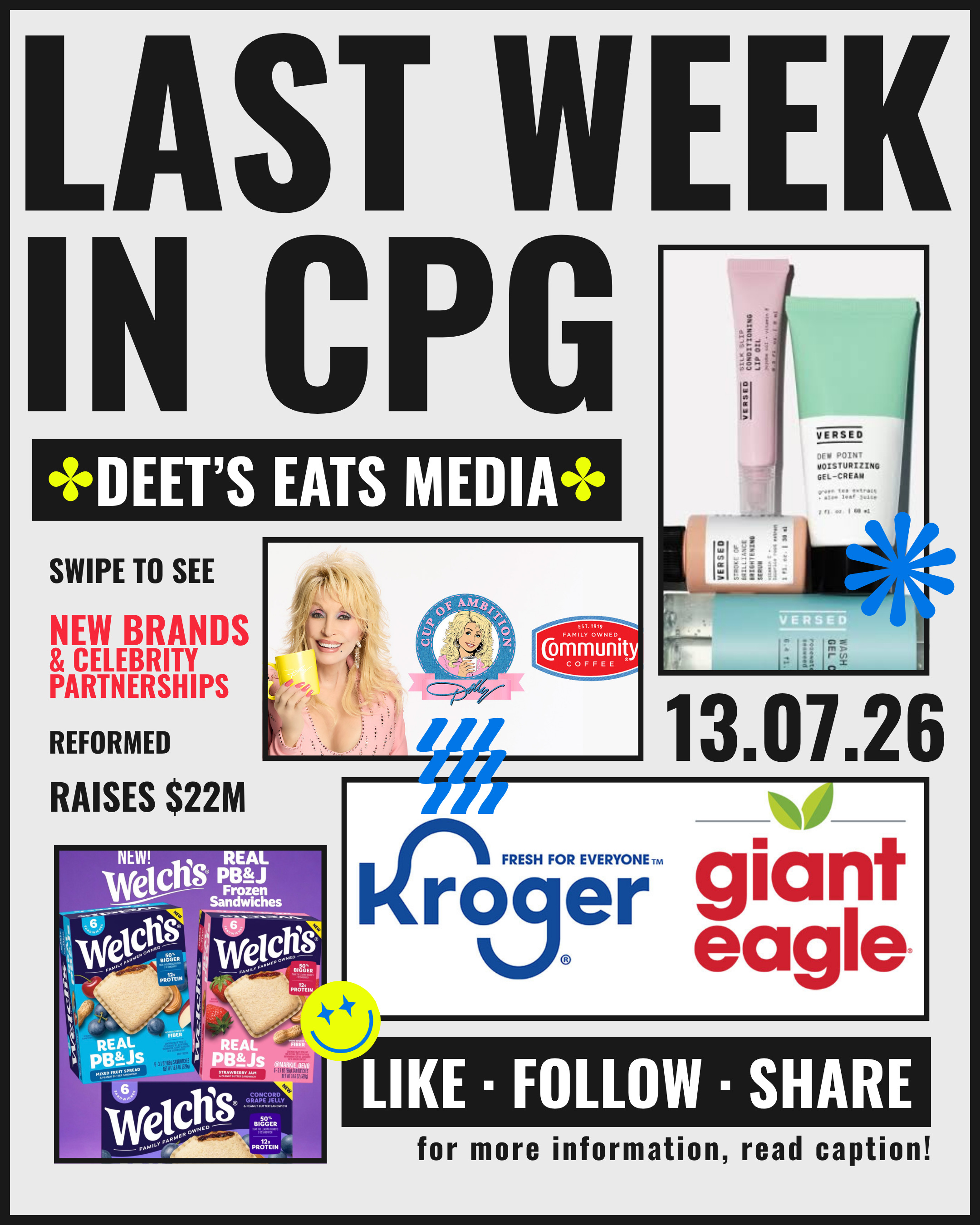
Welcome back. Kroger is acquiring Giant Eagle for $1.65 billion — its first major acquisition since the failed Albertsons megamerger. One less independent regional grocer. One bigger retail media machine. And one more reset for every emerging brand that counted Giant Eagle as a separate buyer to pitch.
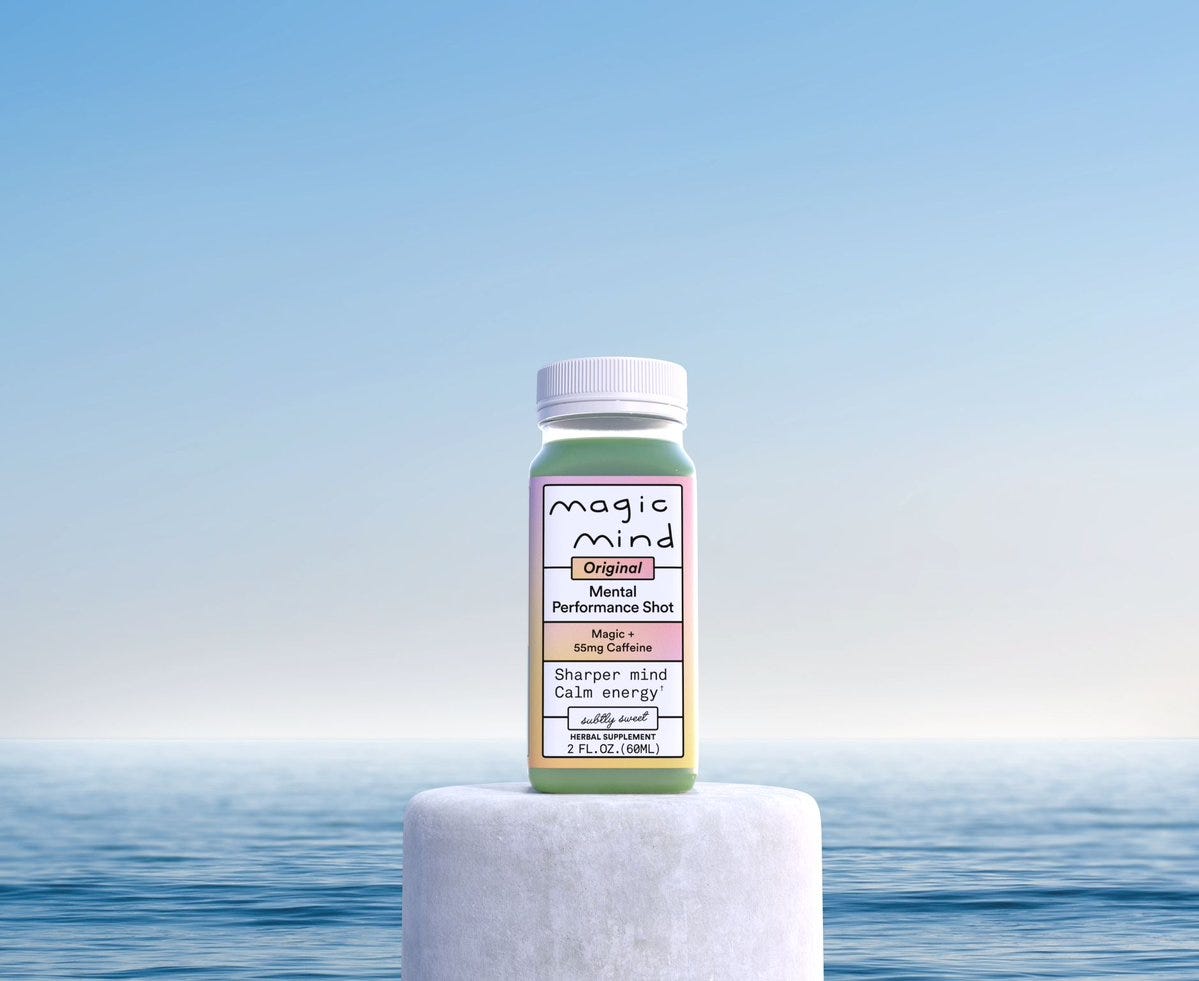
Meanwhile, UK-based Reformed raised $22M after scaling functional coffee to $70M in revenue — profitably, in two years. Cazcanes Tequila signed Reyes Beverage Group across six states with the former WhistlePig CEO as president. Monster struck a landmark Big 12 deal — jersey patches and field logos, a first for energy drinks in college sports. Country Life acquired Aura Cacia to build toward an exit of its wellness platform. Cann launched its first non-infused line. And Magic Mind says it now sells one shot every three seconds.
The theme this week is routes. Kroger's buying Giant Eagle is buying routes to the shopper. Cazcanes signing Reyes is buying routes to the shelf. Varun Beverages, spending $32M in Kenya, is buying routes to a continent. Monster renting the Big 12 is buying attention routes. The product matters, but the route decides who wins. Let’s dig in.
🍊 THE MAIN COURSE
This week’s biggest CPG moves
Kroger Acquires Giant Eagle for $1.65B — The Shelf Itself Consolidates
Kroger entered a definitive agreement to acquire Giant Eagle for $1.65 billion — its first major acquisition since the failed Albertsons megamerger.
This is the biggest retail story of the year for emerging brands, and it’s not close. Giant Eagle operates hundreds of supermarkets across Pennsylvania, Ohio, West Virginia, Indiana, and Maryland. For decades, it’s been an independent regional buyer — a separate pitch, a separate reset, a separate relationship for every brand trying to build the Mid-Atlantic and Midwest.
Now it folds into Kroger. The implications run in both directions. For brands already in Kroger: potential access to hundreds of new doors through one buying relationship. For brands that used Giant Eagle as their regional proving ground before pitching Kroger, that stepping stone just disappeared. One less independent buyer in America means fewer paths to shelf and higher stakes per pitch.
And don’t miss the retail media angle. Kroger Precision Marketing is already one of the largest retail media networks in the grocery industry. Adding Giant Eagle’s shopper data and store network makes the machine bigger — more first-party data, more ad inventory, more leverage over brands that increasingly have to pay to play. After the Albertsons deal collapsed, Kroger needed a growth story. $1.65B for Giant Eagle is a fraction of the $24.6B Albertsons price with a fraction of the regulatory risk. Expect this one to close.
Reformed Raises $22M — Profitable at $70M in Two Years
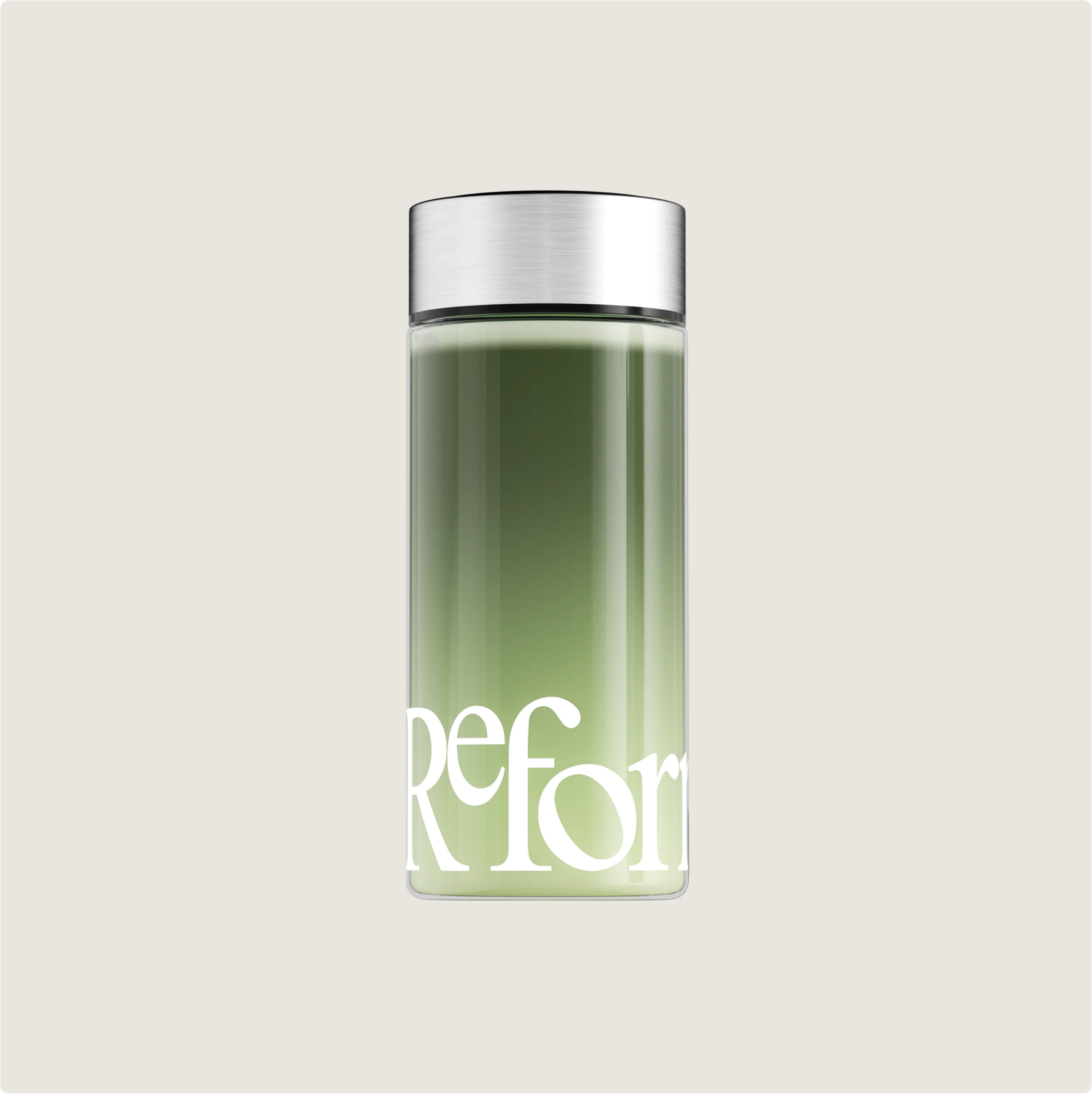
UK-based Reformed closed $22M led by IRIS Ventures with JamJar Investments participating. Founded in 2024 by Neil Saada and Neil Marrakchi. Functional coffee, matcha, and mocha products. Profitable and scaled to $70M in annual revenue.
Read that timeline again. Founded in 2024. $70M in revenue. Profitable. Raising in 2026. That’s one of the fastest, most profitable scaling stories in functional beverage anywhere in the world. Most brands at $70M are burning cash to buy growth. Reformed got there in two years while making money.
IRIS Ventures leads matters — their wellness portfolio includes Healf (the UK wellness marketplace where Oshun just launched), Maurten, Biomel, and Olistic. JamJar is the fund from the Innocent Drinks founders — operators who built and sold a beverage brand to Coca-Cola. The functional coffee category keeps producing outliers: PerfectTed approaching $100M in matcha, Diamond Brew raising for craft instant, and now Reformed at $70M in profitable sales. The UK is quietly becoming the functional beverage factory of the world — and every one of these brands is a future acquisition target for the same strategics buying everything else.
Country Life Acquires Aura Cacia — Building Toward a Platform Exit
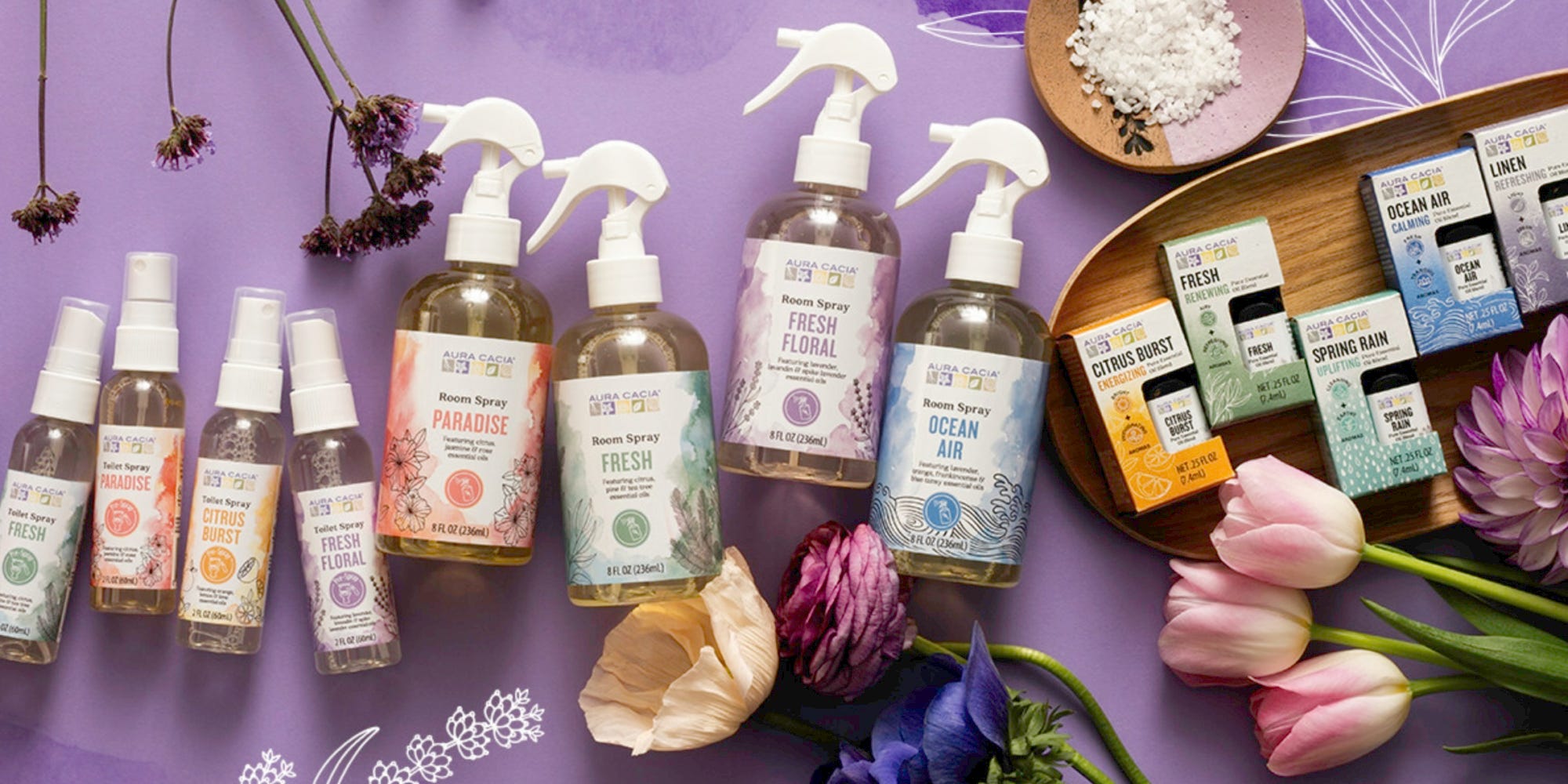
PE-backed Country Life acquired Aura Cacia from Frontier Distribution. Founded in 1982, Aura Cacia is the #1 brick-and-mortar aromatherapy brand, specializing in essential oils and skincare. Country Life — backed by Lion Equity — also owns protein brand Biochem and personal care brand Desert Essence. Post-acquisition revenue is well above $100M. Country Life expects to acquire a fifth brand and reach hundreds of millions in sales before seeking an exit.
The platform playbook, stated out loud. Most PE-backed platforms execute quietly — Country Life is telling you the plan: acquire a fifth brand, scale to hundreds of millions, exit. Supplements (Country Life), protein (Biochem), personal care (Desert Essence), and now aromatherapy (Aura Cacia, the #1 brick-and-mortar brand in its category). Four brands spanning the wellness aisle. The comps tell you where this goes: eComplete acquired Noted Aromas at 1.55x sales, and L’Occitane paid $164M for Dr. Vranjes Firenze at 3.6x sales. A diversified wellness platform at several hundred million in revenue commands a premium multiple from a strategic or larger PE firm. Same blueprint as Second Nature Brands in snacks and Bridgepoint in dermatological skincare — buy category leaders, assemble the platform, sell the whole thing for more than the parts.
Cazcanes Signs Reyes Beverage Group — The WhistlePig Playbook Activates
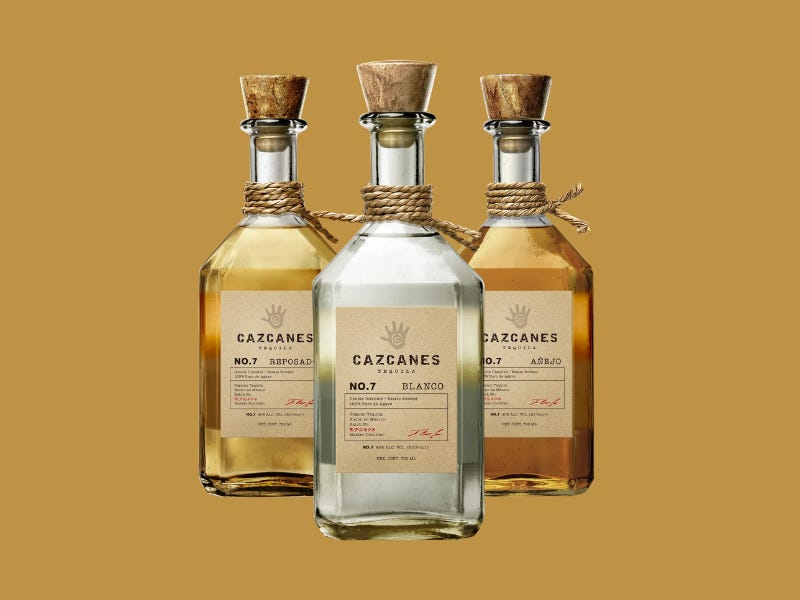
Cazcanes Tequila announced a distribution partnership with Reyes Beverage Group across six markets: Texas, Colorado, Arizona, Oklahoma, Louisiana, and Hawaii, effective August 1st. Late last year, Cazcanes hired former WhistlePig CEO Jeff Kozak as President — Kozak scaled WhistlePig from $1M to over $100M.
Premium spirits scale when the truck network gets serious. Reyes is the largest beer distributor in America, and its beverage division taking on a premium tequila across Texas, Colorado, and Arizona — three of the most important tequila markets in the country — is the infrastructure moment for Cazcanes. Kozak’s hire last year now makes complete sense: you bring in the operator who scaled WhistlePig 100x, and his first major move is locking in the route network. The sequence matters. Operator first. Distribution second. Volume third. Every premium spirits brand trying to scale should study the order of operations.
Belle Brands Acquires Versed — Buying Shelf Presence and Trust
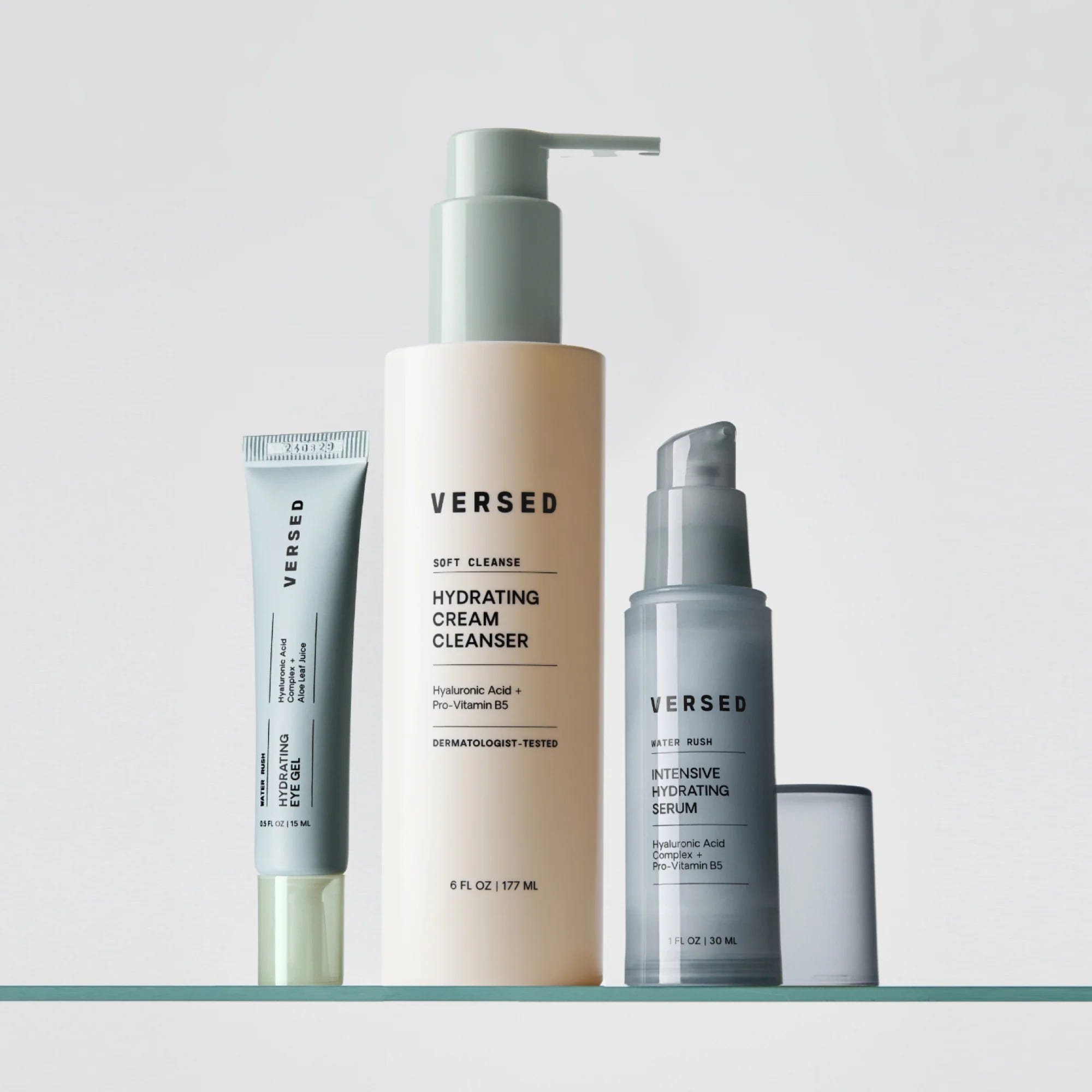
Belle Brands, part of Windsong Global, acquired Versed to expand its beauty platform and reach in mass retail.
Versed is one of the most recognizable clean skincare brands in mass — built by Who What Wear’s parent company and scaled through Target with dermatologist-adjacent positioning at drugstore prices. For Belle Brands, this isn’t just buying products. It’s buying shelf presence and customer trust that would take years and millions to build organically. Versed comes with established Target real estate, years of clean-beauty brand equity, and a consumer who already knows what the brand stands for.
The mass beauty acquisition landscape keeps consolidating: Belle Brands buying Versed, Avenir buying Wrinkles Schminkles, Country Life buying Aura Cacia — all in the same two weeks. The pattern is identical across all three: platforms acquiring established brands with proven distribution rather than building from scratch. Shelf presence is the asset. The products are almost secondary.
Monster Rents College Football — Landmark Big 12 Deal
Monster struck a first-of-its-kind deal with the Big 12: jersey patches, field logos, the works. A first for energy drinks in college sports.
Red Bull built its own events for three decades — Formula 1 teams, cliff diving, air races, esports. Monster just rented one of the biggest attention machines in America instead. College football is the most-watched sport in half the country, and the Big 12 footprint (Texas, Florida, Arizona, Utah, Kansas, Ohio) maps directly onto the energy drink heartland. With Celsius at $2.5B, Alani up 94%, Bloom at $423M growing 646.5%, and Nutrabolt heading for a $1B IPO, Monster is defending its $8.3B franchise by buying cultural real estate the challengers can’t afford. Rent attention or lose it.
💰 THE FUNDING FRENZY
Big checks being written
Laoban — $7.2M as Frozen Asian Expands
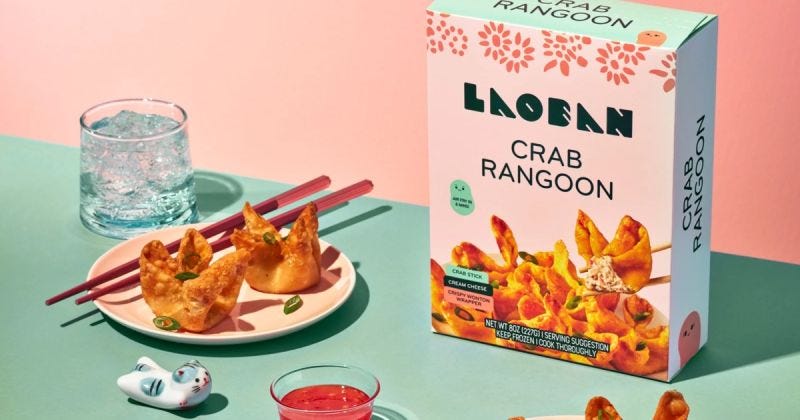
The dumpling brand that just launched Lo Mein exclusively at Whole Foods raised $7.2M. Frozen is where velocity hides now — the freezer aisle keeps producing funded brands (Laoban, Frozen One, ‘ndulge, Evergreen) because frozen delivers the margin structure and shelf life that fresh emerging brands can’t match.
Bayou Best Foods Acquires BettaF!sh — Alt-Seafood Consolidation Begins
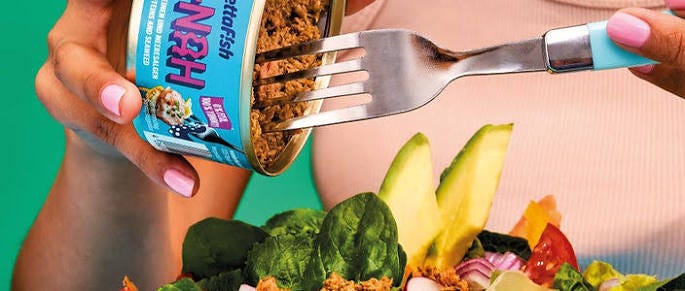
Bayou Best Foods acquired Berlin-based seaweed brand BettaF!sh.
Alt-seafood consolidation has officially started. The plant-based seafood category never got the funding wave that alt-meat did — which means the brands that survived did it on real economics, not venture subsidies. BettaF!sh built seaweed-based tuna alternatives with European retail distribution and a genuinely differentiated ingredient story. Bayou acquiring rather than building signals the same pattern we’ve tracked in every category this year: buying proven brands beats launching new ones. Watch for more consolidation as the alt-seafood survivors get scooped up at reasonable prices by platforms hunting for category exposure without category risk.
Varun Beverages Buys Kenyan Operations for $32M
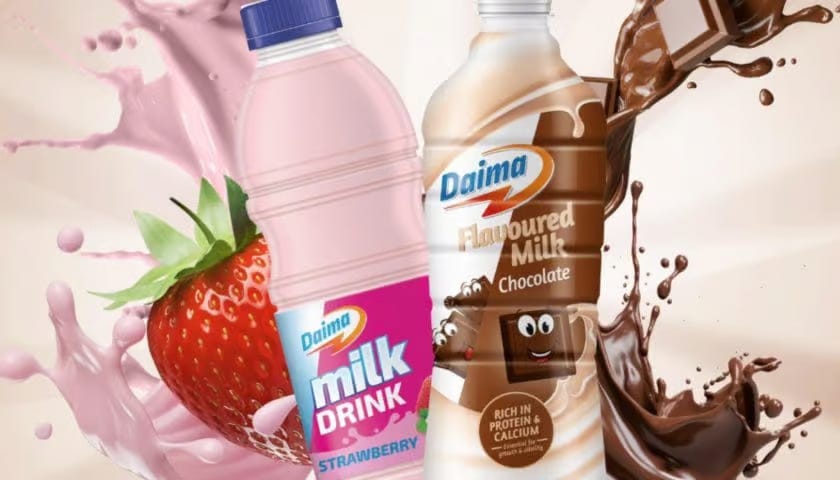
Varun Beverages, PepsiCo’s bottler, acquired a Kenyan beverage business for $32M.
Distribution grows by buying routes, not building them. Varun keeps executing the same playbook across Africa and South Asia — acquire local bottling and distribution infrastructure, plug in PepsiCo’s portfolio, own the route. Building a distribution network in a new country takes a decade. Buying one takes a quarter. At $32M, Varun gets trucks, warehouses, retail relationships, and local operating knowledge that no amount of greenfield investment could replicate on the same timeline. The route thesis of this week’s newsletter in its purest form.
Kimba — $5.4M Seed from Selva Ventures

AI-powered scent diffuser raised $5.4M led by Selva Ventures with Able Partners, bringing total funding to $6.5M. Founded in 2023 by Ben Fuxbruner and Gabi Beck — Fuxbruner developed the concept after struggling with PTSD and insomnia following a near-death incident in combat. $299 pre-order with subscription scent refills every three months. Connects to Oura and Apple Watch to determine when to release scents.
Sleeptech keeps attracting capital: Eight Sleep raised $50M at a $1.5B valuation, Somnee secured a $10M seed extension, and now Kimba brings scent into the stack. Selva, leading (Grüns, Arrae, Perelel, Crown Affair), puts a consumer-wellness heavyweight behind a hardware-plus-subscription model. The founder story — building from personal PTSD and insomnia — gives Kimba an authenticity most sleep gadgets can’t manufacture.
Manasi 7 — $1.5M from Divinity Studio
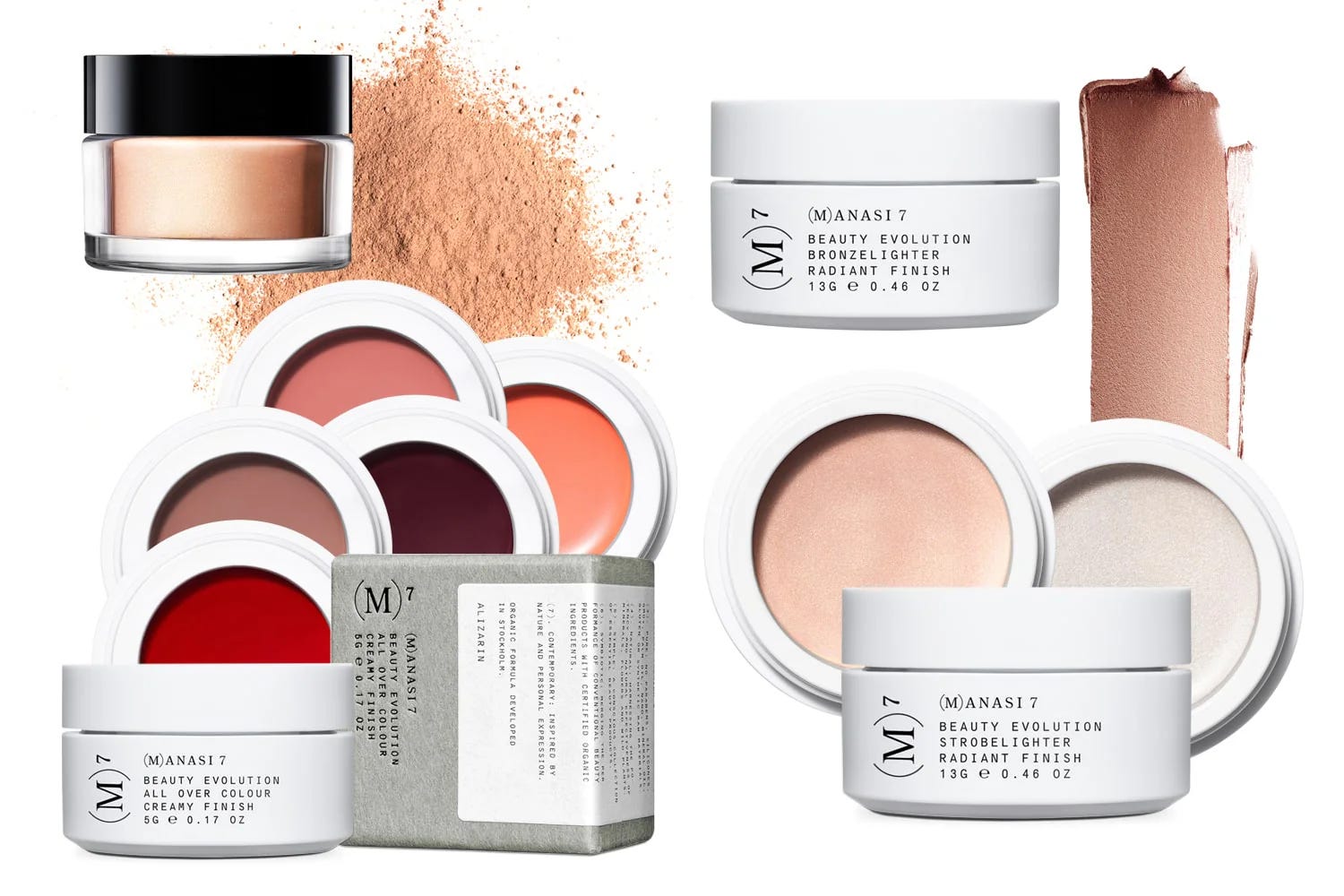
Organic Swedish beauty brand secured its first outside investment. Founded in 2018 by makeup artist Susanne Manasi Persson. Sixty products across skincare and beauty. Won Business of Fashion’s emerging brands category in 2025. Divinity Studio — a newly established investment platform — evaluated the brand for over a year before investing.
A year of diligence for a $1.5M check tells you Divinity is building a concentrated portfolio, not spraying capital. Scandinavian organic beauty with a working makeup artist as founder is the kind of credibility-first brand that scales slowly, then suddenly.
Rise Brewing vs. PepsiCo — Trademark Fight Brewing
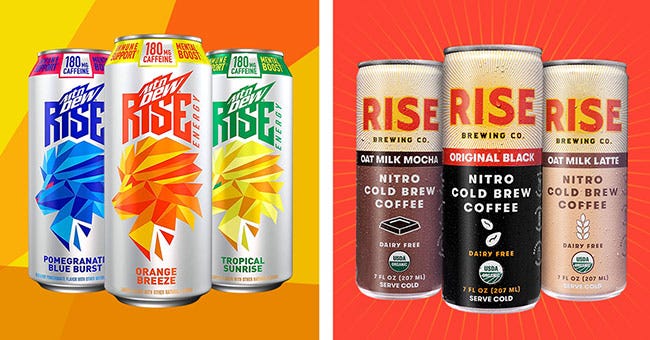
The RTD coffee brand is in a trademark case against PepsiCo. Emerging brand versus $250B conglomerate over naming rights is a David-and-Goliath story worth tracking — these cases shape what insurgent brands can call themselves when the giants come to compete.
Four Loko Licenses Into Hemp
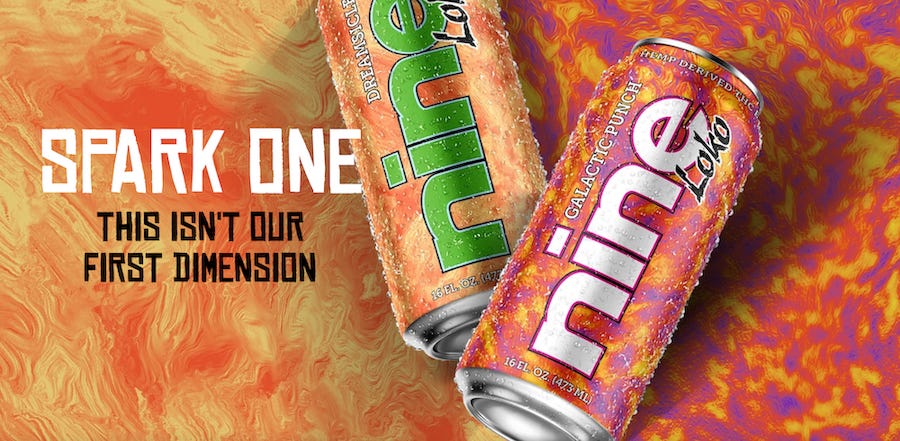
A licensing deal brings Four Loko into the intoxicating hemp beverage set. The brand that defined chaotic energy in alcohol is now entering THC beverages — a category that hit $239M in tracked channels, up 135%. The most on-brand category extension imaginable.
🆕 PRODUCT LAUNCHES & INNOVATION
This week’s innovation circus
Cann Launches 0MG — The THC Brand Goes Zero
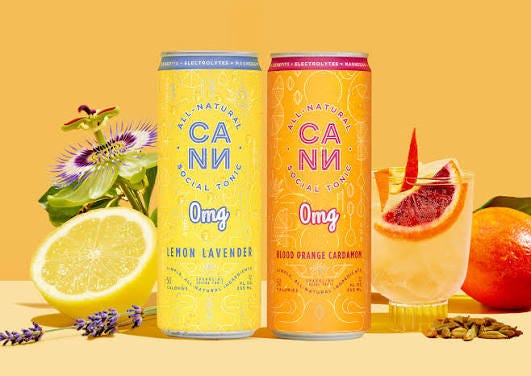
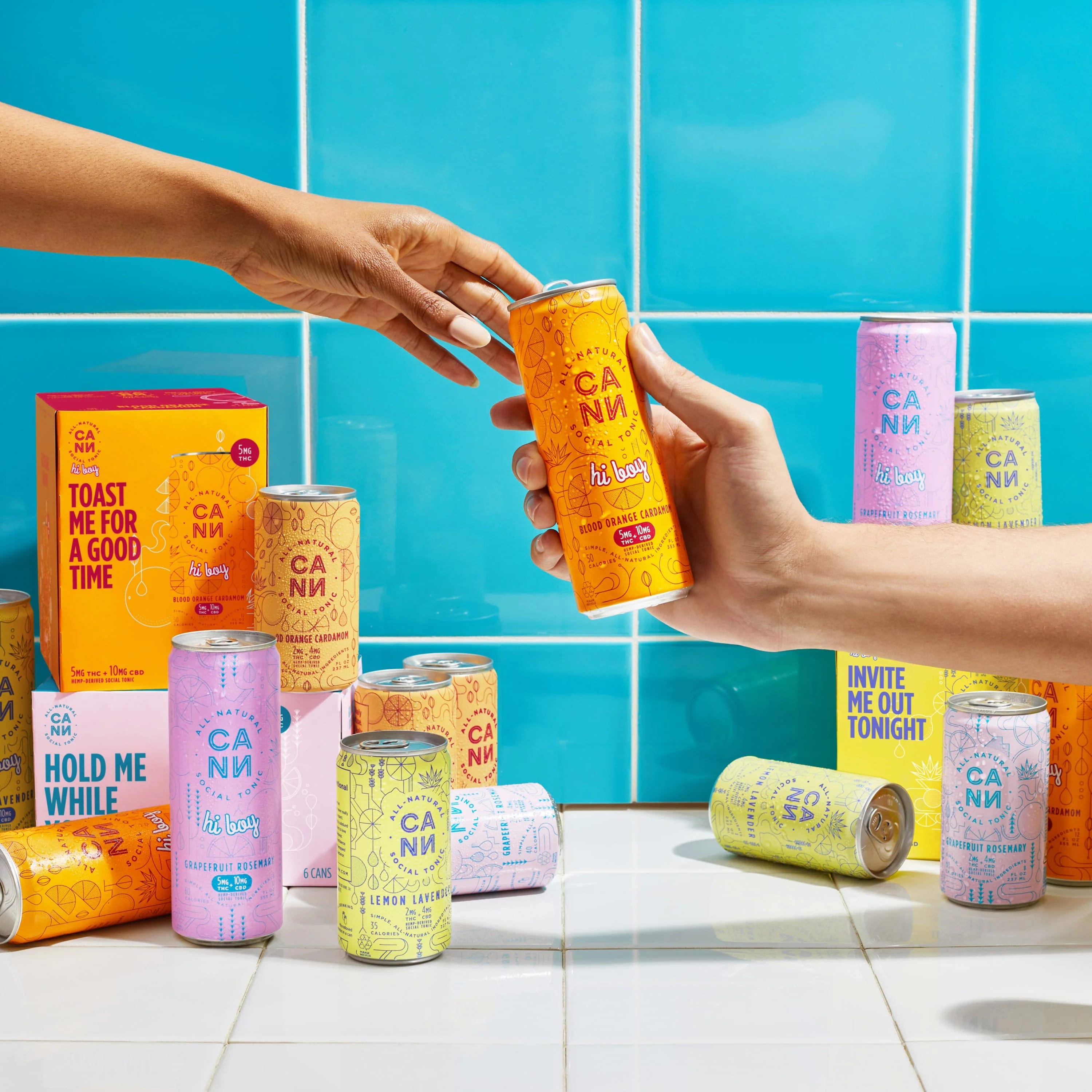
Cann launched its first non-infused line: Blood Orange Cardamom and Lemon Lavender, formulated with magnesium, electrolytes, L-Theanine, and passion flower. Online now, retail in August. Cann did nearly $40M in revenue in 2025.
The leading THC social tonic building for the occasion when THC isn’t invited. Cann 0MG targets the same sober-curious consumer with the same brand and flavor language, minus the intoxicant. At $40M in revenue, Cann has the brand equity to stretch across both sides of the functional relaxation aisle — and 0MG can go into every retailer that can’t legally stock the infused line. That’s the real play: the non-infused SKU unlocks mainstream distribution the THC products never could.
Misfits Launches Stuffed — Protein Candy Gets Indulgent

Misfits’ most indulgent range to date and its first with whey and collagen protein. Candy bar texture, 17g protein, 170 calories, zero added sugar. Salted Caramel, Peanut Butter, Chocolate Frosting. On their website and Amazon.
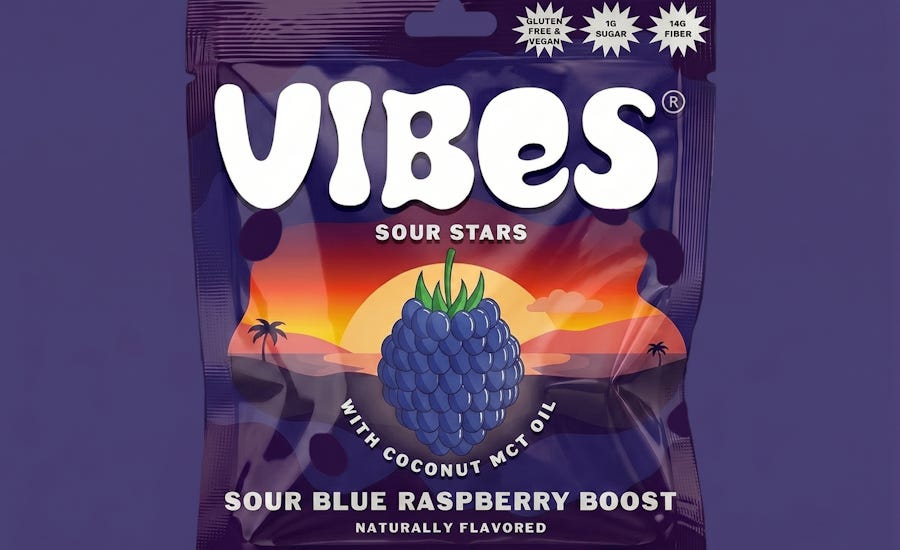
The protein candy race is about who tastes least like protein. Barebells launched candy last month. Vibes dropped Sour Blue Raspberry Boost this week. Misfits Stuffed enters with the candy-bar-first, protein-second positioning that’s winning everywhere — the treat that happens to have macros, not the supplement pretending to be a treat.
Backflip — Creator Cereal Goes Straight to Target
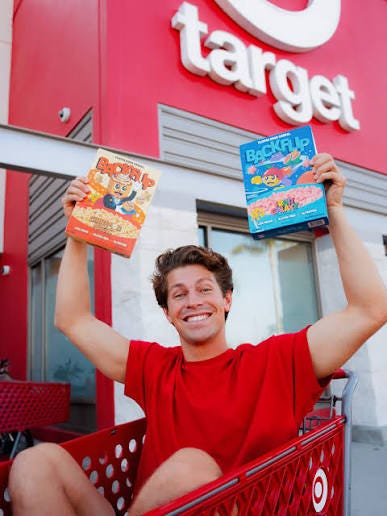
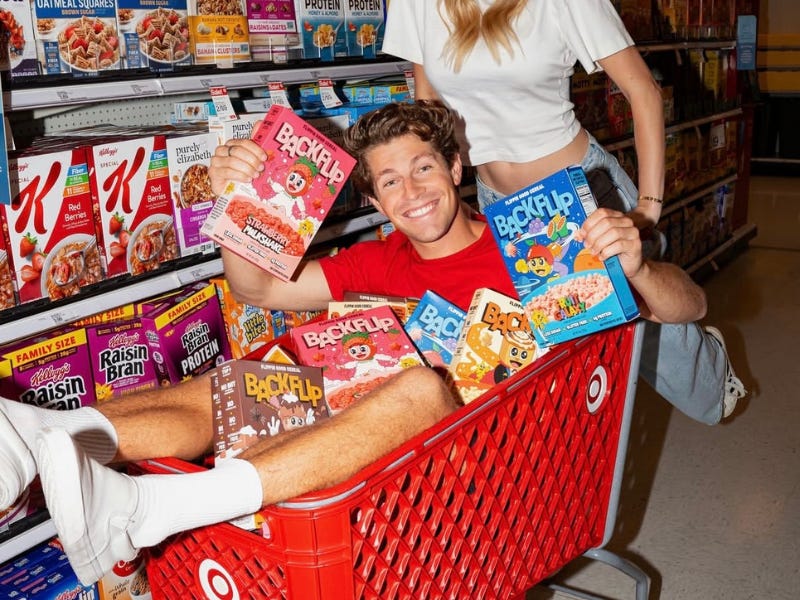
YouTuber Ben Azelart and serial entrepreneur Shaun Neff launched Backflip, a better-for-you cereal free from seed oils, synthetic dyes, glyphosate, and gluten. 6g protein per serving. Four flavors, debuting at Target.
Creator brands are going shelf-first now. No DTC phase, no waitlist, no drop model — straight to Target with four SKUs. Azelart brings 40M+ followers, and Neff brings the brand-building machine behind Neff Headwear and dozens of celebrity ventures. The Magic Spoon comparison is obvious, but the strategy is inverted: Magic Spoon spent years in DTC before retail. Backflip is betting the creator audience converts at shelf on day one.
Kreatures of Habit — DAILY BAR at Sprouts + RV Tour
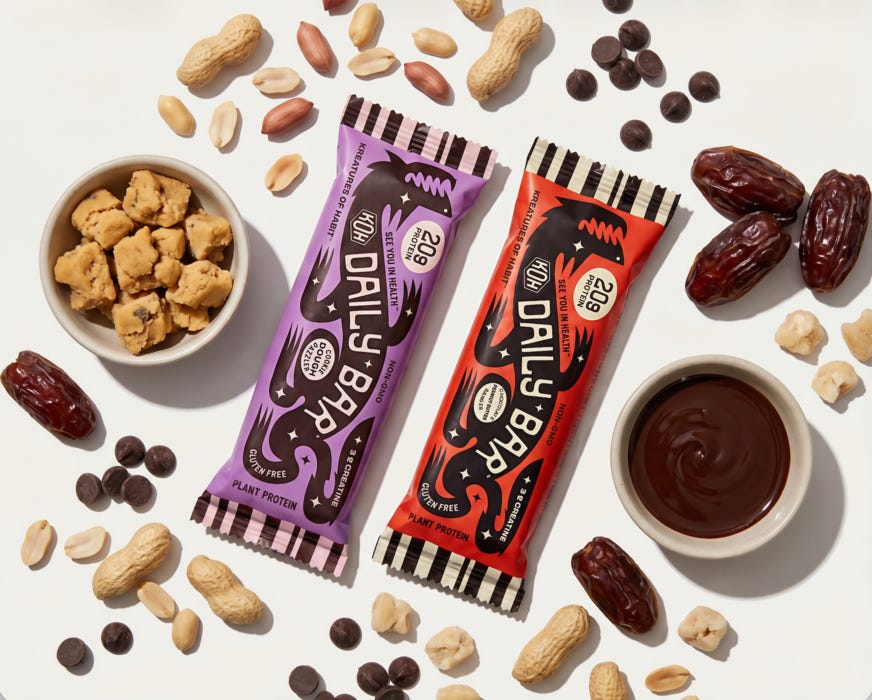
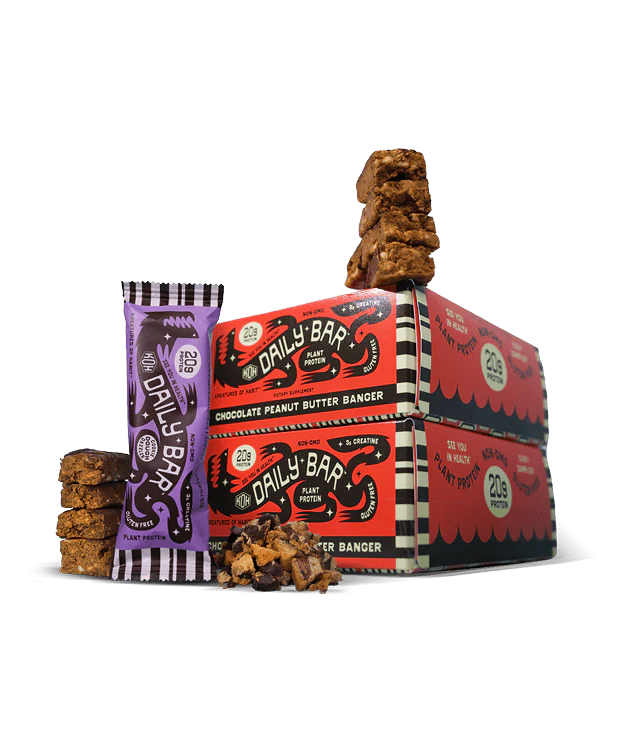
Michael Chernow’s brand launched its 20g protein, 3g creatine DAILY BAR nationwide at Sprouts — 9-10g fiber, no seed oils or sugar alcohols. Chernow is hitting the road in an RV through SoCal, Nevada, Arizona, Utah, and Colorado, partnering with run clubs and sampling at Sprouts stores.
The creatine industrial complex meets founder-led field marketing. Protein plus creatine in a bar is the format convergence we’ve tracked all year (JiMMYBAR!, Plainspeak, AG1 Pro). The RV tour with run clubs is the kind of community-first launch that money can’t shortcut — and exactly what a founder with Chernow’s restaurant-hospitality DNA knows how to execute.
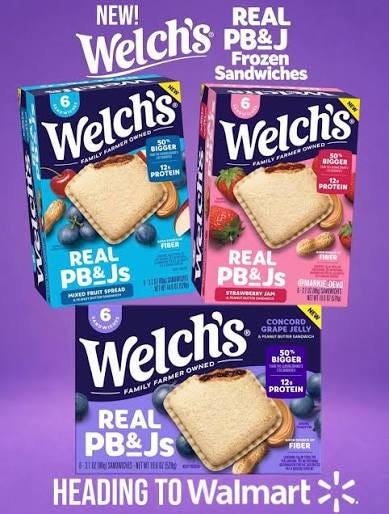
Welch’s Real PB&J Sandwich — 12g Protein at Walmart
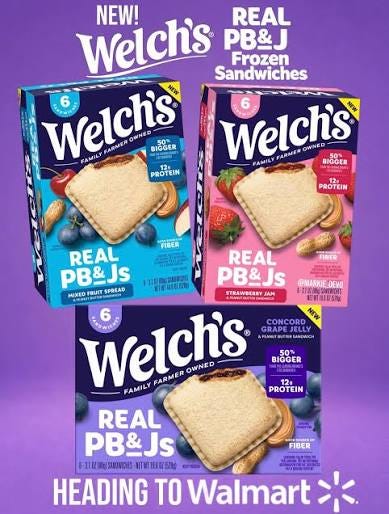
Welch’s launched frozen PB&J sandwiches in three flavors, each with 12g of protein, at Walmart. The grape jelly icon coming directly from Uncrustables — and Jams — with a protein-forward angle neither leads with. The frozen sandwich aisle that Jams cracked open is now a three-way fight.
Melting Forest — Glow Up at Sprouts
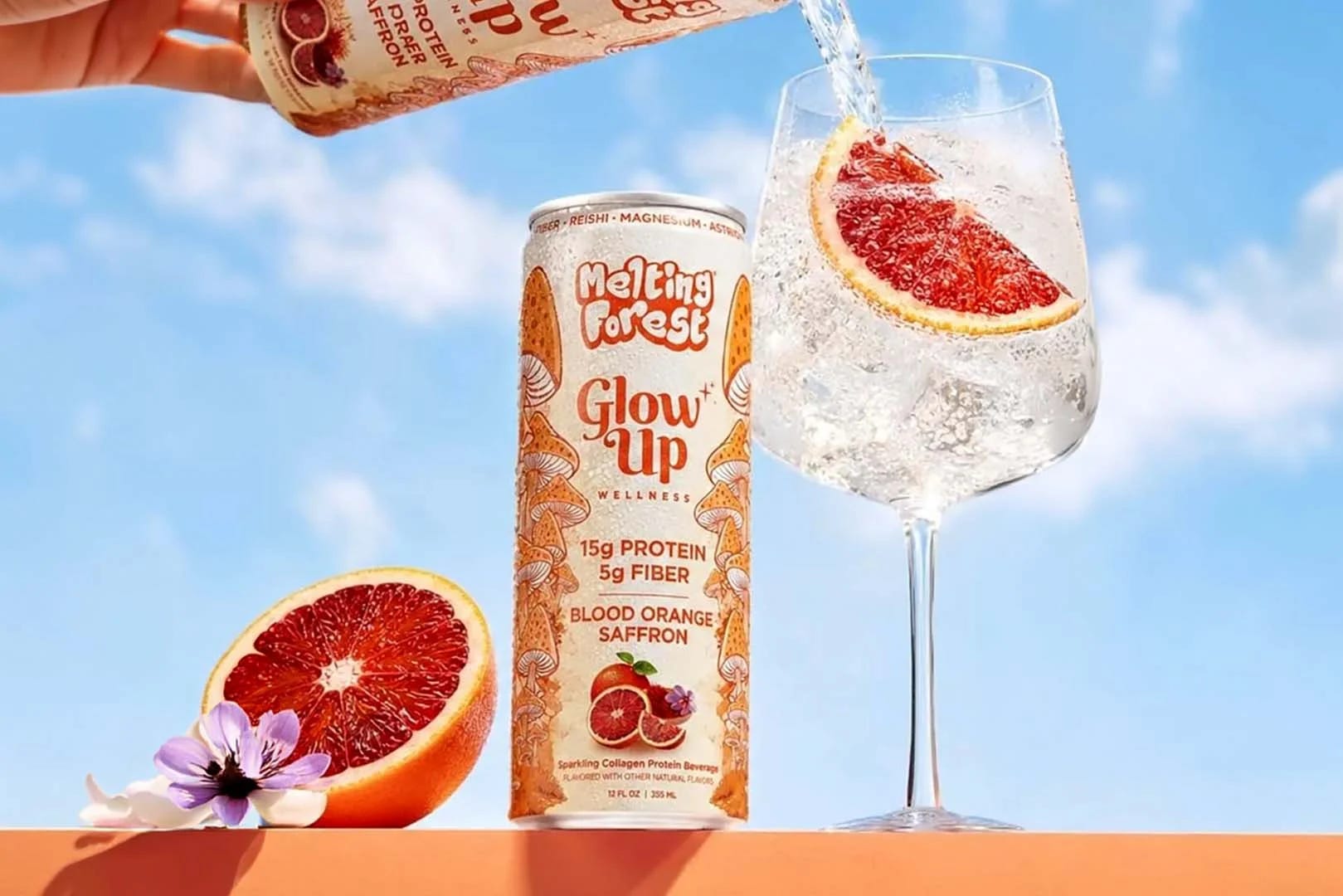
Sparkling protein line in the Sprouts Forager Set: 15g protein, 5g collagen, magnesium, mushrooms, and vitamins, available in four flavors (Hibiscus Berry, Apple Ginger, Blood Orange Saffron, Lemon Rosemary). Founded by functional beverage vet Sean McDonald in 2024. Sparkling protein with adaptogens is the OLIPOP-meets-Be LOVE convergence point.
More Launches Worth Watching
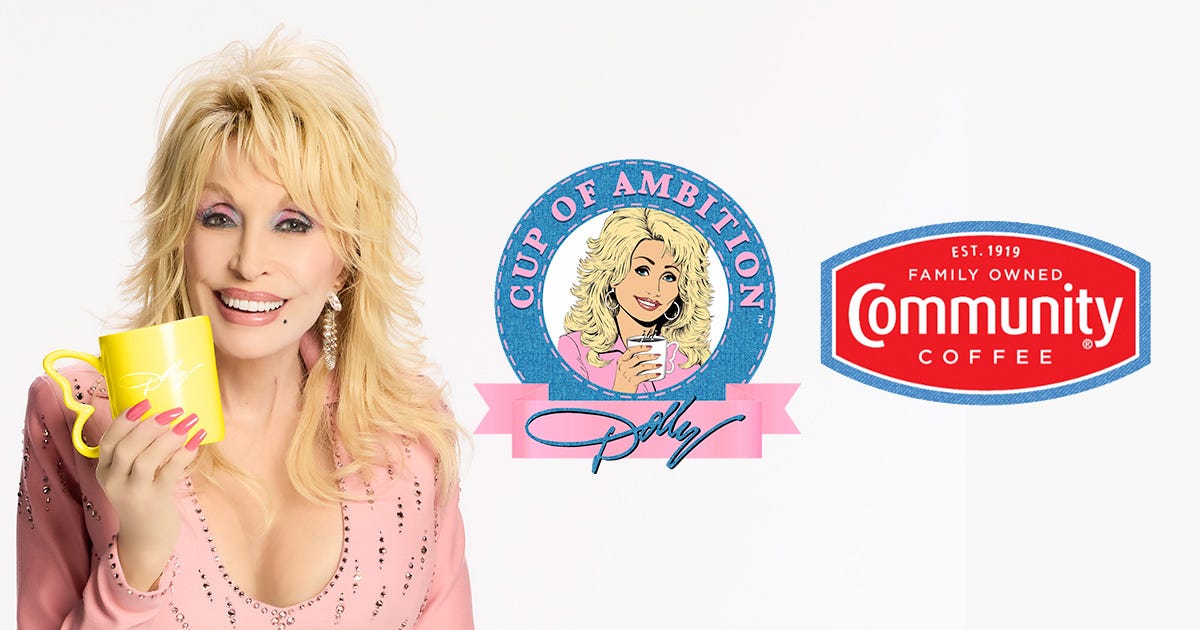
Dolly Parton “Cup of Ambition” — Dolly launches a coffee brand. The name alone earns the shelf space.
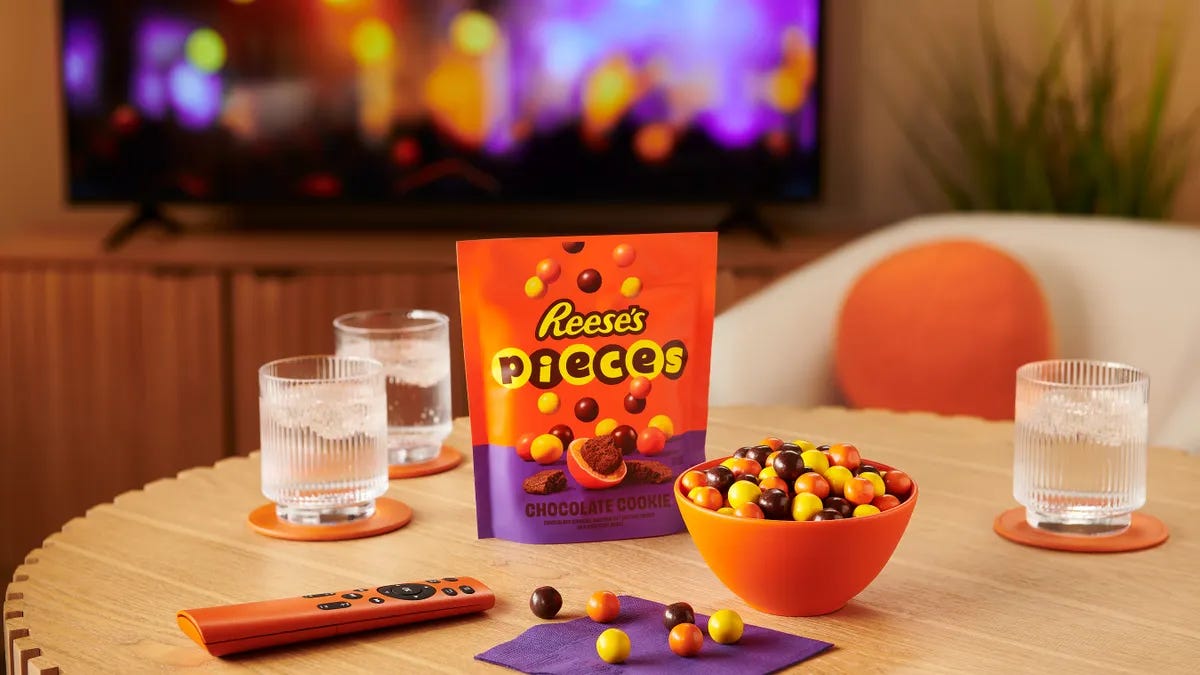
Reese’s Pieces’ first new flavor in 10 years. Legacy candy doesn’t need constant reinvention — it needs novelty rare enough to feel like an event.
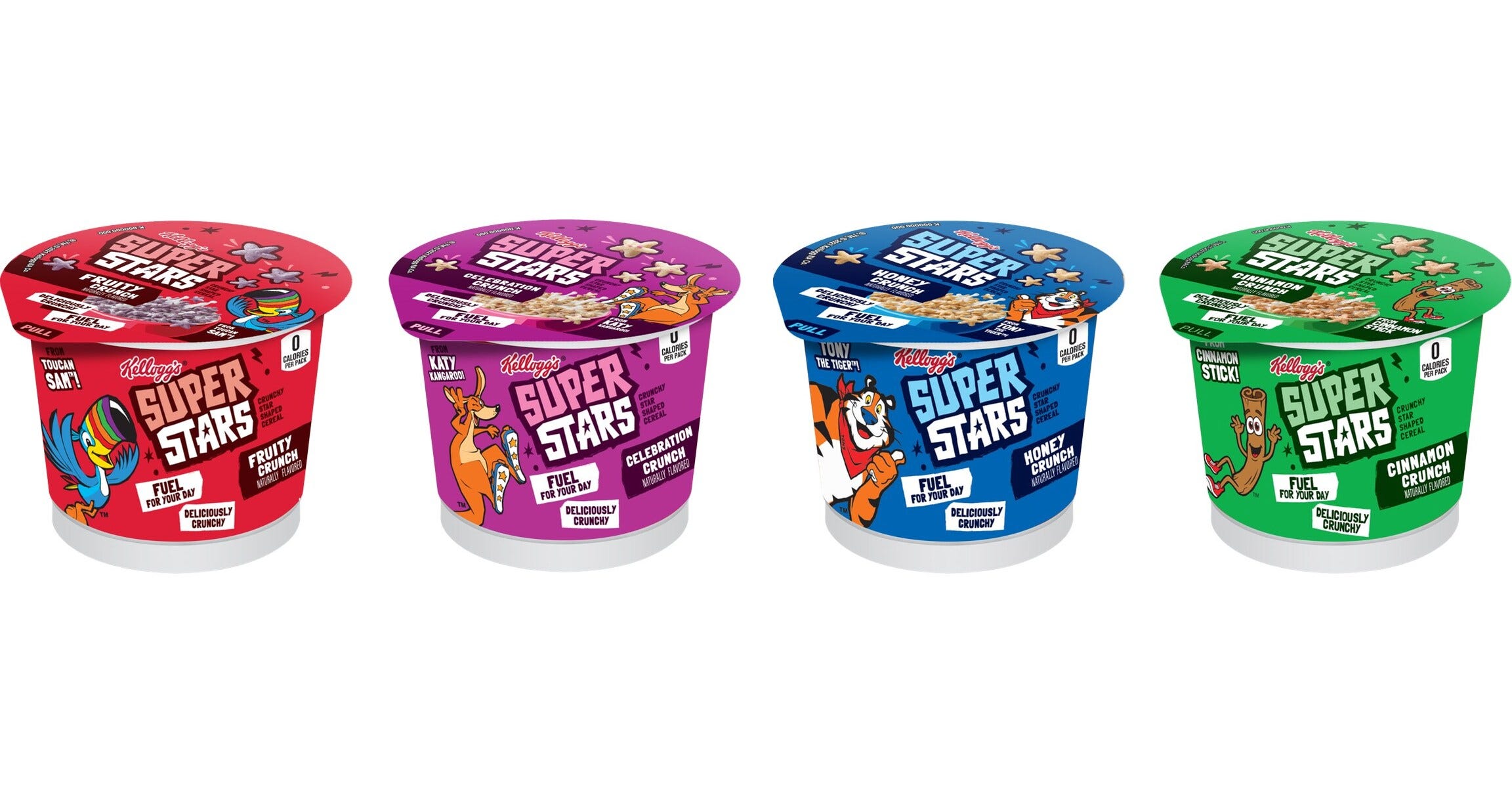
Kellogg Super Stars — a K-12 cereal built for schools. The cafeteria delivers institutional volume today and taste memory for the next decade.
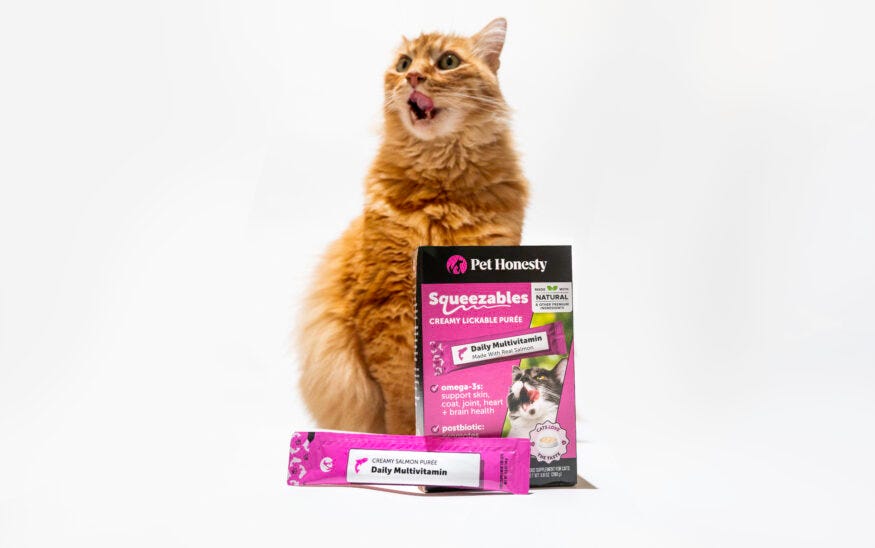
Pet Honesty Cat Squeezables — science-backed cat wellness in a lickable format cats already love. Format is the new formulation, even in pet.
Vibes Candy Sour Blue Raspberry Boost — nostalgia flavor, swapped ingredient panel.
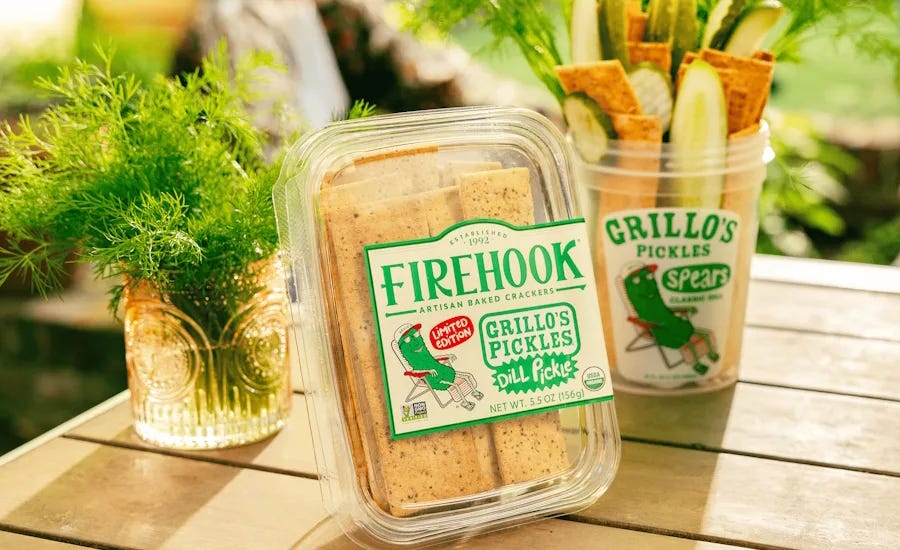
Firehook x Grillo’s Pickles — limited-edition pickle cracker rolling out nationally through July. The pickle industrial complex now includes crackers.
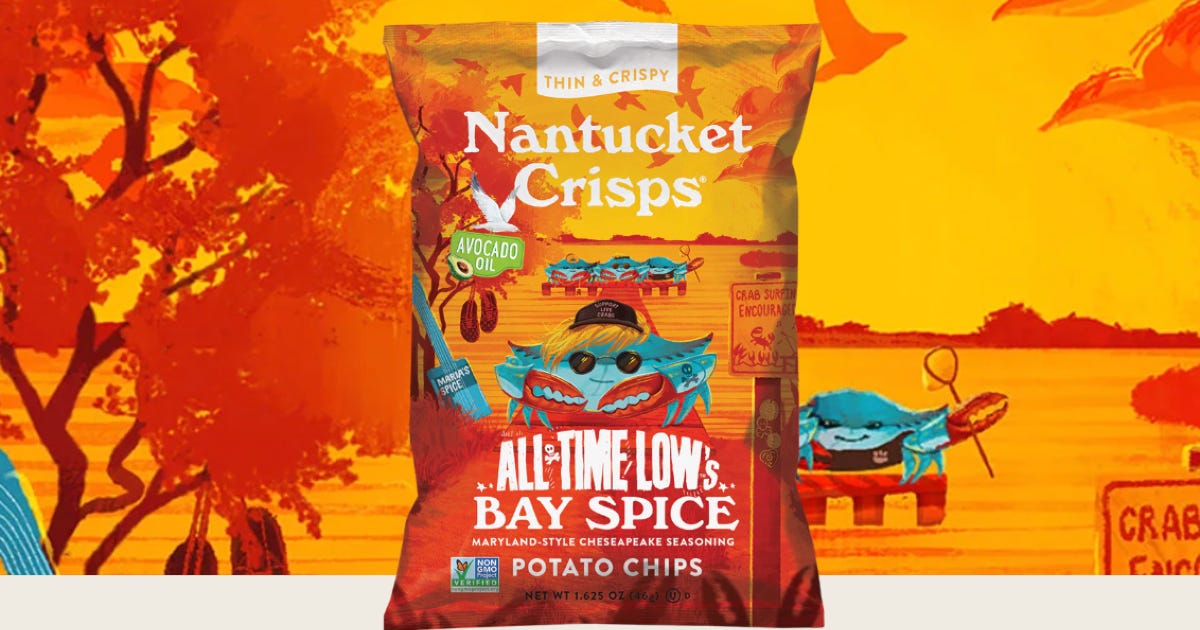
Nantucket Crisps x All Time Low — the chip brand is partnering with the rock band on a limited flavor.
Circadia launched a sleep platform that automatically optimizes room temperature. Rogue Fitness launched the Air Rhino lower-body air resistance trainer. Bala launched its first apparel collection. Evolv launched an oral hair growth peptide supplement.

📊 THE DATA DIGEST
Numbers that matter
Magic Mind: One Shot Every Three Seconds
Per co-founder and CEO William Hicks, Magic Mind now sells one shot every three seconds — roughly 28,800 shots a day — while pushing deeper into Target, Fresh Thyme, and New Seasons. The productivity shot brand turning subscription velocity into retail expansion.
Cann: ~$40M in 2025 Revenue
The THC social tonic leader’s revenue disclosure alongside the 0MG launch. The infused category’s most established brand is now big enough to fund its own hedge against the category’s regulatory risk.
Reformed: $70M Revenue, Profitable, Founded 2024
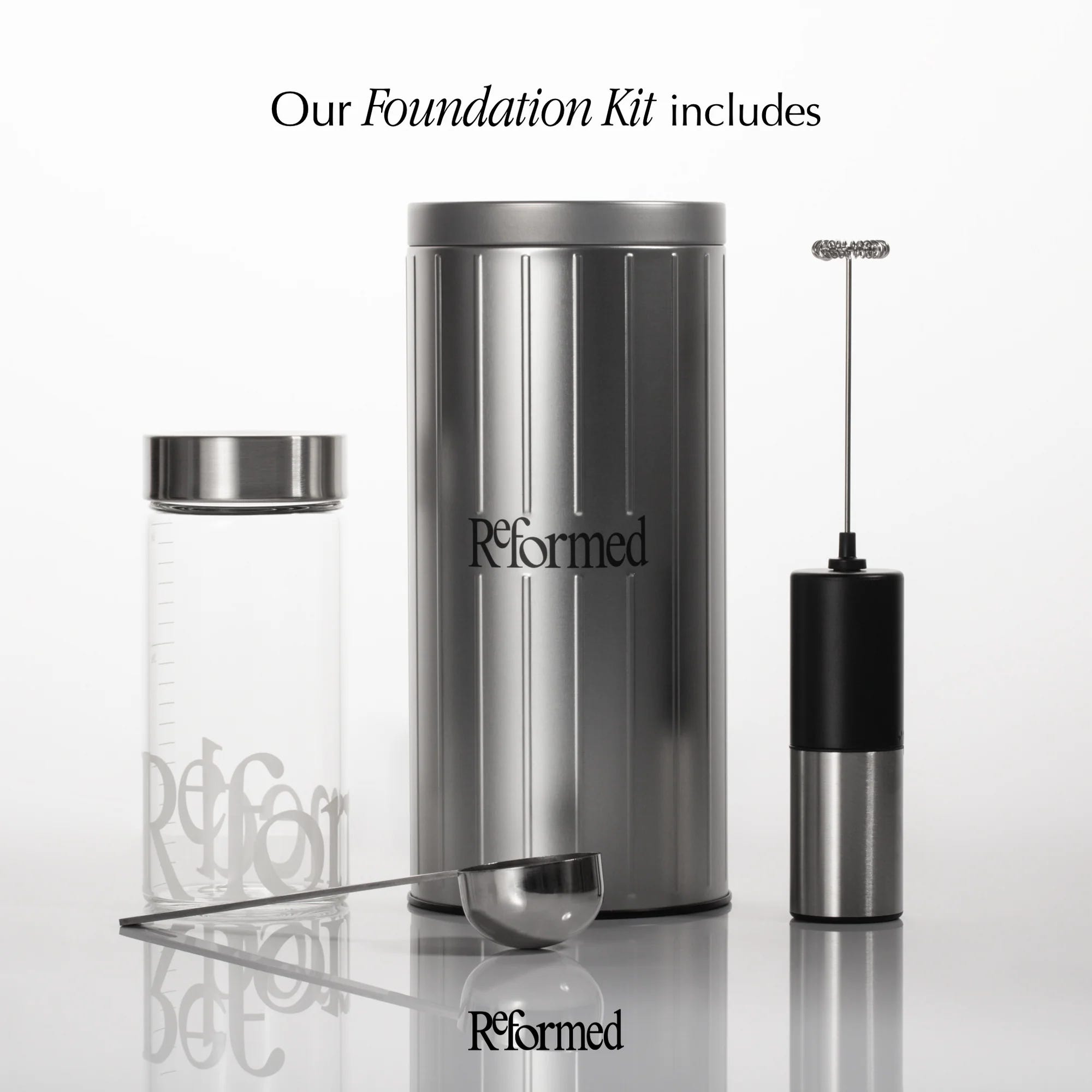
The fastest profitable scale story in functional beverage. Two years from founding to $70M with positive unit economics.
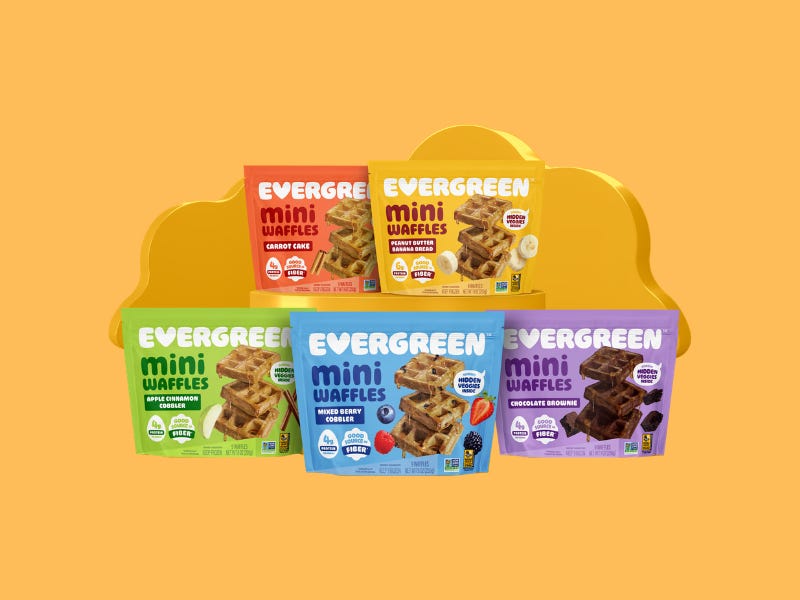
Evergreen: Top-Selling Frozen Waffle in Natural, Double-Digit Growth
Top seller across the two largest natural retailers with double-digit growth in the latest 12 weeks — and now former Poppi CMO Andy Judd on the board.
🏪 DISTRIBUTION DOMINATION
Everyone’s everywhere
HARRIS TEETER
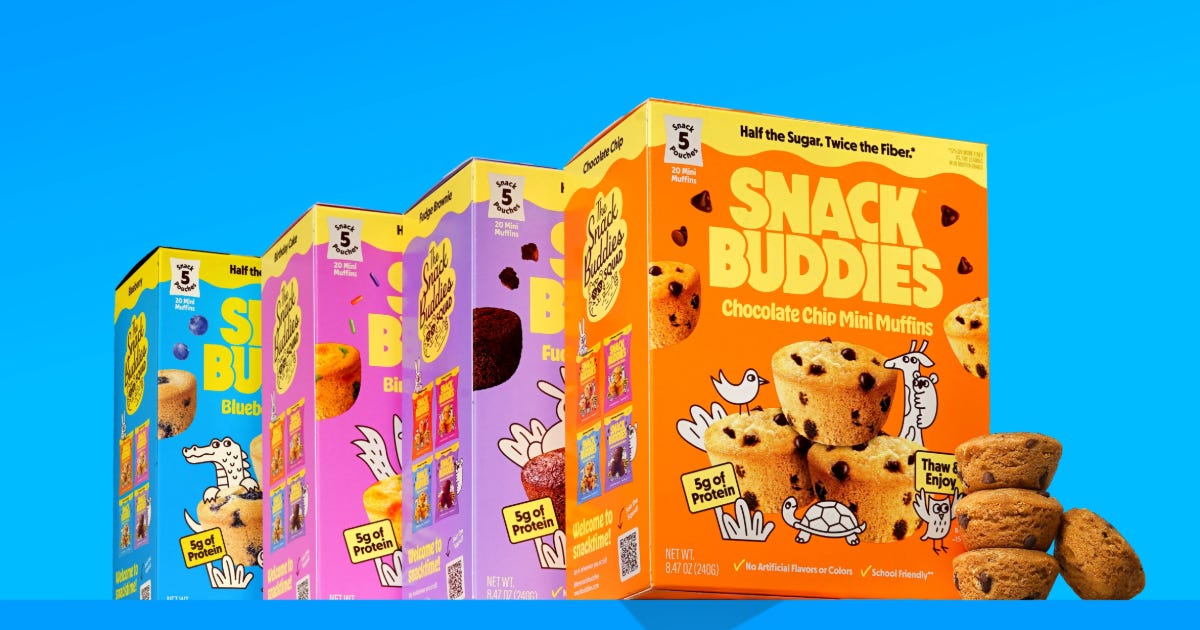
Snack Buddies made its retail debut storewide. The Yasso founders’ mini muffin brand is picking the Southeast grocer for launch — freezer aisle placement, storewide from day one. Serial founders don’t do regional tests.
SPROUTS
Kreatures of Habit DAILY BAR nationwide. Melting Forest Glow Up line in the Forager Set. The natural channel continues to function as the protein and functional launchpad.
TARGET
Backflip debuted with four flavors. Magic Mind is expanding deeper. Target remains the shelf where creator brands and functional brands prove mainstream demand.
WALMART
Welch’s Real PB&J Sandwich line launched. The Uncrustables challenger fight now has a third entrant at America's largest retailer.
REYES BEVERAGE GROUP
Cazcanes across Texas, Colorado, Arizona, Oklahoma, Louisiana, and Hawaii starting August 1st. The route network is the strategy.
FRESH THYME + NEW SEASONS
Magic Mind is expanding across both natural chains alongside the Target push.
WAKEFERN
Wakefern updated its own-brand food and beverage portfolio around evolving customer preferences. Private label is becoming a retailer-owned brand house with guaranteed shelf space. This pairs directly with the Kroger-Giant Eagle story — retailers aren’t just consolidating doors; they’re building brand portfolios that compete with the national brands paying for placement. Every emerging brand’s shelf competition now includes the retailer itself. And the retailer never loses the reset.
👋 PEOPLE MOVES
Andy Judd, former Poppi CMO, joins Evergreen’s Board of Directors. Before Poppi, Judd drove growth at Laird Superfood, Yasso, and ONE Brands. The frozen waffle brand that’s already #1 in natural, adding the marketing mind behind Poppi’s $2B exit, is a scaling signal. Backed by Melitas Ventures and Terpsi Capital.
Jeff Kozak, former WhistlePig CEO (scaled $1M to $100M+), is now President of Cazcanes — and his first major move is the Reyes distribution deal. Operator first, distribution second, volume third.
Michael Chernow is taking Kreatures of Habit on the road personally — a multi-state RV tour through five states. Founder-led field marketing at its most literal.
🔥 THE HOT TAKE
My unfiltered opinion on this week’s madness
The route is the strategy. Every major story this week proves it from a different angle.
Kroger paid $1.65 billion for Giant Eagle. Not for the brand. Not for the private label. For the routes — hundreds of stores, millions of shoppers, and a retail media machine that gets bigger with every door. After the Albertsons deal died, Kroger didn’t abandon consolidation. It just picked a target small enough to close.
Cazcanes signed Reyes across six states — and it did so by hiring the WhistlePig operator first, because Jeff Kozak knew the route network is what turns a premium tequila brand into a business. Varun Beverages, PepsiCo’s bottler, spent $32M buying a Kenyan beverage company — not for the products, for the routes. Distribution grows by buying routes, not building them.
Monster rented the Big 12 — jersey patches, field logos, the first energy drink deal of its kind in college sports. That’s a route too: a route to attention in the exact geography where energy drinks over-index, defended against Celsius, Alani, and Bloom’s 646.5% surge.
And for emerging brands, the Kroger-Giant Eagle deal is the one that changes your math. One less independent buyer in America. One less regional proving ground. The consolidation isn’t just happening to brands anymore — it’s happening to the shelf itself. Fewer doors controlled by fewer companies means every pitch carries higher stakes and every relationship compounds harder.
The winners this week didn’t wait. Reformed got profitable before raising. Cann built the non-infused hedge before regulation forced it. Snack Buddies went storewide on its debut. Magic Mind converted subscription velocity into retail doors.
Own your route or rent it — but know which one you’re doing. The brands that control how the product reaches the shopper are pulling away from the brands that just make a good product and hope.
🎙️ COMING TUESDAY
Unpackaged Goods Episode
Breaking down Kroger’s $1.65B Giant Eagle deal and what one less independent grocer means for every emerging brand’s pitch math. Reformed hitting $70M profitably in two years. Country Life’s stated platform playbook. Cazcanes is activating the WhistlePig playbook with Reyes. Monster renting college football. And why the route — not the product — is deciding who wins.
🥫 ONE MORE THING...
Before you close this tab
Reformed was founded in 2024. It’s now at $70M in revenue. Profitably.
No blitzscaling. No burn. No “we’ll figure out margins later.” Two guys named Neil built a functional coffee brand to $70M in two years while making money, and then raised $22M from a position of strength.
The growth-at-all-costs era produced brands that needed the next round to survive. The proof era is producing brands that raise because they want to, not because they have to.
Be the brand that raises because it wants to.
Until next Sunday,
Jonathan Deeter
Your CPG-Obsessed Friend
P.S. — Firehook launched a pickle cracker with Grillo’s. The pickle industrial complex now officially spans: lip balm, hydration packs, beer, shots, hot sauce butter, hop water lemonade, and crackers. I said Phase 4 was pickle protein powder. I’d like to formally revise my prediction: pickle protein powder AND a pickle-flavored sleep aid by Q1 2027. The pickle does not sleep. But soon it will help you.
Comment NEWSLETTER to get The Deeter Digest delivered straight to your inbox every Monday 🥣
TikTok | Instagram | Newsletter | Pickle Advisors | YouTube
This newsletter is finished with Trophy Wife Finishing Salts - elevating every bite since 2025