


Issue #19 | March 9, 2026
Proudly seasoned by Trophy Wife - The Official Finishing Salt of The Deeter Digest. Because you are the prize, and so is this salt.
🥄 FIRST BITE
The appetizer before we dive in
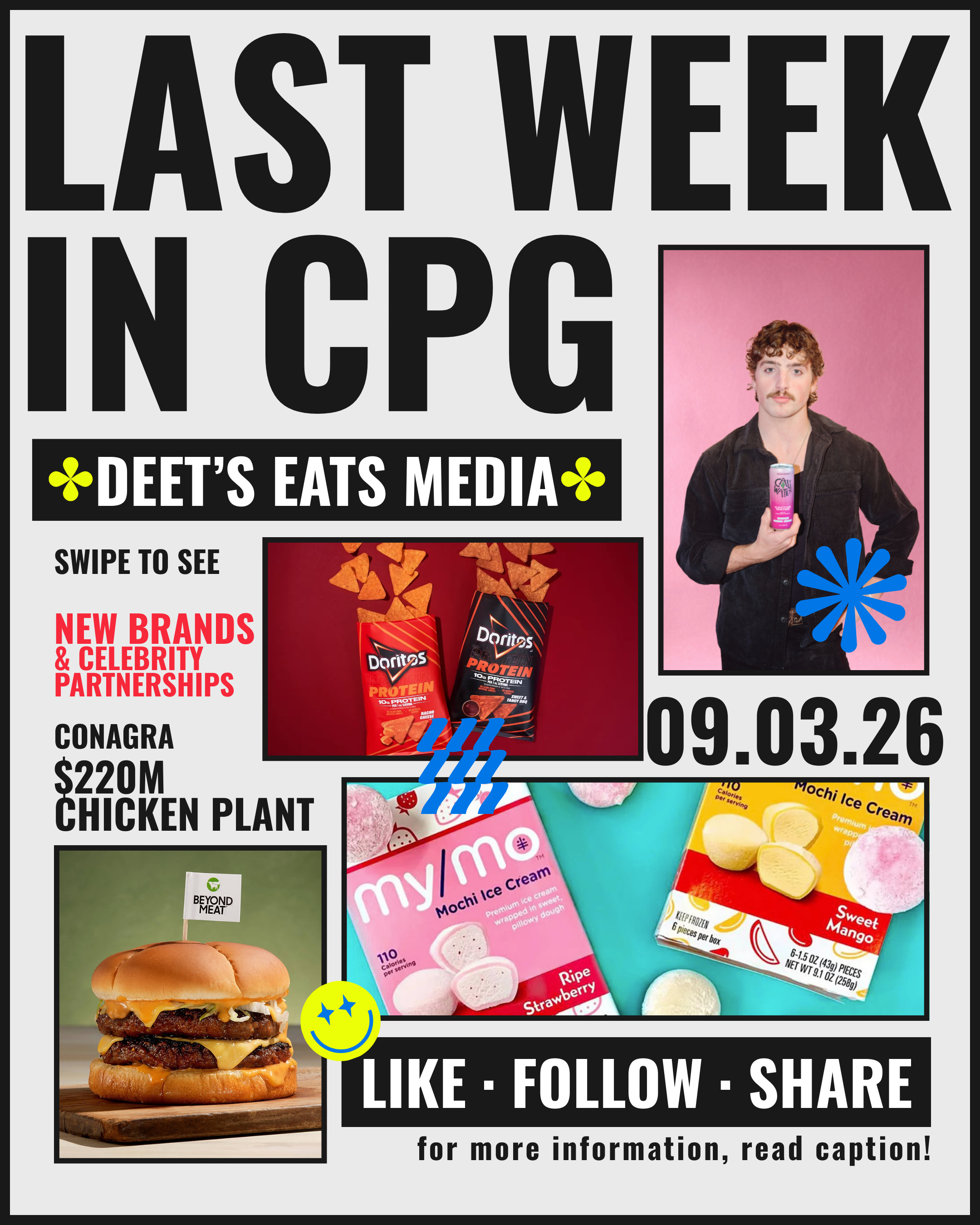
Welcome back. This week, Beyond Meat decided the word “meat” was the problem all along — and renamed the entire company. Bain & Company confirmed what anyone watching grocery shelves already knew: insurgent brands are eating Big Food alive, accounting for 25% of all food growth in 2025. Target banned synthetic dyes from its entire cereal aisle before the government even had the chance.
And Expo West descended on Anaheim with its annual parade of what’s coming to shelves near you — protein chips, clean-label everything, and a Japanese candy company that looked at the American snacking landscape and quietly acquired the largest mochi ice cream brand in the country.
The theme this week is forced evolution. The brands that refuse to move are getting passed. Retailers are outrunning the FDA on clean ingredients. And the insurgents are winning precisely because incumbents spent five years waiting for growth to come back on its own. It didn’t. Let’s dig in.
🍊 THE MAIN COURSE
This week’s biggest CPG moves
Beyond Drops “Meat” From Its Name — And Reveals What It’s Actually Chasing
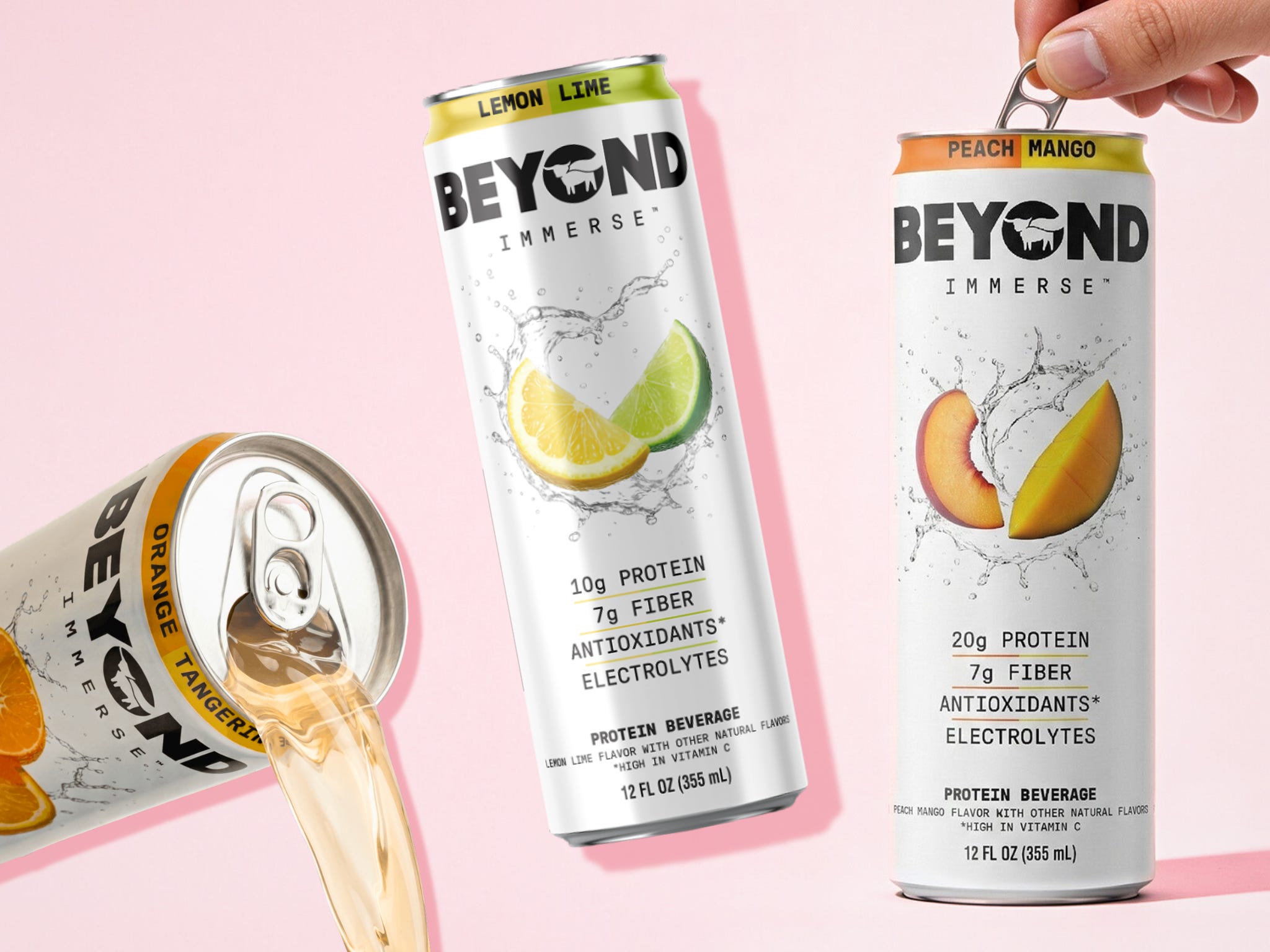
The biggest brand pivot of the week came from a company that hasn’t had a good few years. Beyond Meat officially changed its name to Beyond The Plant Protein Co. The trigger: the launch of Beyond Immerse, a sparkling protein drink with plant protein, fiber, antioxidants, and electrolytes that Ethan Brown is calling the company’s “next chapter.” Four new flavors — cherry berry, strawberry lemonade, piña colada, and cucumber grapefruit — dropped this week.
The context matters. Beyond’s retail revenue was down 18.4% year-over-year as of Q3 2025. Net revenue fell to $70.2 million, down 13.3%. The plant-based meat category, which Beyond helped create, has cratered under consumer fatigue and a brutal price-versus-value reality. Beyond insists it remains “committed to category leadership in plant-based meat” — but the rebrand says something louder than the press release.
The strategic bet is real: protein drinks grew 122% between 2020 and 2025. Moving into functional beverages is a defensible play. But whether Beyond has the brand permission to compete alongside Celsius, Fairlife, and a hundred well-funded challengers in a beverage aisle is a very different question than whether they can make a good-tasting plant burger. “Pioneer of plant-based meat” and “your go-to protein drink” are not the same consumer relationship. Ethan Brown has a product question and a positioning question to answer. The name change doesn’t solve either — but at least it signals he’s finally asking them.
Bain Just Confirmed It: Challenger Brands Drove 25% of All Food Growth in 2025
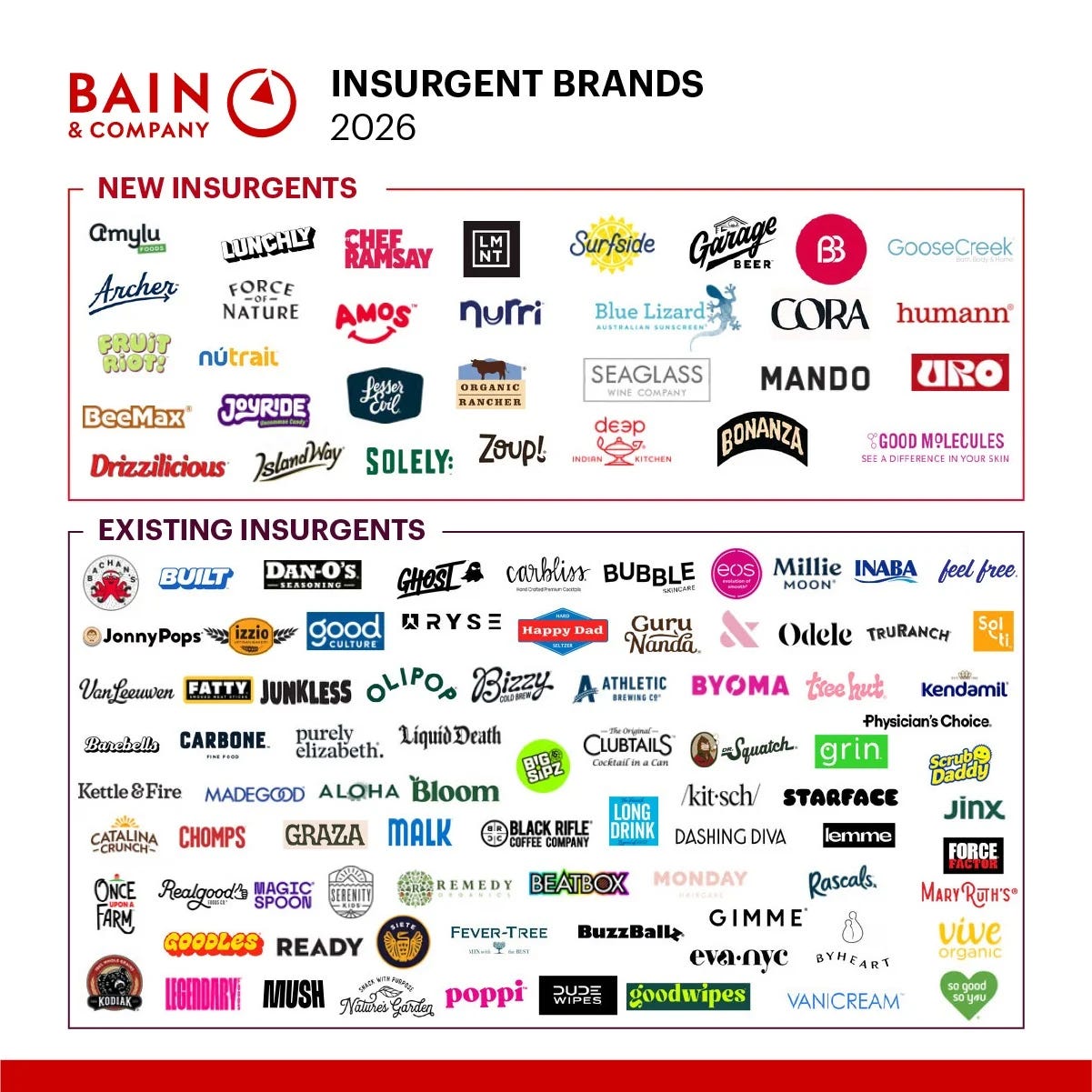
Bain & Company dropped its 10th Annual Insurgent Brands report this week, and the numbers validate everything you already suspected. Brands growing at least 10 times faster than their category average — while staying independent or being recently acquired — drove a full quarter of all food sector growth in 2025. In non-alcoholic beverages alone, insurgents accounted for 13% of growth.
The new names on the 2026 list: Archer Meat Snacks (which just landed a $100M JPMorgan credit line) and LesserEvil (acquired by Hershey in November). Returning insurgents include Chomps, Kodiak, Carbone sauces, Conagra’s Fatty meat sticks, and PepsiCo’s Siete. The formula: 44% of insurgent brands carry natural or organic claims, nearly 40% tout high protein, and 25% emphasize elevated or global flavors.
What Bain’s data confirms is that this isn’t a cycle — it’s structural. Big CPG is now acquiring these brands specifically because it cannot replicate their cultural relevance internally. LesserEvil to Hershey. Siete to PepsiCo. Bachan’s to Marzetti. The exit path for challenger brands has never been clearer or more validated. Build the audience, own a position, let the distribution machine find you. The founders who understand this and execute against it are building real equity.
Target Bans Synthetic Colors From Cereal. By May. Without Being Asked.
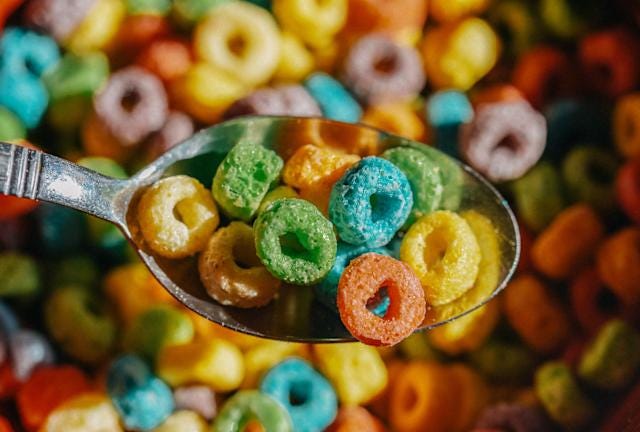
Target announced it will stop carrying any cereal containing certified synthetic colors by the end of May 2026. The company says it worked directly with national brands and private-label suppliers to reformulate. Walmart and Save A Lot have made similar moves in recent months. General Mills, WK Kellogg, and Nestlé had already committed to removing artificial colors from their products.
This is bigger than it looks. Retailers moving in formation on ingredient standards — without FDA mandating it — is a new kind of market pressure. For any brand on Target’s cereal shelf, this is no longer a regulatory issue. It’s a retail compliance deadline. Synthetic dyes in your formula by May? You lose the placement.
The MAHA movement and RFK Jr.’s aggressive public positioning on food ingredients is clearly accelerating the timeline for these decisions. Whatever you think about the politics, the downstream effect on formulation timelines across every food brand is real and immediate. Companies that were planning a 2027 reformulation are now having a very different conversation with their food scientists. The window just got a lot smaller — and the brands already formulating without artificial dyes should be calling their Target buyers today.
Morinaga (Hi-Chew) Acquires My/Mochi — Japanese Snacking Moves Into Your Freezer
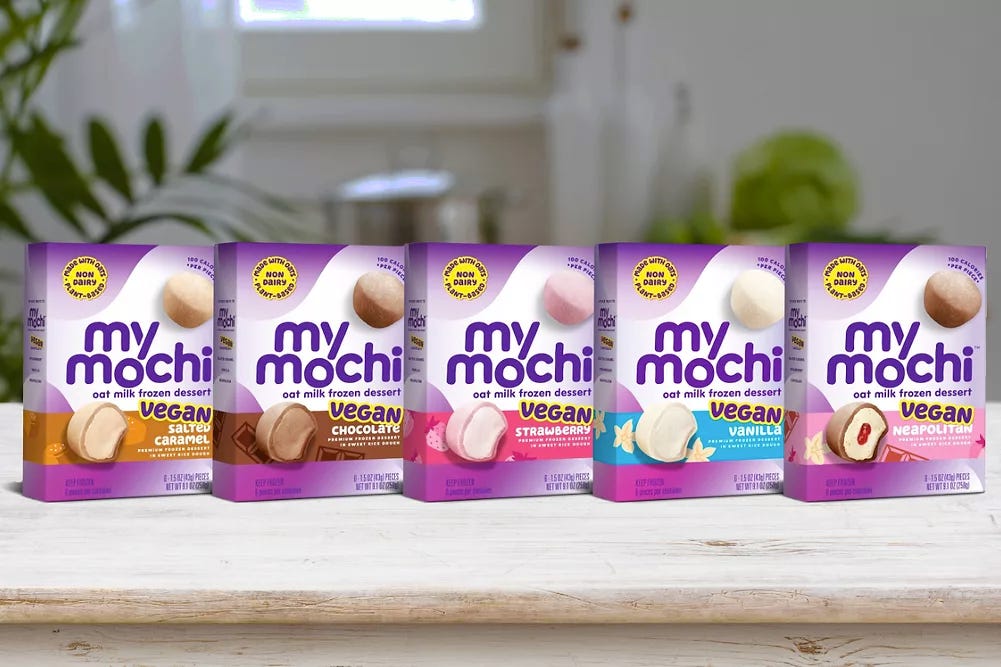
Tokyo-based Morinaga & Co. — the company behind Hi-Chew — reached an agreement to acquire My/Mochi, the largest mochi ice cream brand in the United States. Deal size undisclosed. My/Mochi was generating approximately $80 million in annual sales as of January 2026 per SPINS data.
Morinaga has been systematically building American snacking infrastructure, targeting Gen Z and Gen Alpha consumers drawn to Asian-inspired flavors and multi-textural eating experiences. The company is already building its second U.S. factory in North Carolina, set to open in 2027. My/Mochi adds a fast-growing frozen treats brand to a portfolio that already has strong candy presence and brand recognition in the U.S. market.
The broader trend this validates: Asian food is no longer a specialty aisle bet. Sales of products in the “Asian/ethnic aisle” grew nearly four times faster than overall grocery in 2024, according to Circana. When a Japanese confectionery company acquires the largest mochi ice cream brand in America, it’s not a cultural novelty — it’s a calculated infrastructure play. Morinaga sees what Gen Z is eating, has the manufacturing scale to grow My/Mochi past $80M, and is building the domestic production capacity to do it efficiently. This is how global incumbents enter American snacking without starting from scratch.
💰 THE FUNDING FRENZY
Big checks being written
Caliwater Gets Serious — Benson Boone In, Blair Owens as CEO
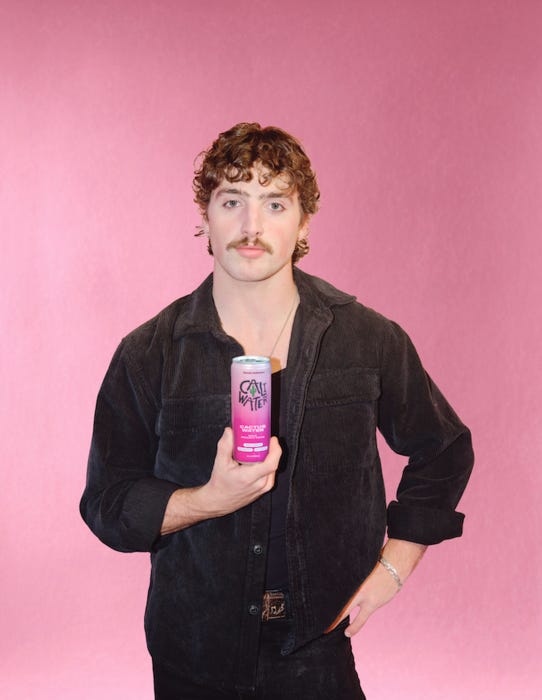
Caliwater, the prickly pear cactus water brand co-founded by Oliver Trevna and Vanessa Hudgens, added Grammy-nominated musician Benson Boone as an investor and brand partner this week at Expo West. Simultaneously — and more importantly — the brand announced its first-ever CEO: Blair Owens, former chief executive of Hint Water and a veteran of both Coca-Cola and Monster Beverage.
The Owens hire is the signal that matters here. Hint is one of the most operationally disciplined better-for-you beverage brands in the country. Owens knows how to scale a functional water brand with distribution rigor. Benson Boone brings a 22-year-old Gen Z fanbase that none of the brand’s existing celebrity investors (Glen Powell, Gerard Butler, Cody Bellinger) were reaching. But celebrity is trial; operations are repeat purchase. Caliwater finally has both.
The cactus water category is getting crowded — Pricklee has been fundraising too — but Caliwater’s combination of celebrity distribution credibility and now-serious operational leadership puts them in pole position. Owens is eyeing Canada as the next expansion. First mover in functional hydration wins the category. Hint proved it in flavored water. The race is on.
Conagra Commits $220M to Protein Manufacturing
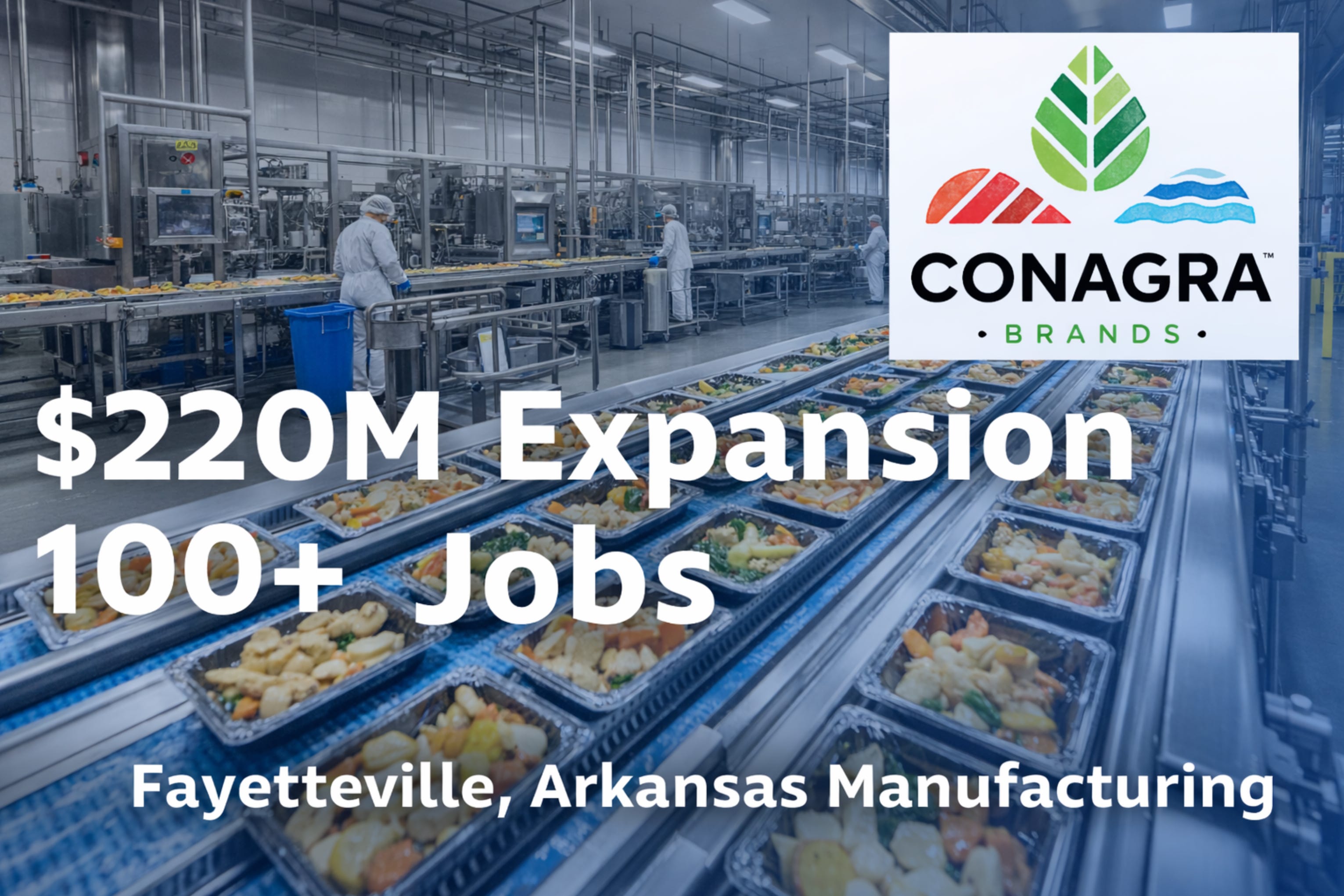
Conagra Brands announced a $220 million, five-year investment to expand its chicken production plant in Fayetteville, Arkansas. The facility currently produces about 15 million cases per year for brands including Hungry-Man, Banquet, Healthy Choice, Gardein, and Evol. Construction begins later this year. Over 100 new jobs expected.
This isn’t venture capital hype — it’s a $220M bet on infrastructure because the data supports it. High-protein frozen food volume grew 11% year-over-year with particular gains in chicken and turkey, per Conagra’s own Future of Frozen report. The frozen aisle is the leading retail channel for high-protein foods at $12 billion annually. When a company of Conagra’s scale makes a five-year capital commitment like this, they’ve run the analysis five times and they’re confident.
The deeper story: frozen food’s rehabilitation is complete. What was once considered a convenience compromise is now the highest-growth protein channel in grocery. Every emerging protein brand selling DTC should be watching what Conagra is building in Arkansas. That’s the competitive infrastructure they’ll eventually be going up against.
🆕 PRODUCT LAUNCHES & INNOVATION
This week’s innovation circus — Expo West edition
Doritos Goes Protein. PepsiCo Makes Its Move.
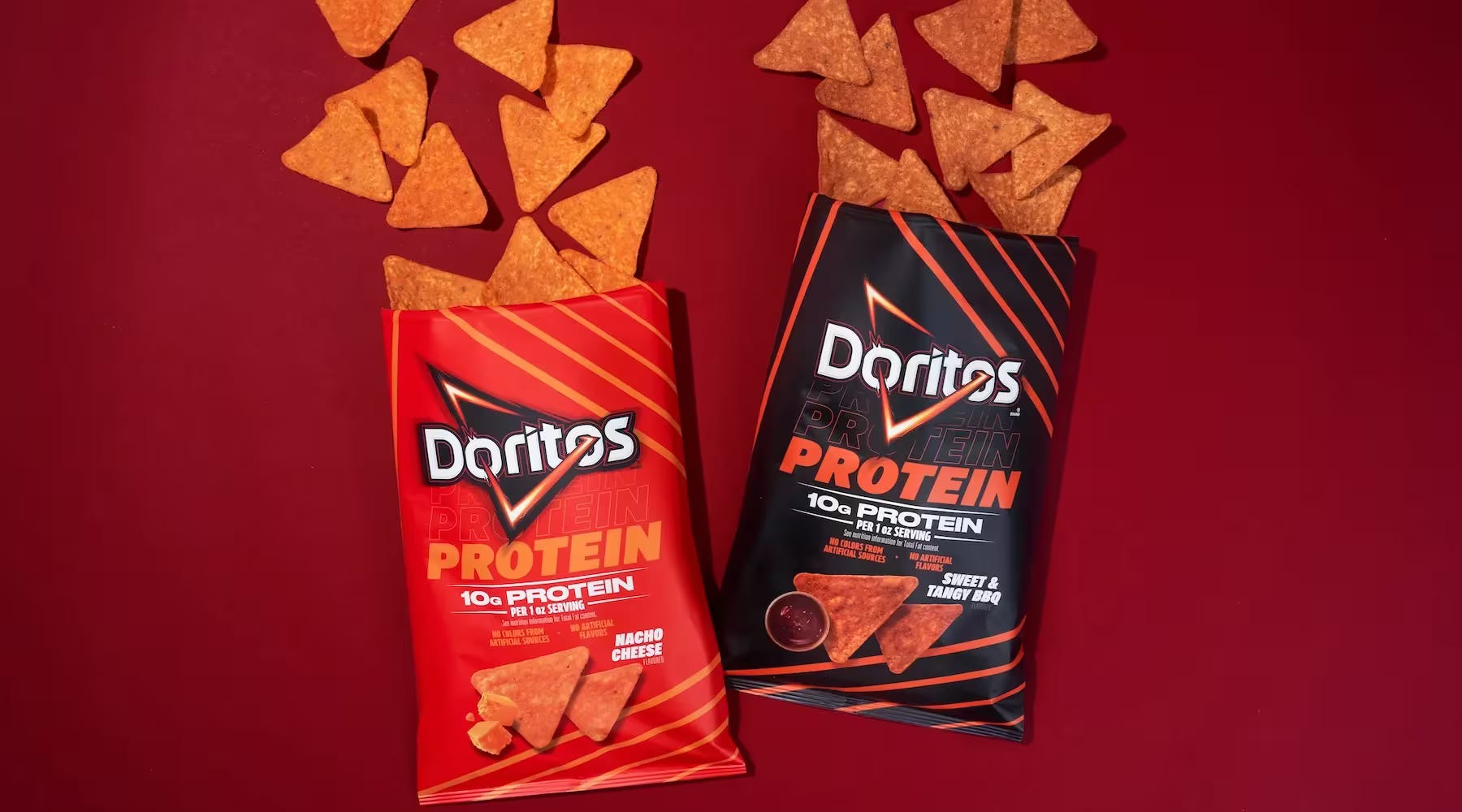
PepsiCo unveiled Doritos Protein at Expo West this week — 10 grams of protein per one-ounce serving in Nacho Cheese and Sweet & Tangy BBQ. A single-serve bag with 17 grams hits later in 2026. Simultaneously, PepsiCo announced a Jack Link’s collab for Doritos-flavored meat sticks and jerky.
When Doritos launches a protein SKU, the protein macro is no longer an insurgent play — it’s a mainstream retail planogram. PepsiCo is citing that 86% of Americans are actively adding protein to their diet and seven in ten want protein in salty snacks. That data isn’t going to a venture pitch. It’s going to grocery buyers across the country as a shelf space argument. Every emerging protein snack brand now has a Doritos to compete with.
Jack Link’s Goes Clean-Label With Just Three Ingredients
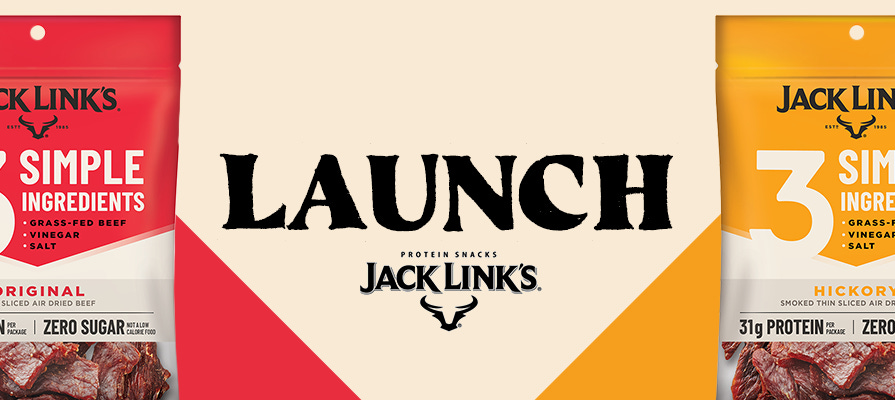
Separate from the Doritos collab, Jack Link’s debuted a clean-label line of sticks, steaks, and air-dried beef slices — three ingredients, displayed prominently on the pack. The company is explicitly calling out competitors carrying “a list longer than a store receipt.” When the largest meat snack brand in America goes clean-label and markets it aggressively, the category standard just shifted overnight.
More Launches Worth Watching
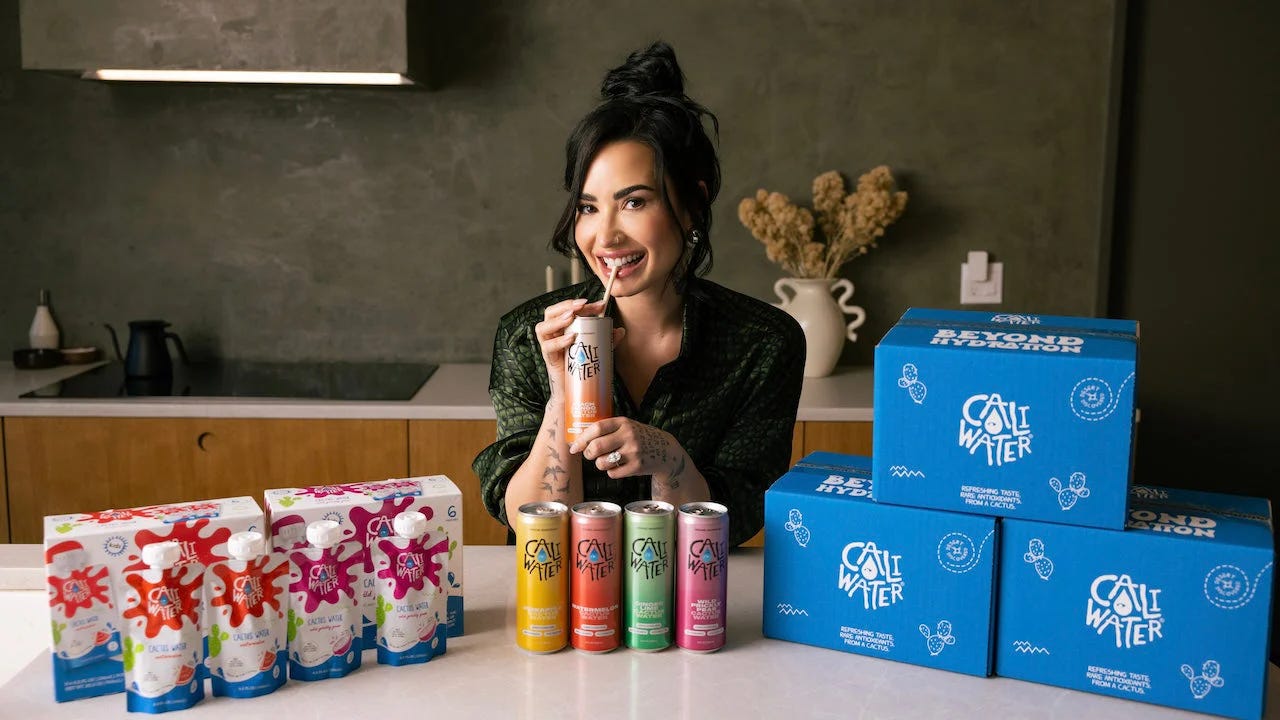
Caliwater Blood Orange x Demi Lovato — new flavor with existing celebrity partner, timed to Expo West launch buzz.
Grupo Bimbo GLP-1 Redesign — the world’s largest bread company redesigned bakery products for Ozempic users. Smaller portions, higher protein, more fiber. When Bimbo moves, it’s no longer a niche positioning strategy.
Keurig’s First Branded Coffee — after 30 years of building hardware for other coffee brands, Keurig is launching its own K-Cup. Premium positioning, targeting consumers who’ve been loyal to the machine but indifferent to what goes in it.
Beyond Immerse — four new flavors of sparkling protein drink. DTC only for now via Beyond Test Kitchen. $29.95–$37.95 for 12-packs. Worth watching the repeat purchase data over the next 90 days.
📊 THE DATA DIGEST
Numbers that matter
25% of Food Growth Came From Insurgent Brands in 2025 (Bain)
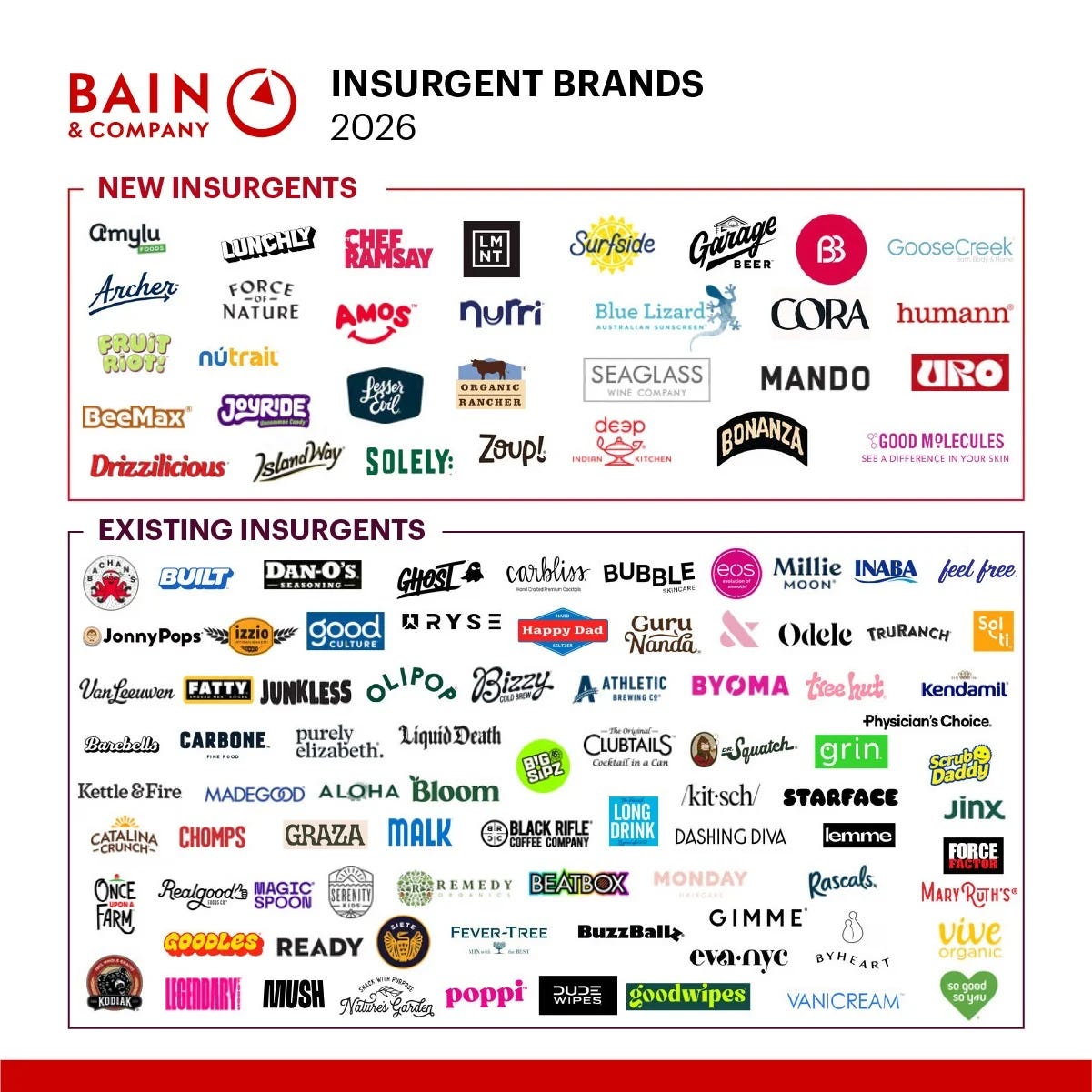
The headline number from Bain’s annual insurgent report. The formula: clean label + protein + elevated/global positioning. 44% of insurgent brands carried natural or organic claims. 40% touted protein. 25% emphasized global flavors. This isn’t a coincidence — it’s a consumer behavior pattern running across every category.
High-Protein Frozen Is a $12B Category Growing 11% YoY (Conagra)
Per Conagra’s own Future of Frozen report, high-protein frozen food volume grew 11% year-over-year with gains in chicken and turkey leading the category. The frozen aisle is now the leading retail channel for high-protein food at $12 billion annually. That’s why Conagra is dropping $220 million on chicken production capacity.
GLP-1 Didn’t Kill Snacking. It Just Redirected It.
Despite widespread predictions that Ozempic would crater snack sales, snack sales have held steady. The expected volume decline from GLP-1 users hasn’t materialized in the aggregate data. What’s shifting is which snacks sell — protein, fiber, and cleaner labels taking share from traditional indulgence formats. Not the apocalypse brands feared. A category reshuffling.
🏪 DISTRIBUTION DOMINATION
Everyone’s everywhere
Expo West Is This Week’s Biggest Distribution Story
Natural Products Expo West 2026 wrapped in Anaheim with thousands of emerging brands in front of buyers. The retail resets that result from this week’s conversations hit shelves in April through June. Watch the spring reset cycle for which Expo West brands actually converted buyer conversations into placement. The show is where the bets get made. The shelf is where you find out if they were right.
Target’s Dye Ban Opens Shelf Space
Target’s synthetic colors deadline by end of May isn’t just a compliance issue — it’s a distribution disruption. Brands already formulating clean are inheriting placement from brands that can’t or won’t reformulate in time. If you’re selling a clean-label cereal and not currently in Target, this is the best buyer conversation window you’ll have in 2026.
👋 PEOPLE MOVES
Blair Owens → Caliwater (CEO) — Former CEO of Hint Water, previously in leadership roles at Coca-Cola and Monster Beverage. His hire as Caliwater’s first CEO is the most operationally significant executive move in emerging beverages this week. Owens knows how to take a better-for-you beverage brand from credible to scaled.
Ethan Brown → Beyond The Plant Protein Co. (CEO, continuing) — Brown is leading the rebrand and the pivot to beverages. He built the category. The question is whether he can lead a company that’s essentially starting over in a new one.
🔥 THE HOT TAKE
My unfiltered opinion on this week’s madness
This week’s biggest story is really one story told from five different angles: protein and clean label have officially won. And every player from insurgent startups to Doritos is now positioning around that reality.
Beyond Meat is fleeing its own category to chase functional beverages because plant-based meat stopped growing and protein drinks didn’t. Bain’s data shows insurgents winning through clean label plus protein drove a quarter of all food growth. Doritos — the original junk food — just launched a protein SKU because their own data says 86% of Americans are actively adding protein to their daily diet. Target is banning synthetic colors from cereal before the FDA tells it to. Conagra is committing $220 million to chicken production because high-protein frozen is a $12 billion category growing 11% annually.
These aren’t separate trends. They are the same consumer behavior signal showing up at every price point, every retailer, and every format. What insurgent brands built as differentiated positioning in 2018 has become the operating assumption of Big Food in 2026, and major retailers are now codifying it into their shelf standards.
The cautionary tale remains Beyond Meat. Here’s a company that spent years convincing everyone it had reinvented protein delivery — and now it’s changing its name because the original idea ran out of runway. The lesson isn’t that plant-based is dead. The lesson is that consumer behavior is the judge, not your pitch deck. Beyond built a category. It didn’t build a daily habit. Archer built a daily habit. Chomps built a daily habit. Kodiak built a daily habit. Bain’s data just told you exactly what the difference was worth.
The brands that win in five years are embedding themselves into repeatable daily routines right now — with products that work, at prices people can maintain, without ingredient lists that need a chemistry degree. The formula is obvious. The execution is everything.
Build accordingly.
🎙️ COMING TUESDAY
Unpackaged Goods Episode
Breaking down what Expo West 2026 actually signals for the next wave of emerging brands, why Beyond’s rebrand is more interesting than it looks — and whether functional beverages were where the plant-based bet should have been placed from the start. Plus: what Bain’s insurgent data means if you’re building a CPG brand in 2026 and trying to figure out where the next exits are coming from.
🥫 ONE MORE THING...
Before you close this tab
Grupo Bimbo — the largest bread company on the planet — redesigned its products for people on Ozempic. Let that land for a second. The global bread incumbent is now formulating around a weight-loss drug’s impact on appetite and portion psychology. We’ve officially entered the era where GLP-1 drugs appear in product development briefs.
Meanwhile, the snack category that everyone predicted would collapse from GLP-1 adoption posted stable sales. Consumers on Ozempic are still snacking. They’re just reaching for protein bars instead of potato chips. Better margins, higher repeat purchase, cleaner labels. Not the category apocalypse snack brands feared. A category upgrade.
The Expo West cohort that showed this week hits shelves in the next 90 days. The April–June retail reset is where you’ll see which Expo West conversations were real. Watch the shelf.
Until next Sunday, Jonathan Deeter Your CPG-Obsessed Friend
P.S. — Doritos launched protein chips this week. DORITOS. We are either in the most exciting era of food innovation in American history, or we’ve all completely lost our minds. Possibly both. Either way, protein wins.
TikTok | Instagram | Newsletter | Pickle Advisors | YouTube
This newsletter is finished with Trophy Wife Finishing Salts - elevating every bite since 2025