


Issue #39 | July 27, 2026
🥄 FIRST BITE
The appetizer before we dive in
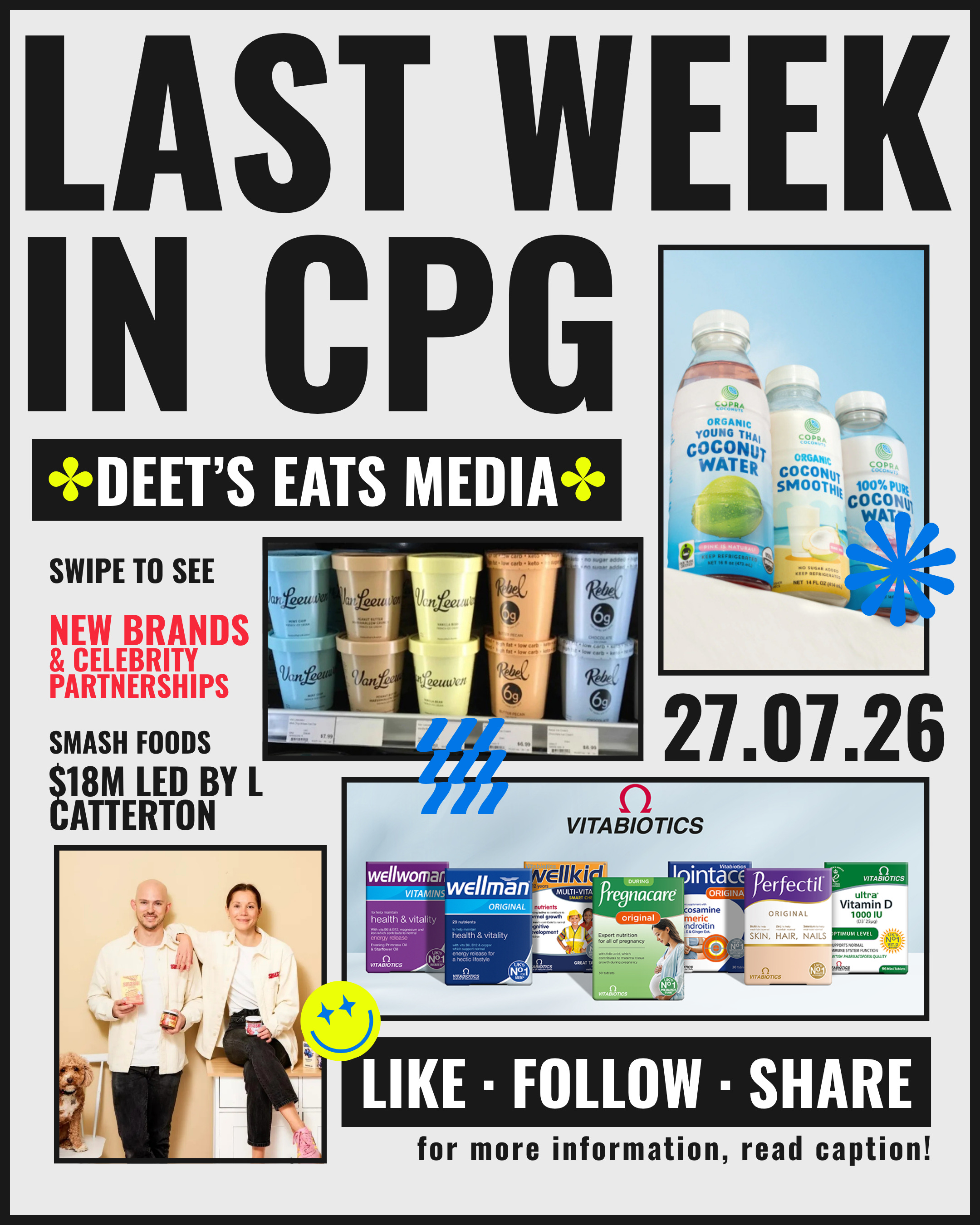
Welcome back. This was the week Big Food started selling itself for parts.
Nestlé handed half its water business to Platinum Equity in a $5.6 billion joint venture. Intersnack took Utz private at $2.9 billion. Bain bought Vitabiotics for around $1.2 billion. Vita Coco spent up to $275 million on a Thai coconut supplier. Oatly put Greater China under strategic review. That’s on top of Conagra’s brand fire sale and the McCormick-Unilever Foods review already in motion.
Six conglomerates, one instinct: we cannot run all of this well, so someone else should own part of it.
Meanwhile, in the aisle nobody was watching, a category war broke out over peanut butter and jelly. And a Brooklyn ice cream brand won $23.8 million because a competitor copied its pint.
Two stories, one lesson. The giants are learning that focus is worth more than scale. The small brands are learning that what they own isn’t the recipe. It’s the shelf presence. Let’s dig in.
🍊 THE MAIN COURSE
This week’s biggest CPG moves
Nestlé Sells Half Its Water Business to Platinum Equity
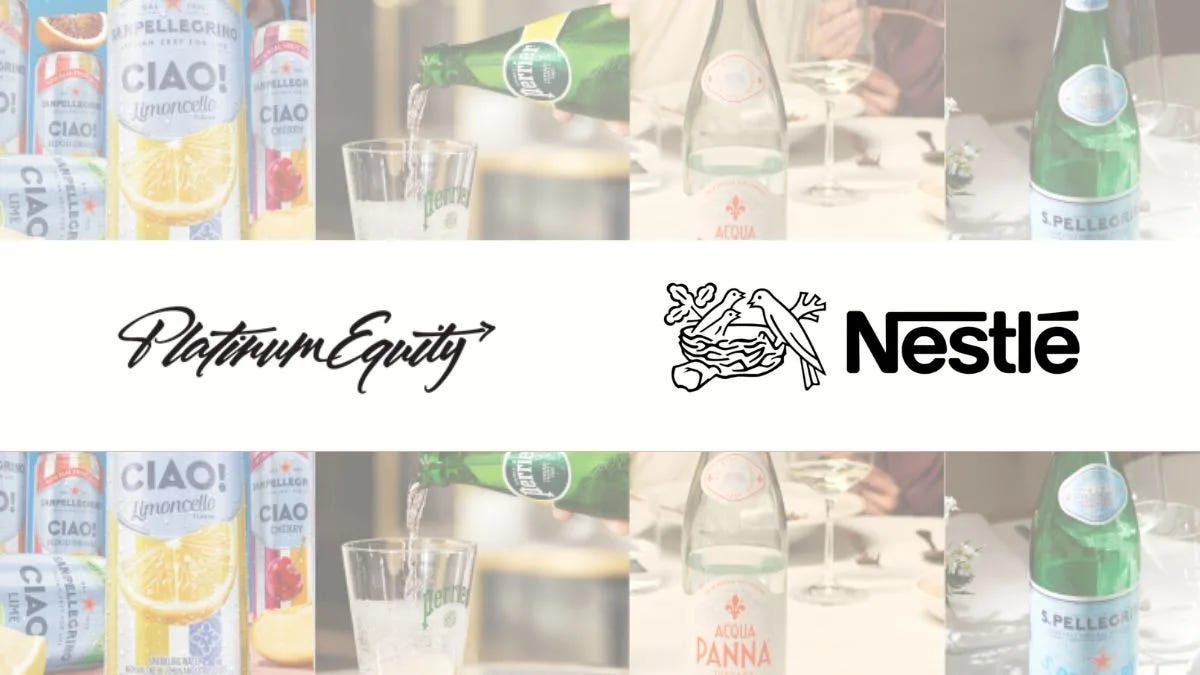
Nestlé and Platinum Equity announced Peranel, a 50/50 joint venture housing Nestlé’s waters and premium beverages business at an enterprise value of $5.6 billion (€4.9 billion). The portfolio spans more than 30 brands sold in 120 countries: S.Pellegrino, Perrier, Acqua Panna, Nestlé Pure Life, and a stack of local water brands. Paris-headquartered, led by current Nestlé Waters CEO Muriel Lienau, with roughly €3.0 billion in cash proceeds to Nestlé at closing, expected in the first half of 2027. Nestlé also signaled it will divest several value brands from its VMS portfolio early next year.
Read the structure, not the headline. Nestlé isn’t dumping a failing business. Water and premium beverages are among its fastest-growing categories, and Perrier and S.Pellegrino are among the most recognizable beverage brands on earth. What Nestlé is dumping is the obligation to run it. Platinum Equity brings three decades of carve-out experience and roughly $48 billion in AUM, and the JV structure lets Nestlé keep half the upside while handing over day-to-day control and the operational headaches that come with it, including Perrier’s ongoing regulatory issues in France.
For founders, this reshapes the map. Peranel is a dedicated, PE-backed hydration platform with a mandate to grow organically and by acquisition, unencumbered by Nestlé’s approval layers. If you’re building a premium water or functional hydration brand, a serious acquirer just came into existence.
Intersnack Takes Utz Private at $2.9 Billion
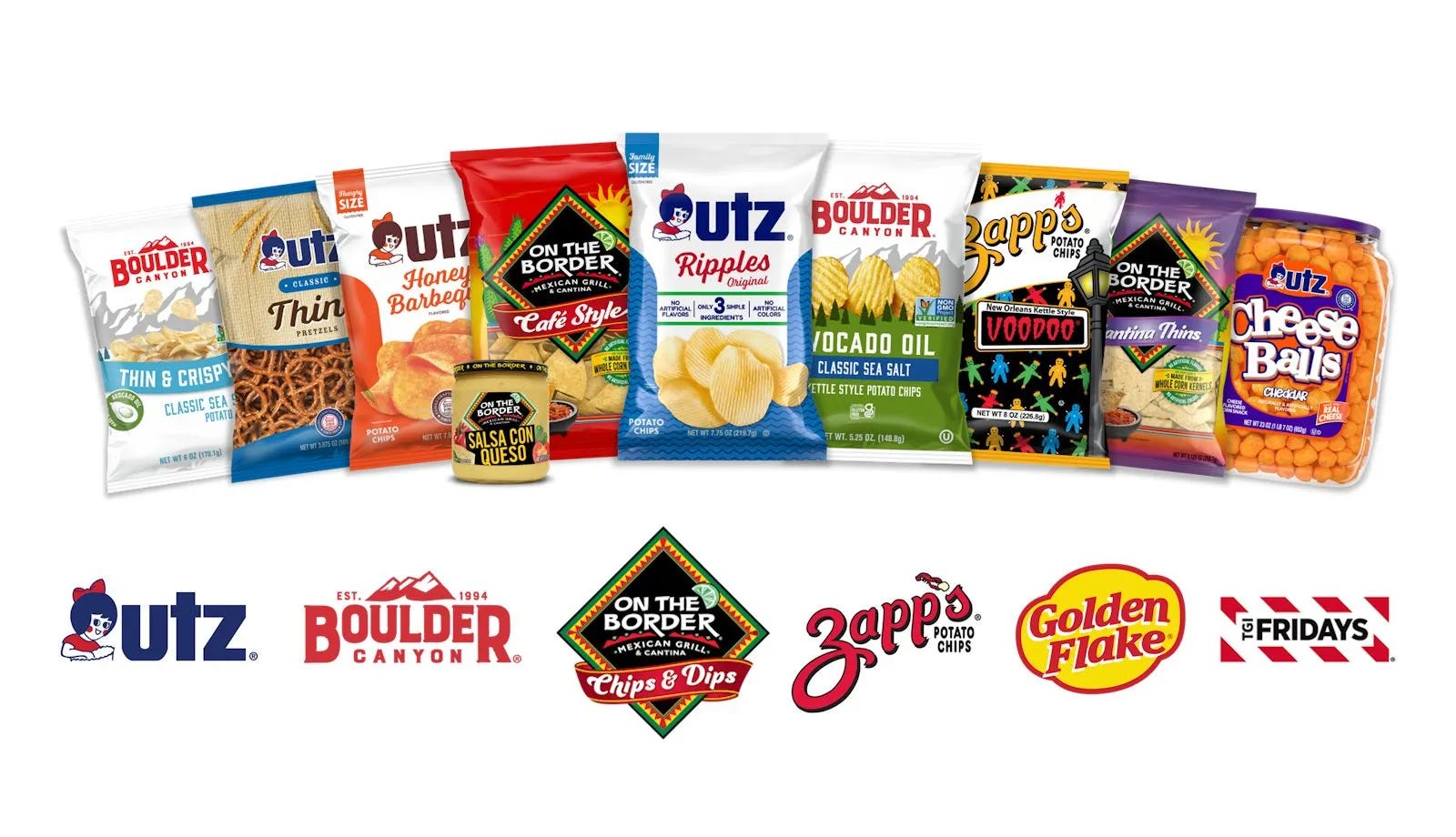
Germany’s Intersnack Group is acquiring all outstanding Utz Class A shares at $14.25 each, a roughly 91% premium to the July 20 close, at an enterprise value of about $2.9 billion. When it closes in Q4, Utz becomes private, with Intersnack and the Rice and Lissette family entities each owning 50%. Dylan Lissette becomes executive chair. Utz brings Zapp’s, Boulder Canyon, On The Border, Golden Flake, and its namesake, on more than $1.4 billion in 2025 net sales.
Two things stand out. That 91% premium is a brutal verdict on where Utz’s public valuation had drifted; as Barclays put it, the surprise wasn’t that a deal happened but that it took years of valuation compression to get there. The SPAC-era listing never delivered the currency Utz needed, and the family is now taking half the company back off the public market.
Second, this is Intersnack’s first meaningful U.S. presence. A European snacking giant built across Europe and Oceania just bought its way into American salty snacks in one transaction, and paid up to do it. For emerging snack brands, a new deep-pocketed strategic just planted a flag in your category.
Bain Capital Buys Vitabiotics for About $1.2 Billion
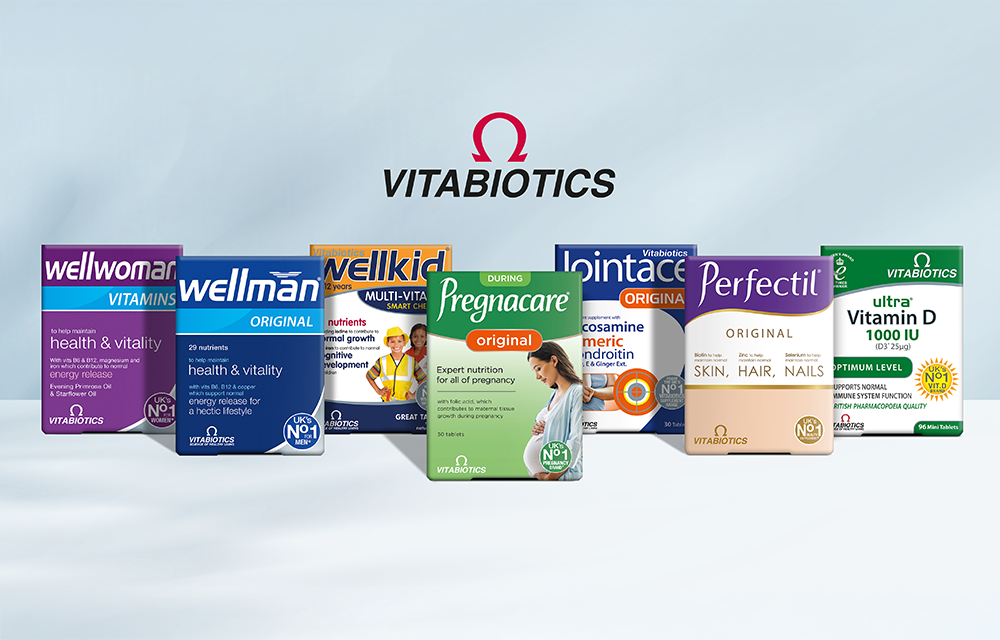
Bain Capital agreed to acquire Vitabiotics, the UK’s number one vitamin and supplement company, along with the wider VB Group, including Meyer Organics in India and its African operations. Terms weren’t officially disclosed, but multiple outlets put the deal around $1.2 billion. Founded in 1971 by Professor Kartar Lalvani, who becomes Chairman Emeritus at close, and led since 2015 by his son Tej Lalvani, the company sells in more than 90 countries with brands including Wellman, Wellwoman, Pregnacare, Perfectil, and Osteocare. The sale followed a competitive auction that drew Blackstone, EQT, and TPG.
Bain already owns a significant stake in 1440 Foods (Pure Protein, Met-Rx, Body Fortress), so this is platform-building in nutrition, not a one-off. The interesting detail is geographic: Bain’s Asia private equity team is leading, with the growth thesis pointed at India, MENA, and China rather than the UK. Vitabiotics is a British brand being bought primarily for its emerging-market runway.
Add it to the ledger: Danone bought Huel, Nestlé bought yfood, Lactalis bought Protein Works, and now Bain takes the UK’s biggest vitamin brand. Every well-run supplement brand with real distribution is sitting inside somebody’s acquisition model.
Vita Coco Buys Copra for Up to $275 Million
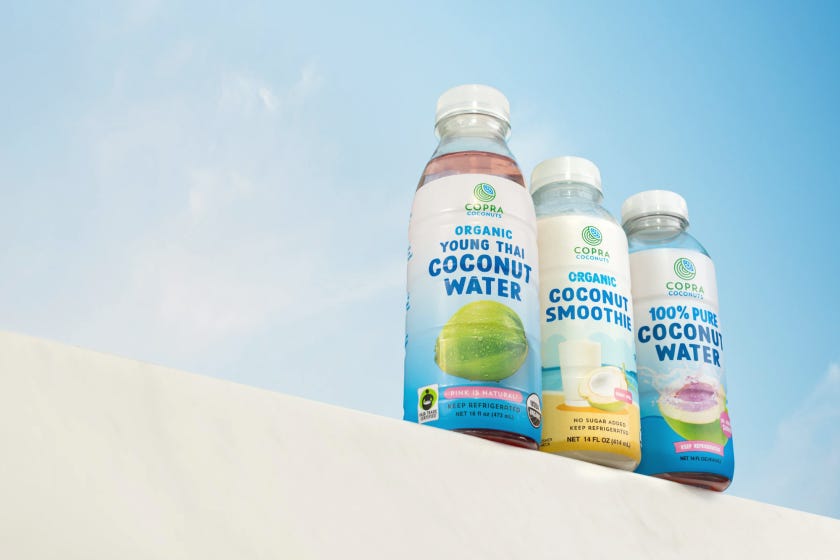
Vita Coco acquired Copra, a leading producer of super-premium Thai Nam Hom coconut water, for $175 million upfront plus an earnout in 2029 ranging from $45 million to $100 million based on 2028 performance. The initial price was 80% cash, 20% Vita Coco stock. Copra expects 2026 net sales above $100 million and has compounded at 48% annually over three years. The deal brings a Thailand factory with access to Nam Hom coconuts and an extract-and-fill-on-site model.
This is a supply chain acquisition wearing a brand acquisition’s clothes. Vita Coco already controls more than half the U.S. coconut water market, so it wasn’t short of distribution. What it lacked was a super-premium cold-chain position and direct access to a specialty coconut variety. Buying the Thai factory means owning the input, not renting it. It’s the same instinct behind EMPWR’s four facilities and WILDE’s 130K plant. When a category gets competitive enough, the moat stops being the brand and starts being the supply. Vita Coco did $610 million in net sales last year with a stated goal of $1 billion within five years. You don’t get there on marketing.
The IPO Window Cracks Open: Jersey Mike’s and Reformation
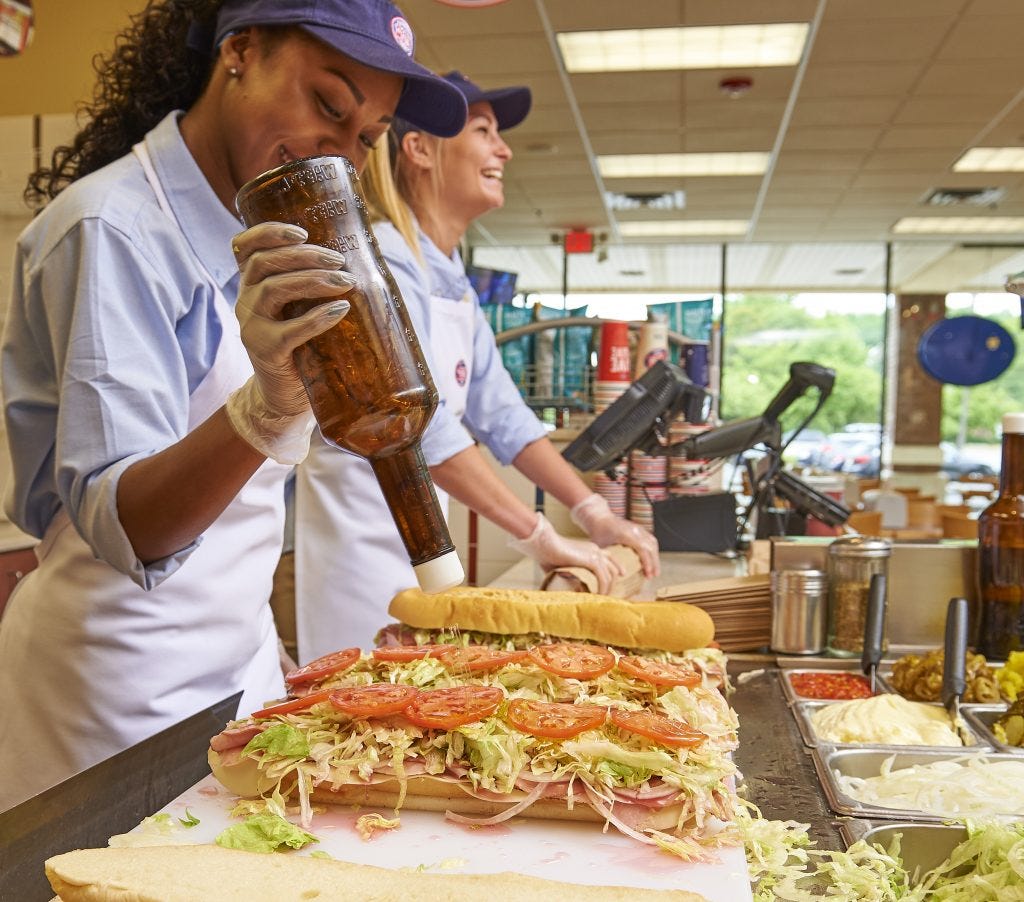
Two consumer IPOs launched roadshows on July 20, and neither made this week’s roundups. Jersey Mike’s filed a 43,478,261-share Class A offering at an expected $21 to $25, listing on the NYSE as JMKE. Reformation launched its roadshow for 14,062,500 shares at $15 to $17, NYSE: REF, pricing July 29 and trading July 30. Reformation is Permira-backed; Jersey Mike’s is Blackstone-backed.
After years when consumer companies couldn’t go public at acceptable valuations, two sponsor-backed brands testing the window the same week is a real signal. Watch how they price. If they hold, the exit path that’s been closed to late-stage consumer brands starts reopening, and that changes the math on every growth round being negotiated right now.
⚖️ THE PACKAGING RULING EVERY FOUNDER SHOULD READ
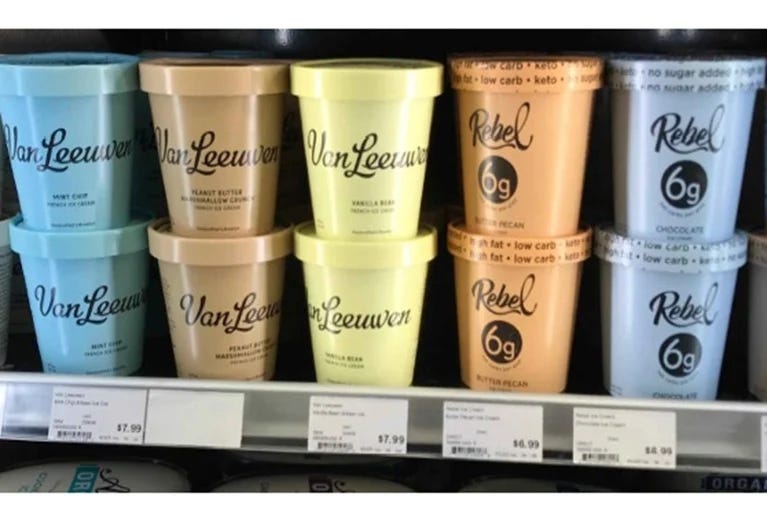
Van Leeuwen won a sweeping trade dress judgment against Rebel Creamery. After a bench trial, Judge Eric Komitee of the Eastern District of New York found Rebel intentionally infringed and diluted Van Leeuwen’s pint trade dress, ordering Rebel to disgorge $23.785 million in profits, permanently enjoining the packaging, and requiring a redesign conveying a substantially different commercial impression. The ruling came July 16, so it slipped past last week’s cutoff, but it matters too much to skip.
Van Leeuwen never claimed Rebel copied its name or logo. It claimed four packaging elements: monochromatic pints with matching lids, a pastel palette, black script lettering with an oversized initial, and minimalist design. Rebel argued those elements are commonplace. The court rejected that, holding trade dress protects the overall combination and commercial impression, not each individual component.
If your product lives on a shelf, this is the most important CPG development this month. The court sized the remedy at Rebel’s profits, reduced 33% to account for demand attributable to Rebel’s keto positioning rather than the copied look. And Van Leeuwen won on documentation: dated drafts, rejected concepts, revision rounds, press, and sales growth tied to the look. One caveat: this is a district court decision; it doesn’t bind other courts, and Rebel hasn’t said whether it will appeal.
💰 THE FUNDING FRENZY
Big checks being written
Smash Foods: $18M Led by L Catterton
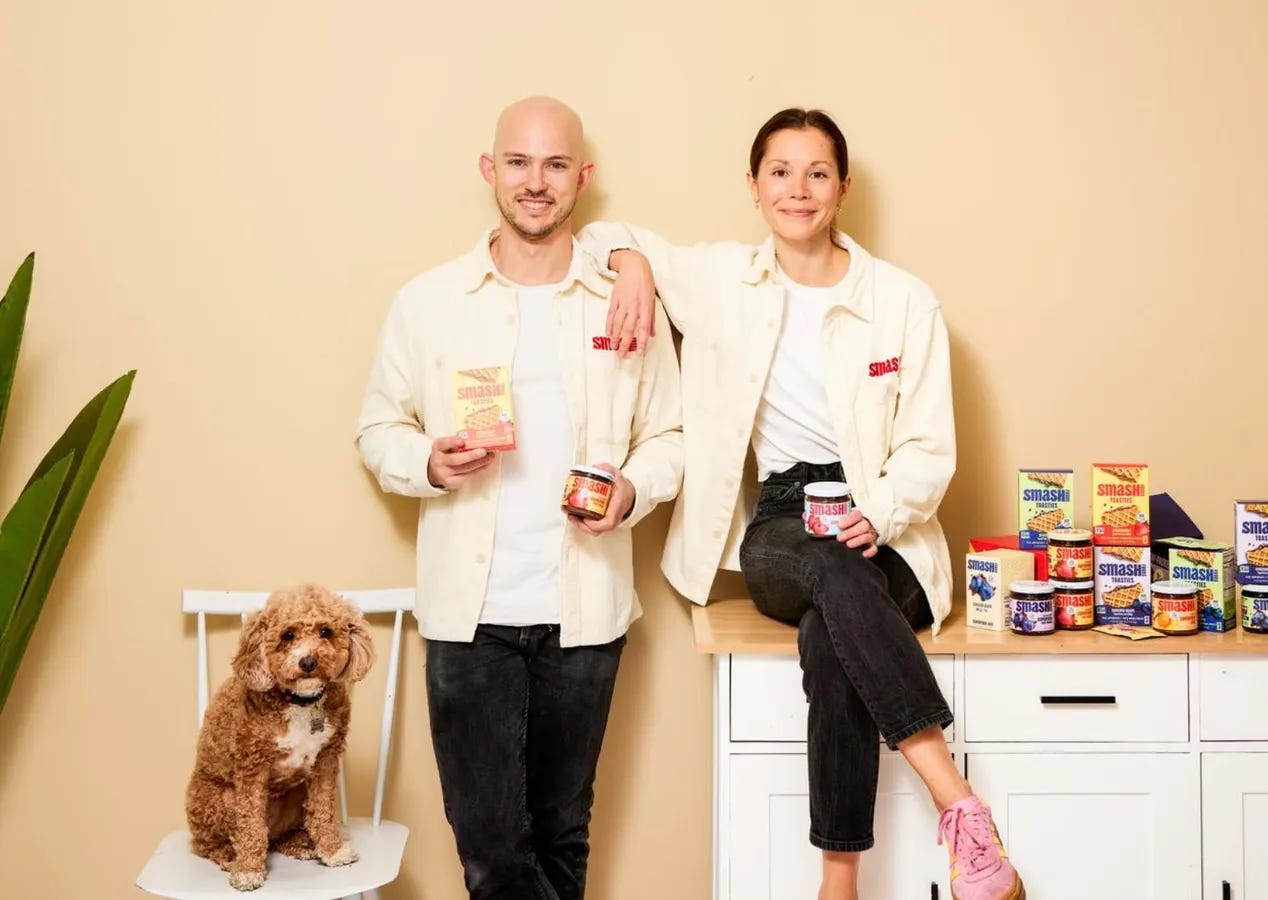
Smash Foods secured an $18 million growth investment led by L Catterton, with existing investors Éclair Partners and The Family Fund participating. Founded in 2019 by Anna Peck and Steve Ford, Smash reimagines jam using real fruit, chia seeds, and dates, and has extended into toaster pastries and protein balls. Revenue tripled in 2025, and the brand recently passed 10,000 doors across Whole Foods, Sprouts, Costco, Target, H-E-B, and Publix. L Catterton’s food portfolio includes Good Culture, Goodles, Kodiak, and Little Moons.
Jam is having a moment nobody predicted, and L Catterton writing the check confirms it isn’t a fluke. Ten thousand doors with 3x growth is the profile that attracts a strategic-minded growth investor rather than a pure venture round.
MOTH: £11M ($14.7M) for UK Convenience and U.S. Expansion
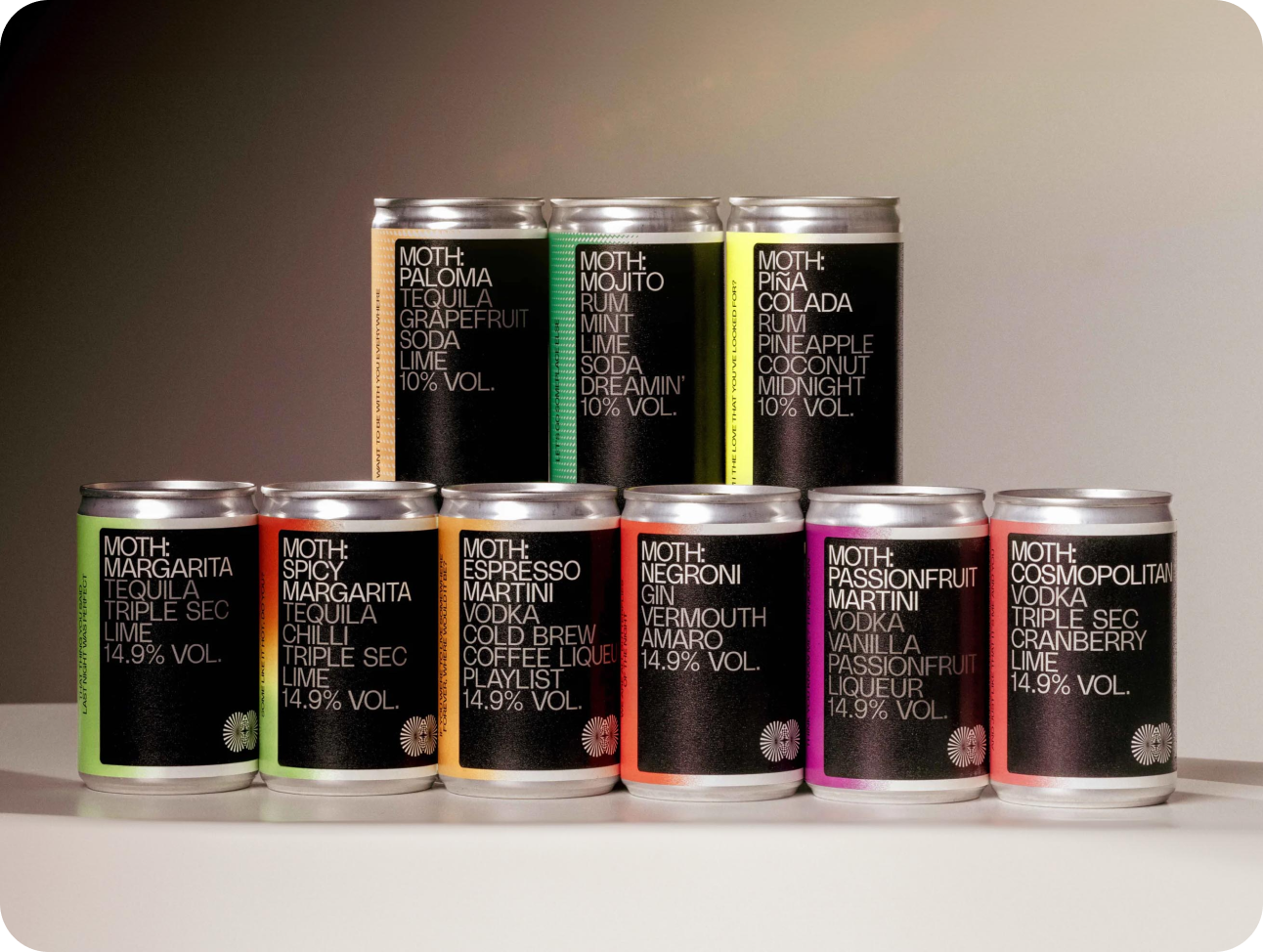
London RTD cocktail brand MOTH closed an £11 million round led by Puma Growth Partners, with Beringea, Guinness Ventures, and Rianta Capital participating, bringing total raised to £23.5 million. Turnover hit £20.9 million last year, up 67% year over year and 146% over two years, roughly three times category growth. MOTH is the No. 2 RTD brand in UK grocery, sits in 40,000+ UK distribution points, is a certified B Corp, and sells a can every four seconds. U.S. expansion runs through Whole Foods, Target, Trader Joe’s, and Binny’s.
RTD cocktails remain one of the most acquisitive categories in bev-alc. Finnish Long Drink, St. Agrestis, BeatBox, Monaco, and SipMARGS all found strategic homes. A No. 2 UK grocery brand growing 67% is squarely on that path.
Organic Traditions: $10.5M Series A
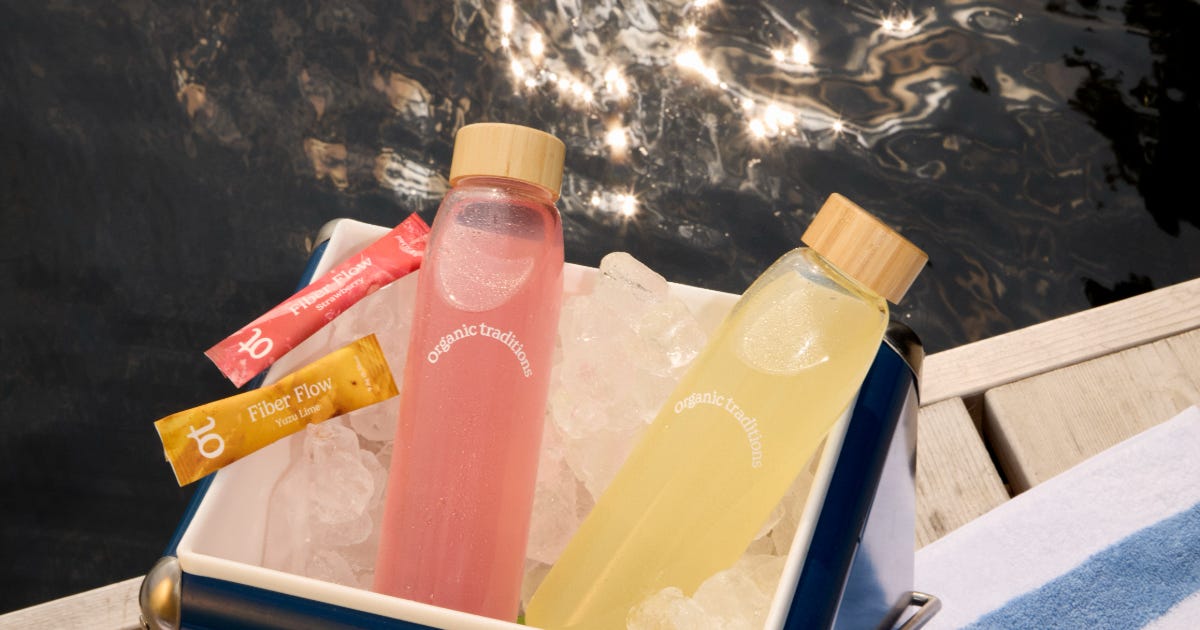
Canadian wellness brand Organic Traditions raised $10.5 million from strategic angels including Shopify, Frito-Lay, and Colgate-Palmolive executives. Founded 25+ years ago by Jerry Zeifman and now led by his daughter Ally Mamalider, it spans functional lattes, mushroom coffees, greens, and fiber smoothies. Revenue is up 70% over three years, with 82% U.S. retail growth projected. Its Fiber Flow sold out three times online, and the capital targets 1,500+ U.S. stores.
A 25-year-old bootstrapped family business raising its first institutional round on the back of a fiber product is a very 2026 story. Fiber is the ingredient of the year, and the angel roster is a distribution roster.
Quick Hits
Jesse & Ben’s raised a $10 million Series A led by Greycroft, with participation from Foundership, the CPG holding company built by Yasso founders Amanda Klane and Drew Harrington, whose venture portfolio also includes Slate Milk. The Yasso founders now touch this category from three directions: their own brands, Snack Buddies, and Foundership’s checks.
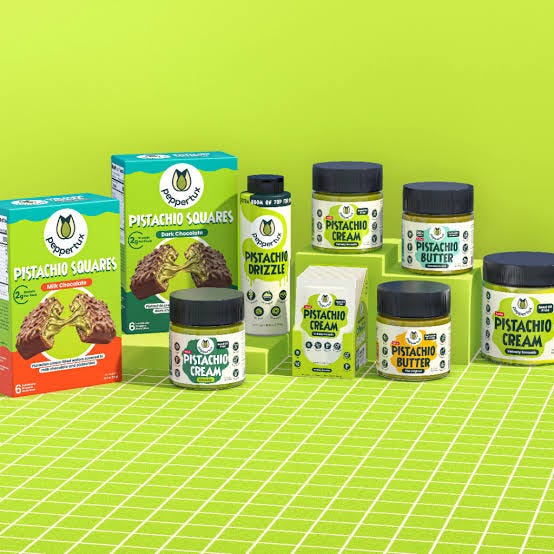
Peppertux raised a $2.35 million bridge led by Santatera Capital with Lever VC participating. The California pistachio brand spans spreads, sauces, and snacks, sits in 3,000 doors, and has a stated path to 7,000 by year-end. The Dubai chocolate trend turned pistachio into a durable flavor platform.
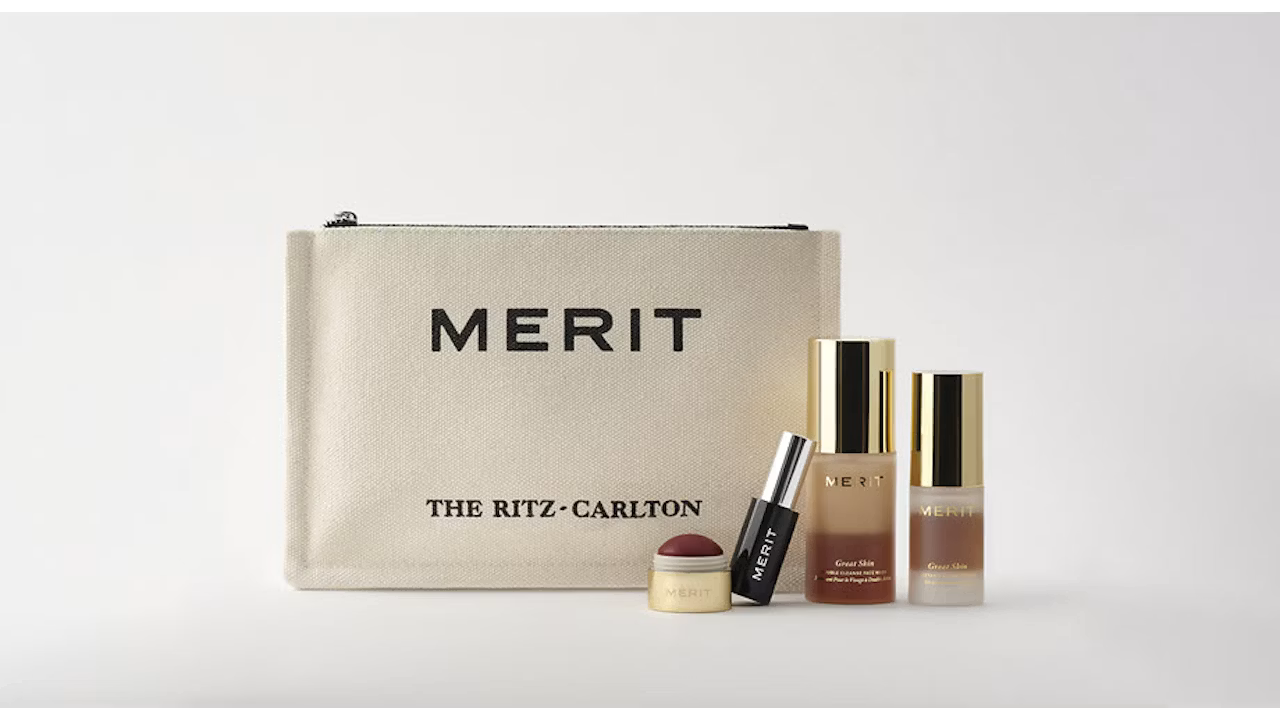
SEMCAP made a minority investment in MERIT, the clean minimalist makeup brand. The investment was led by Vasiliki Petrou, the longtime Unilever beauty executive behind the Tatcha, K18, and Hourglass acquisitions, who joins MERIT’s board. Petrou’s track record is buying beauty brands and scaling them to exits, which tells you the thesis.
Starco Brands acquired Custom Bakehouse, a branded and private-label baking mix producer with a 75,000-square-foot facility in Santa Fe Springs, California. Starco (Soylent, Skylar, Art of Sport) buying manufacturing rather than another brand is the same supply-chain instinct driving Vita Coco.

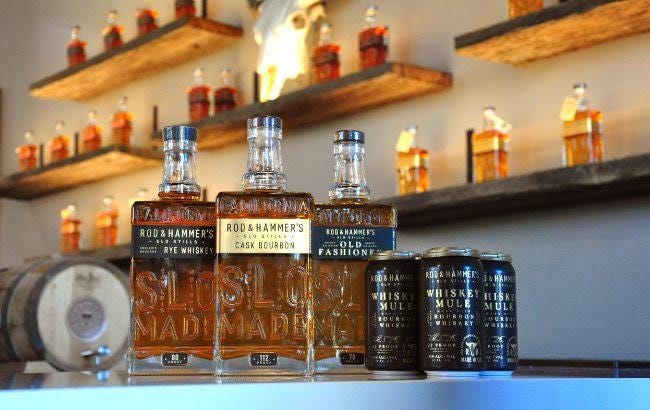
Apogee 21 acquired bankrupt Luca Mariano Distillery for $19.5 million, including a 529-acre campus and 6,600 bourbon barrels, and separately picked up the Rod & Hammer whiskey brand and its San Luis Obispo distillery. Distressed spirits assets are trading at real discounts right now.
🆕 PRODUCT LAUNCHES & INNOVATION
This week’s innovation circus
The PB&J War Goes Nuclear
Three more entrants landed in a category that didn’t exist eighteen months ago.
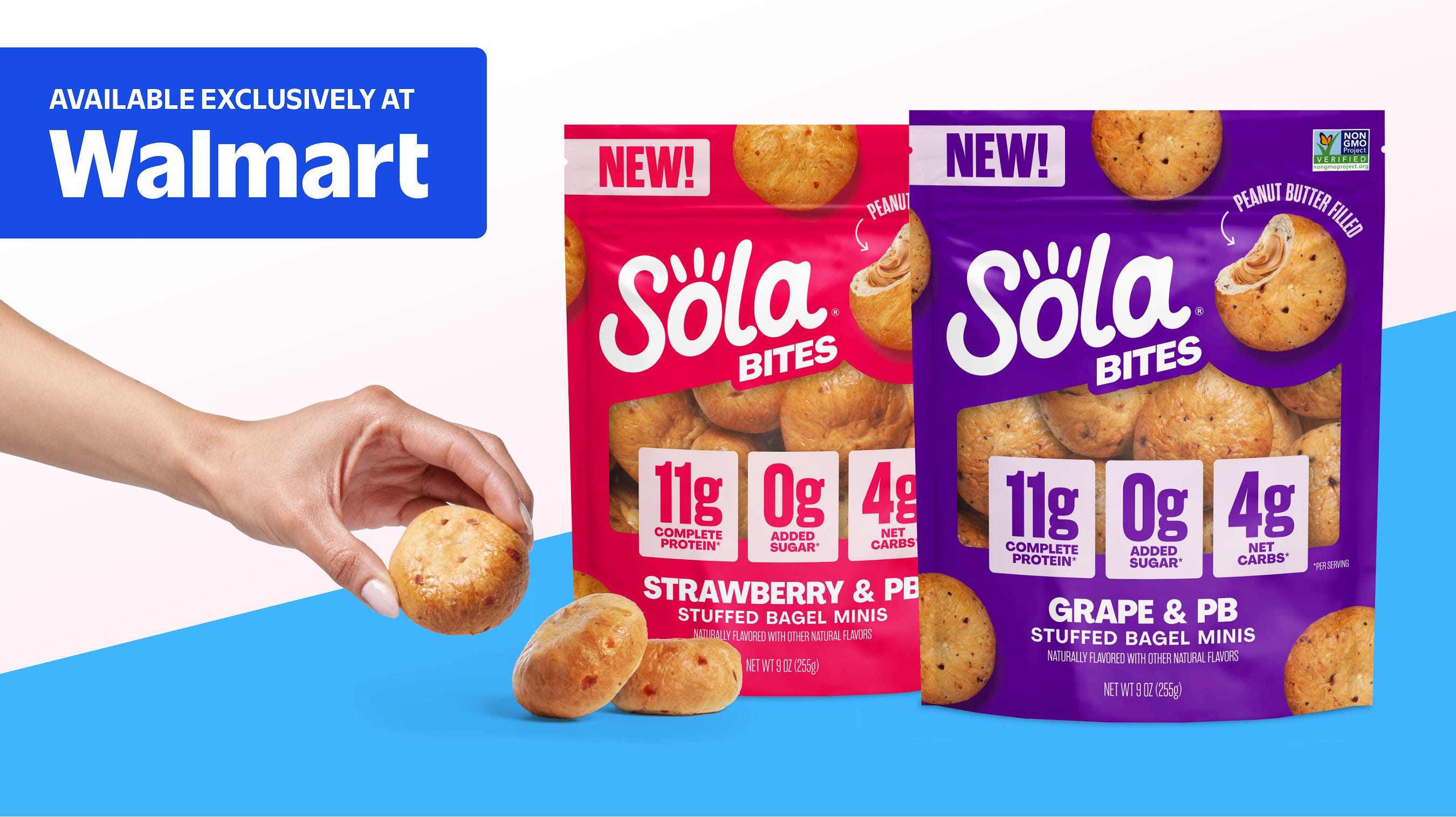
Sola launched Sola Bites nationwide at Walmart in Strawberry & PB and Grape & PB, with 11g protein, 17g fiber, 4g net carbs, and no added sugar. Lunchly, the MrBeast, KSI, and Logan Paul brand, dropped Lil Sammies Crustless Sandwiches exclusively at Walmart with 13g protein, no high fructose corn syrup, and no dyes, in Peanut Butter & Grape, Peanut Butter & Strawberry, and Cookies & Cream. And Smash Foods just raised $18 million on a business built around reimagined jam.
Count the field. Uncrustables holds the incumbent position. Jams built a better-for-you challenger, won an NFLPA deal, and just added Grape at Target and Walmart. Welch’s entered frozen PB&J at Walmart with 12g protein. Mid-Day Squares says No Bread PB&J is its fastest-growing line. Now Sola, Lunchly, and Smash. That’s seven brands fighting over a sandwich.
Here’s why. PB&J is nostalgic, portable, kid-approved, and trivially easy to fortify with protein and fiber. It requires zero consumer education. In a market where the hardest thing to buy is trial, a format everyone already loves is the cheapest distribution advantage available. The winner will be whoever solves texture and shelf life, not whoever has the most protein.
Beverage and Snack
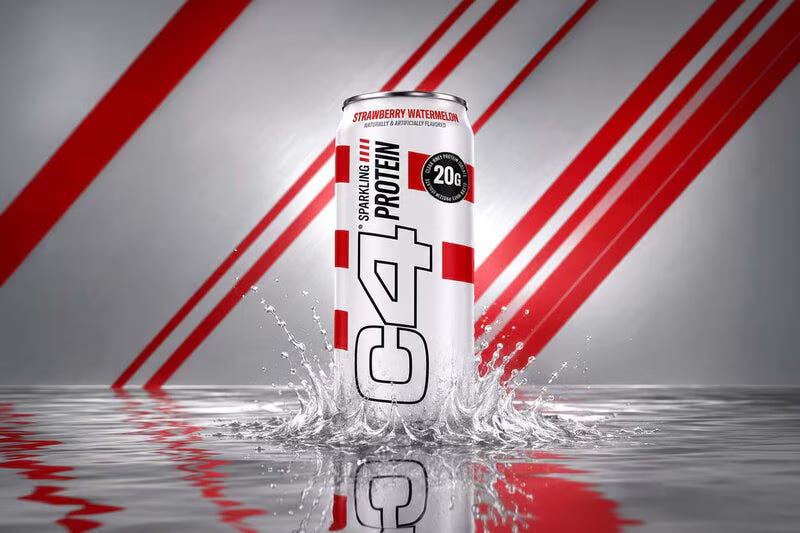
Nutrabolt is taking C4 into sparkling protein with a clear-style drink at 20g protein, zero sugar, and 95 calories, in Strawberry Watermelon and Cherry Vanilla. Clear protein is the fastest-moving format in the category, and Nutrabolt is heading toward a billion-dollar IPO, which is a scale signal.
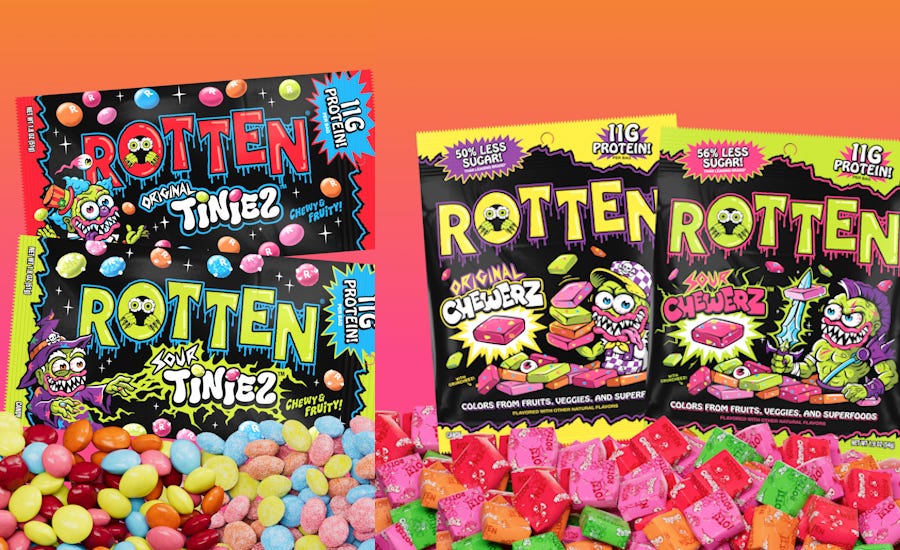
Rotten launched two BFY candy lines, Tiniez and Chewers, at 11g protein, 5g prebiotic fiber, and 40% less sugar. Halfday rolled out 12 oz sleek cans nationwide at Target with 6g fiber and 35-40 calories. Chilly Willy debuted graham-crusted rolled ice cream. BEZI launches Dippers next month, pairing single-serve labneh with gluten-free crackers. And Smyle released ROX, a xylitol-and-arginine candy designed to support teeth rather than damage them
Beauty and Wellness
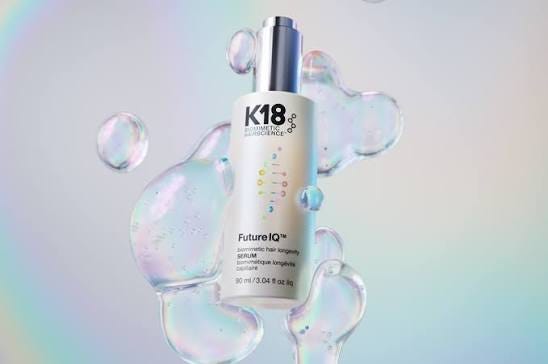
K18 launches FutureIQ, a $120 biomimetic hair longevity serum, August 5th. Re:You, from Dr. Evan Zhao (creator of Revela, acquired by Oddity Tech), debuted three serums at $128 to $141. Summer Fridays enters bodycare August 8th. Lemme launched its first gummy ring format. Dear Biology launches a melatonin-free sleep line August 24th, targeting the grogginess and dependency problem. Dynasty debuted a hydration mix formulated for women’s hormonal and metabolic needs. And California Naturals launched a $11.99 kids personal care line across Sprouts, Target, Amazon, and Ulta.
Rebrands Worth Studying
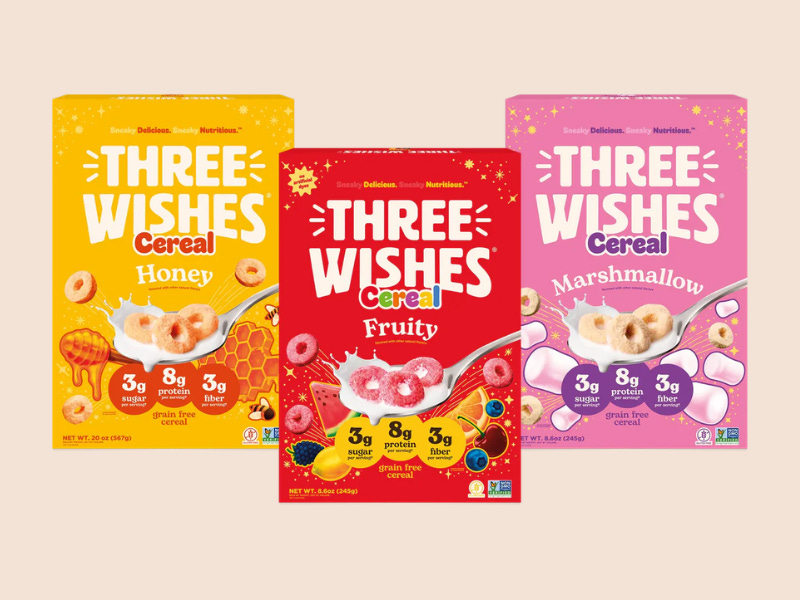
Three Wishes unveiled a cleaner identity, removing clutter, improving legibility at distance, and pushing protein, fiber, and sugar callouts to the front. Founded by Margaret and Ian Wishingrad, the brand is up more than 40% year over year in 52-week MULO data. Curie, Sarah Moret’s eight-figure personal care brand, launched identity 2.0: bolder, more modern, built for people in motion. Curie has the largest repeat-purchase rate in its category at Walmart.
Both did the same thing: reduce noise, increase legibility, move proof points to the front panel. And after the Van Leeuwen ruling, a distinctive, well-documented visual identity is demonstrably an asset with a dollar value attached.
📊 THE DATA DIGEST
Numbers that matter
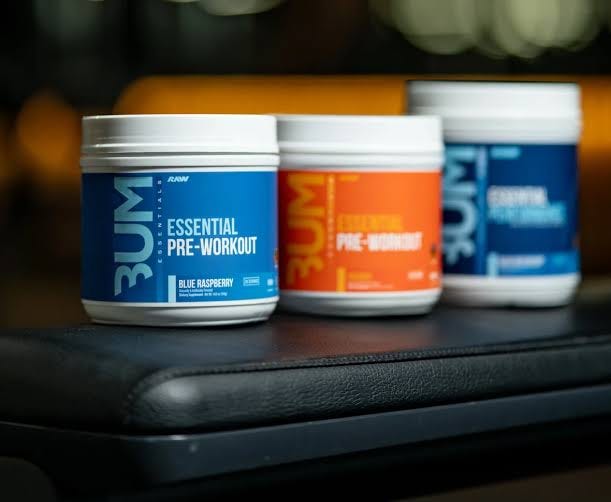
The Quality Group reported H1 revenue of €850 million, up more than 40% year over year. The German VMS specialist behind ESN, More Nutrition, RAW Nutrition, and BUM Energy crossed €1 billion in annual revenue in 2025. European functional nutrition is compounding faster than almost anything in American CPG.
Oatly surged after reporting Q2 revenue of $240.1 million, up 15.2% (12.7% constant currency), beating estimates by roughly 9%. Gross margin improved to 33.9%, net loss narrowed to $31.3 million from $55.9 million, and adjusted EBITDA turned positive at $0.4 million for a second consecutive quarter. Full-year constant-currency growth guidance jumped from 3-5% to 8-10%. Note the detail that fits this week’s theme: Oatly’s Greater China business remains under strategic review, including a potential carve-out.
Yough! is reportedly the top-selling pizza brand at Target, using Greek yogurt dough to deliver 40-50g of protein per pizza. It only launched at Target in March. That is an extraordinarily fast climb, and more evidence that protein-fortified versions of familiar formats are the highest-velocity innovation in food right now.
Outlaw Light shipped 180,000 cases in June, up from 80,000 in January and 90,000 in February. Roughly doubling monthly volume inside six months is the kind of curve that attracts strategic attention in beer.
Taylor Farms update: the Cyclospora outbreak we covered last week escalated further, with Michigan case counts climbing sharply through the week. The recall and investigation remain active.
🏪 DISTRIBUTION DOMINATION
Everyone’s everywhere
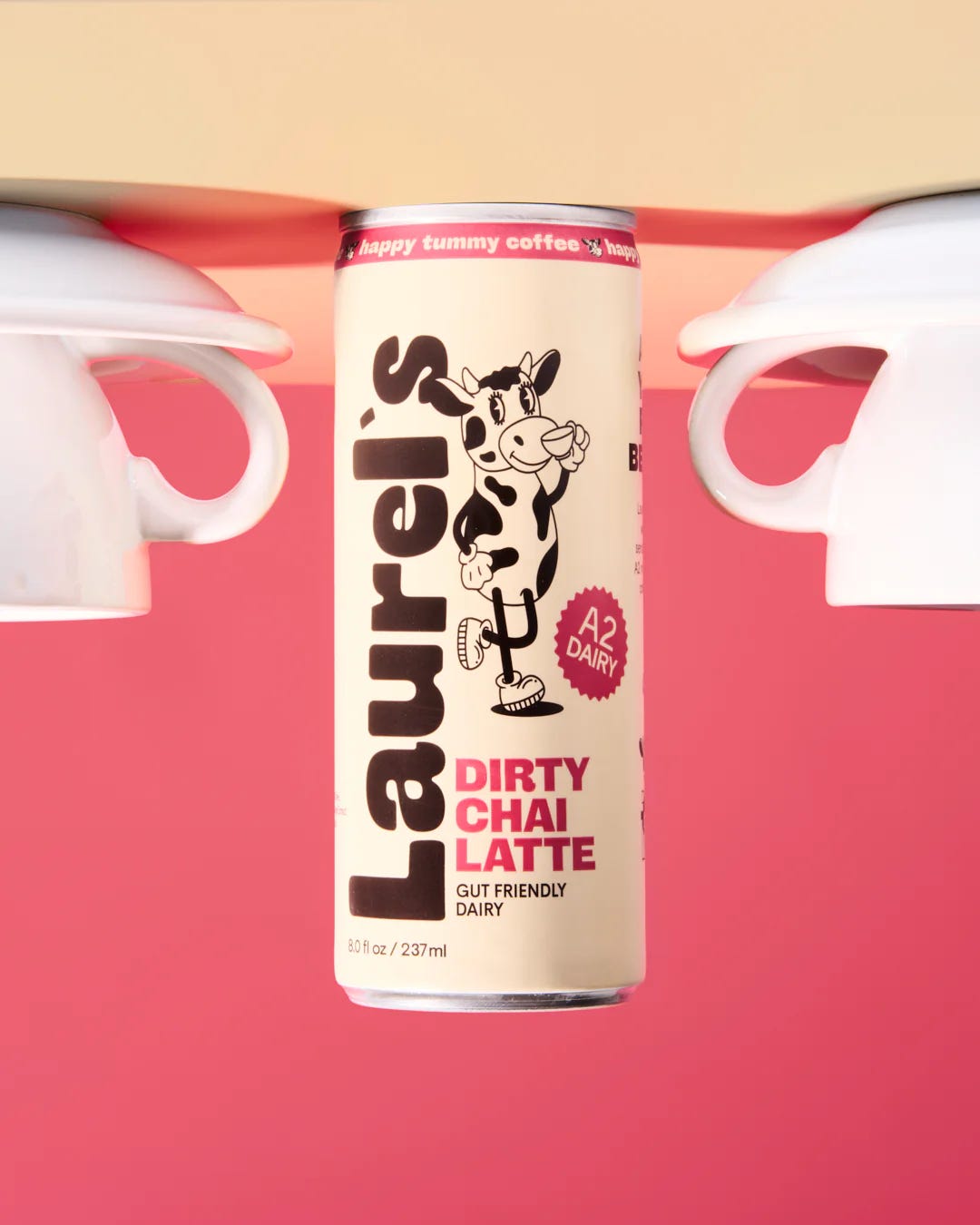
Target: Laurel’s launched at 1,700+ stores. Costco: Khloud is now in SoCal warehouses, and Saint James Iced Tea went nationwide. Kroger: Huxley launched at 290+ stores. Sprouts: GROUNDED launched storewide. Erewhon: Fruit Bliss launched storewide. Thrive Market: Konsoom launched nationally. Citarella: Motif launched in NYC.
And ARMRA is the distribution story of the week. After building a nine-figure DTC business, Dr. Sarah Rahal’s colostrum brand is now fully omnichannel, expanding its retail footprint more than 8x in its second year of retail and surpassing 7,600 doors, a 78% increase from Q1 alone, driven by Sprouts, Erewhon, Walmart, Whole Foods, and The Vitamin Shoppe. DTC-first brands crossing into retail at that speed is the defining go-to-market pattern of this cycle.
👋 PEOPLE MOVES
Steve Lesnard succeeds Ben Mand as CEO of Yerba Madre, effective immediately. Lesnard served on the board and previously held C-suite roles at Godiva, Sephora, Nike, and The North Face. Scott Miller, co-founder and CEO of YESLY Water, joins the board.
Prequel hired Nathalie Kristo as CEO and Toral Patel as CMO. Kristo spent nearly two decades at L’Oréal before running Huda Beauty; Patel came from Kopari via L’Oréal and Estée Lauder.
Torch Beverages, the Miami THC seltzer brand, hired Ryan Bouton (Halo Top) as CMO and Ryan Heuser (Liquid Death, White Claw) as Head of Experiential Marketing after doubling revenue and passing 4,000 doors. Hiring the Liquid Death playbook into THC seltzer is a deliberate choice.
🔥 THE HOT TAKE
My unfiltered opinion on this week’s madness
Big Food has stopped trying to be big.
Look at seven days. Nestlé gave up operational control of Perrier and S.Pellegrino, both iconic and growing, because running them alongside coffee, pet food, and infant nutrition cost more attention than it was worth. Utz’s founding family took half the company off the public market. Bain bought Vitabiotics from a family that ran it for 55 years. Oatly is reviewing whether to carve out China. Add Conagra’s review and the McCormick-Unilever deal now with UK regulators, and the pattern is unmistakable.
For thirty years, the operating theory of CPG was that scale wins: buy more brands, consolidate manufacturing, negotiate harder, spread overhead across more SKUs. That theory is being dismantled in public, one carve-out at a time.
What killed it was fragmentation. When there were four ways to reach a consumer, owning fifty brands meant leverage. Now there are four hundred, and every one rewards focus. A brand that knows exactly who it’s for and doesn’t need three approval layers to greenlight a flavor. Conglomerate structure became the tax. So the giants are keeping the half they can run and selling the half they can’t. Private equity is the natural buyer because PE’s entire model is focus: Platinum will run Peranel as one business, Bain will run Vitabiotics on an India and MENA plan, Intersnack will run Utz as a salty snack company and nothing else.
Now flip to the other end of the barbell. While the giants shrank, seven brands piled into peanut butter and jelly, and a Brooklyn ice cream company won $23.8 million because someone copied its pint.
Those two stories are the same story. When scale stops being the moat, what’s left is the thing consumers actually recognize: the format they already love, and the look they already know. Van Leeuwen didn’t win because of a recipe or a patent. It won because it built a visual identity distinctive enough that a court could measure what copying it was worth, and disciplined enough to have documentation proving it got there first. The PB&J brands are all racing toward a format that requires zero consumer education for the same reason.
The giants are selling scale. The winners are buying recognition. If you’re building right now, the question isn’t how big you can get. It’s whether anyone would know your product from six feet away with the label turned around, and whether you saved the files that prove you designed it.
Build accordingly.
🎙️ COMING TUESDAY
Unpackaged Goods Episode
Nestlé handing Perrier and S.Pellegrino to private equity. Utz going private at a 91% premium. Bain’s $1.2 billion Vitabiotics bet and what it means for every supplement brand with distribution. The Van Leeuwen ruling and why your packaging is now a measurable asset. And the seven-brand war over peanut butter and jelly.
🥫 ONE MORE THING...
Before you close this tab
Van Leeuwen sued Rebel Creamery in 2021. The case took five years. The deciding evidence wasn’t a patent or a trademark registration. It was a folder of old design files: dated drafts, rejected concepts, revision rounds, proving Van Leeuwen got to that pastel minimalist pint first and got there deliberately.
Five years of litigation, and it came down to whether somebody bothered to save their work.
Every founder reading this has a Dropbox folder full of packaging comps nobody has opened since 2023. That folder is not clutter. It is the only evidence you will ever have that the look on your shelf is yours.
$23.785 million. Save your files.
Until next Monday, Jonathan Deeter Your CPG-Obsessed Friend
P.S. Two weeks ago I predicted sour was the new pickle. This week Rotten launched two sour lines with 11g of protein and Smyle put out a candy that’s good for your teeth. But the real signal is Lunchly: MrBeast, KSI, and Logan Paul, three creators with a combined audience larger than most countries, decided the highest-value thing they could sell is a crustless PB&J. Not a snack bar. Not an energy drink. A sandwich your mom made. Nostalgia is the last undefeated category.
TikTok | Instagram | Newsletter | Pickle Advisors | YouTube
This newsletter is finished with Trophy Wife Finishing Salts - elevating every bite since 2025