


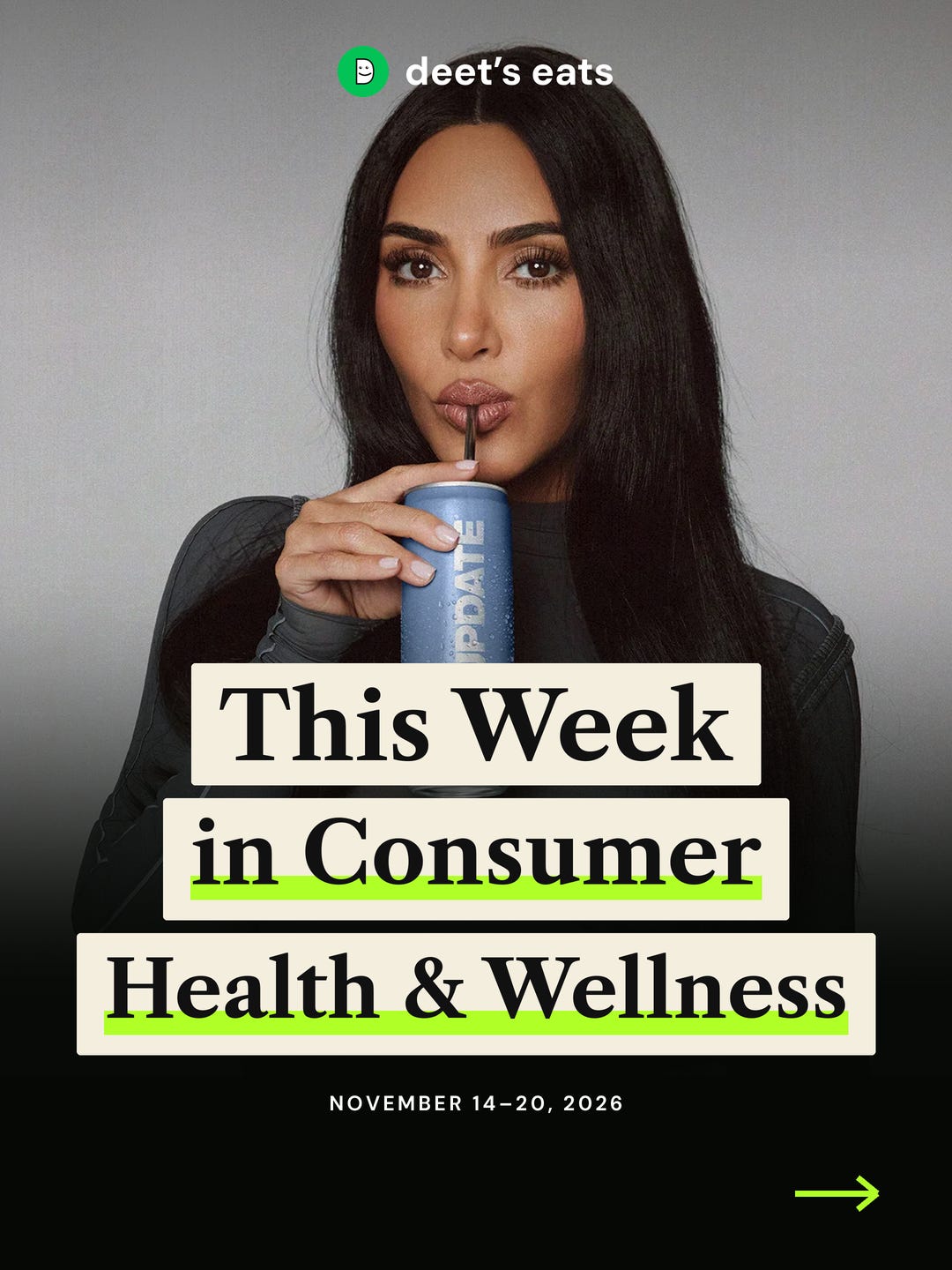
This Week in Consumer, Health & Wellness | November 20, 2026
Chomps and Yough! both made funding headlines this week. The useful detail is who got the check.
Sixth Street paid Chomps’ existing shareholders for a piece of a brand that already sells more than $1 billion at retail annually. Selva Ventures put money into Yough! as the frozen pizza brand gets ready for its next wave of stores. If you’re a founder, one deal is about giving shareholders a way to sell without giving up control. The other is about making sure the next wave of stores works.
Presented by Drivepoint and Dough
Drivepoint helps consumer brands see what a new retail account, a price change, or a bigger inventory order will do to cash and margins. Get Drivepoint’s finance templates.
Dough is an authorized Square reseller that helps businesses get set up with Square hardware, train their team, and get local support. Learn more about Dough.
The deals I’d start with
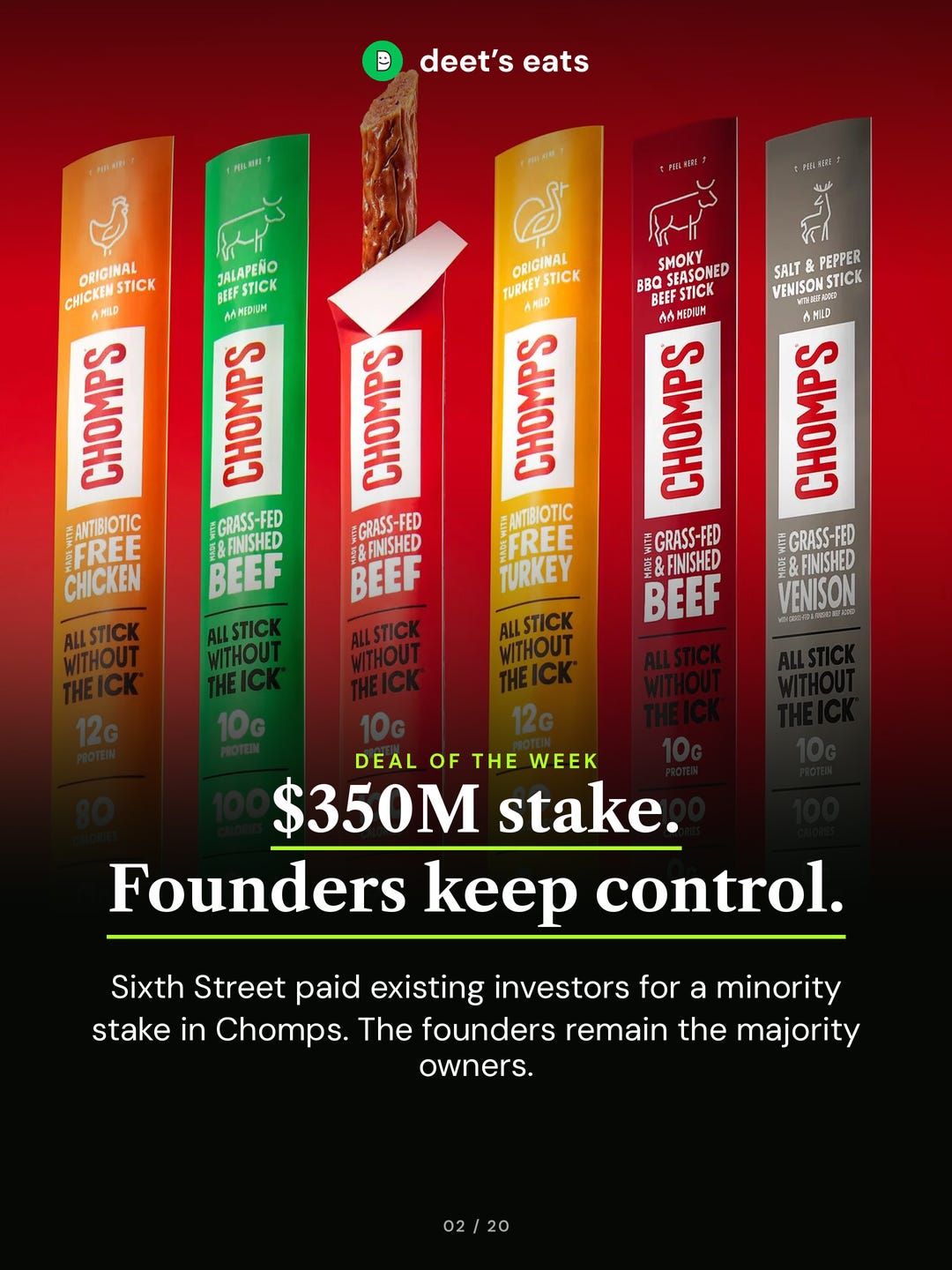
Chomps’ founders kept the keys. Sixth Street paid $350 million for a minority stake from existing shareholders. Rashid Ali and Pete Maldonado remain majority owners. That distinction matters: $350 million changed hands, but it wasn’t $350 million of fresh cash for Chomps. The founders got a new partner without selling control of the company.
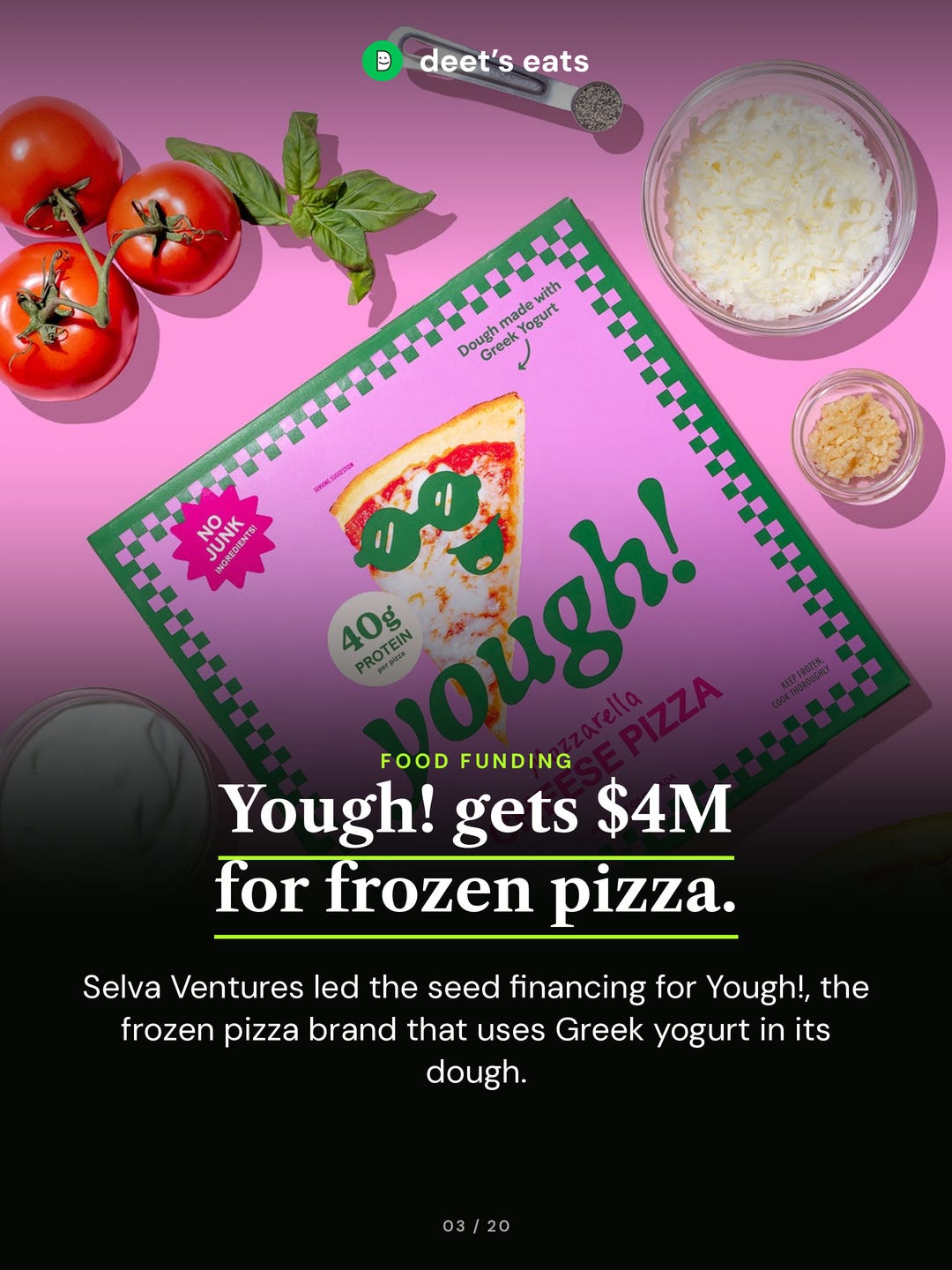
Yough! got a $4 million check for frozen pizza. Selva Ventures anchored the seed round with $4 million. Yough! didn’t disclose the full round size. Greek yogurt in the dough gets you to pick up the box; the test is whether you reach for it again next week. As the brand adds stores, I’m watching how the pizza sells after shoppers have had a chance to try it.
Church & Dwight wants 45% of the company behind Bali Curls and Bali Gents. The proposed deal is worth about $225 million and is expected to close in Q1 2027. Church & Dwight gets the option to buy the rest starting two years after closing. That structure gives it time to see how a European haircare brand travels before deciding whether to own the whole thing.
The shelf moves I’m watching
Kim Kardashian’s UPDATE goes from cans to stick packs. The $12.99 cartons launched on TikTok Shop, Amazon and UPDATE’s site. A can is something you grab when you want a drink. A stick pack is something you throw in your bag before you leave. Same brand, different occasion and a format that makes more sense to ship.
Once Upon a Coconut is on the shelf in 4,500+ Walmarts and in the cooler at 1,500 locations. The brand says it built out its direct-store-delivery network to support that expansion. To me, the cooler number is the one to watch. A multipack in the grocery aisle competes for a spot in your pantry. A cold single competes for what you’re going to drink in the car.
AG1 added energy, and Lewis Hamilton is the face of it. Hamilton was already an investor before becoming a global ambassador for AG1 Energy+. Meanwhile, Diplo joined IM8 as an ambassador and Prenetics shareholder. IM8 was already showing up at his run clubs. That’s the detail I like: the product had a place in the community before the announcement.
The rest of the Friday carousel
DOC Brands bought MOON Oral Beauty. The owner of Dentemp adds whitening pens and a beauty-led oral care brand. Terms weren’t disclosed.
Royal’s parent bought the rest of dinner. LT Foods Americas closed its acquisition of Maya Kaimal Foods, pairing its basmati rice with simmer sauces and dals.
Hone Health’s $228 million breaks down two ways. That’s $28 million in equity and $200 million in growth financing.
Therabody bought Embr Labs’ thermal technology. The deal takes Therabody into tech designed to help people manage hot flashes.
Noom is adding a wearable. The band is slated for employer and health-plan programs in early 2027, with no additional upfront cost to payers.
Buffy put protein in the deli case. Its chicken-and-cottage-cheese dips are listed at 488 Sprouts stores in Buffalo and Lemon Pepper.
20VC backed high-protein dessert. UK brand Majic raised £500,000 in a round led by 20VC and is targeting a 2027 retail launch.
Forager Project took on senior debt. SG Credit Partners provided financing to support capacity, product development and distribution. The amount wasn’t disclosed.
Cuso’s made beef tallow pourable. Its 16-ounce bottle gives shoppers a way to use it like the cooking oil they already keep by the stove.
DoorDash talked prices; Instacart worked on swaps. DoorDash pledged same-item pricing at the same store and time, though fees can differ. Instacart is surfacing replacement suggestions that match dietary preferences.
BERO gave holiday shoppers a reason to come back in January. The Big Apple Shandy drop pairs holiday gifts at spending thresholds with January credit on qualifying member orders. The January visit is the part I’d measure.
If you’re building a brand, two numbers I’d ask for before the next retail expansion: how fast the product sells at regular price, and how often people come back for it. The store count tells you how far you’ve gotten. Those two numbers tell you whether to keep going.
Which move are you watching? Hit reply or leave a comment. I’ll be back Monday with The Deets.